Seraj: The human rights dimensions of the Zionist regime’s aggression against Iran encompass a series of gross and systematic violations
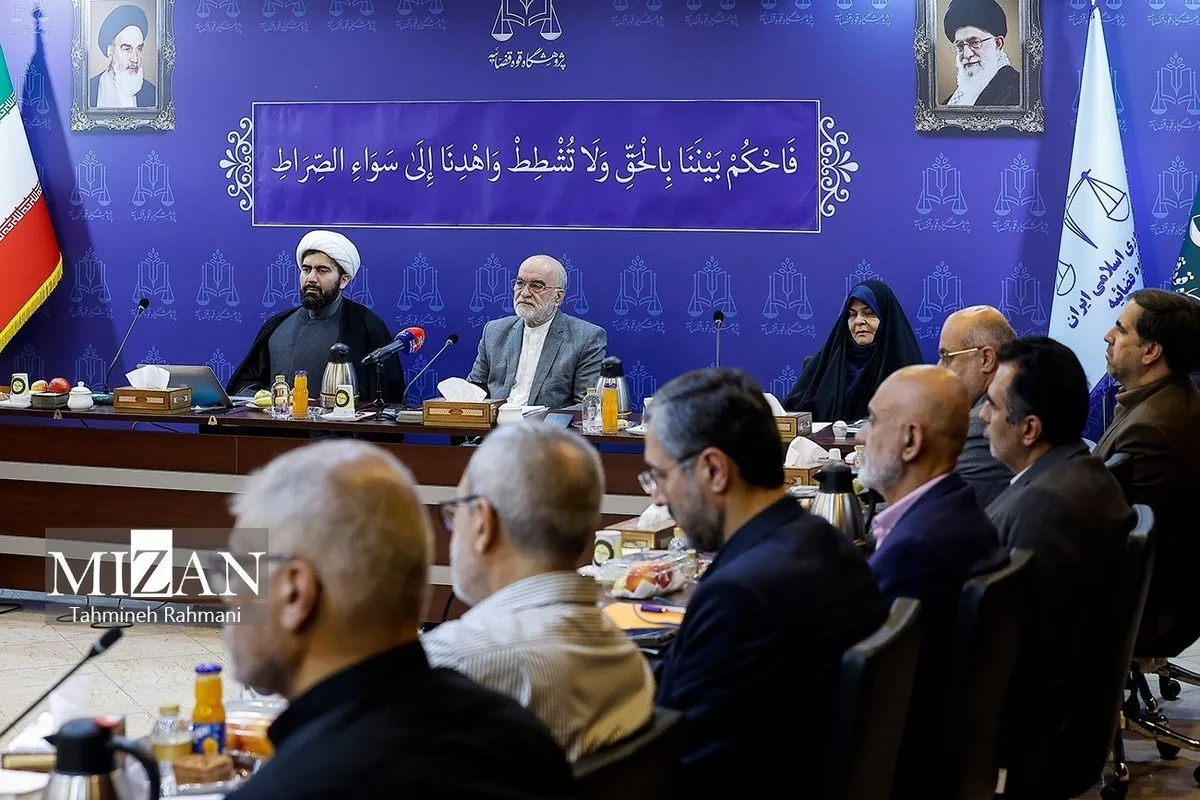
This inaugural session, focusing on the legal and human rights aspects of the twelve-day imposed war, was held on Wednesday, August 27, 2025, in the presence of the families of martyrs.
Nasser Seraj, Deputy for International Affairs of the Judiciary and Secretary of the High Council for Human Rights, conveyed the greetings of the head of the Judiciary to the families of martyrs and said: “The head of the Judiciary regularly meets the families of martyrs on a daily, weekly, and provincial basis and considers it his duty to honor them.”
He continued: “As you are aware, the occupying and aggressor Zionist regime, during a twelve-day imposed war (from June 12 to June 23), with the extensive intelligence, military, and political support of certain Western governments that claim to defend human rights, carried out a series of coordinated, targeted, and pre-planned military attacks against the Islamic Republic of Iran. These acts of aggression, which flagrantly violated fundamental principles of international law, targeted not only peaceful nuclear facilities and military centers but also vital civilian infrastructure, residential areas, Red Crescent relief workers, and even media institutions—clearly representing a widespread and systematic breach of international law.”
Seraj stressed: “From the perspective of international law, the actions of the Zionist regime constitute a blatant act of military aggression, violating the fundamental principle of the prohibition on the use of force as enshrined in Article 2 of the UN Charter. Furthermore, these attacks gravely violated international humanitarian law, especially the principles of distinction, proportionality, and precaution in attack. Targeting civilians, medical, and relief facilities, under the Geneva Conventions and their Additional Protocols, constitutes war crimes and entails international prosecution.”
He added that the regime’s past record in Gaza, the West Bank, Lebanon, and now Iran shows its utter disregard for peremptory norms of international law, fundamental principles of human rights, and even the minimum requirements of humanitarian law.
Seraj then cited shocking statistics:
- Since October 7, 2023, more than 57,000 people in Gaza have been killed, the majority being women and children.
- Over 135,000 wounded and about 14,000 missing under rubble.
- In Lebanon, since the ceasefire of November 27, 2024, there have been more than 3,700 ceasefire violations with thousands of casualties.
- During the recent aggression against Iran, nearly 1,100 were killed and more than 5,600 wounded, including children, women, scientists, and even a two-month-old infant named Rayan Ghasemian.
- Seven hospitals, several emergency centers, health units, and dozens of ambulances were targeted. The Red Crescent’s “Peace Building” was bombed, killing relief workers.
He then pointed to three emblematic crimes:
1. Attack on Evin Prison (June 22, 2025): Direct airstrike on civilian sections, including the visiting hall, infirmary, and ordinary prisoner wards, killed at least 80 people. This constitutes a war crime under the Additional Protocol I of the Geneva Conventions.
2. Tehran’s Qods Square Massacre (June 15, 2025): Two massive explosions destroyed a six-story building and Tehran’s busiest square, killing 17 civilians—including a 3-year-old child and a pregnant woman—and injuring 46. This showed a deliberate pattern of systematic genocide, not a “military error.”
3. Astaneh Ashrafiyeh Crime (June 24, 2025): Following the assassination of Iranian scientist Mohammadreza Sedighi Saber’s son, his family sought refuge in their hometown. At midnight, coinciding with the ceasefire announcement, their residential area was bombed, killing 15 family members and injuring dozens more—an act aimed at terrorizing Iran’s scientific community.
Seraj concluded: “These crimes represent only a fraction of the Zionist regime’s heavy record of aggression, civilian massacres, and gross violations of peremptory norms of international law. Together, they clearly demonstrate the anti-human nature of this regime and the urgent need for its accountability before international tribunals.”
He emphasized that the aggression is not only an act of military invasion but also war crimes, crimes against humanity, and genocide, carried out with direct U.S. and Western support.
Seraj then outlined the human rights impacts of the aggression:
1. Violation of the Right to Life – 1,100 killed, including women, children, and scientists.
2. Violation of the Right to Health – thousands wounded, permanent disabilities, and widespread psychological trauma.
3. Destruction of Civilian Infrastructure – 23 hospitals and emergency centers attacked, relief workers killed.
4. Violation of the Right to Environment – fires, chemical leaks, water contamination, and oil facility strikes.
5. Destruction of Housing and Livelihoods – 10,000 homes and hundreds of commercial and industrial centers destroyed.
6. Attacks on Media and Freedom of Expression – state TV buildings bombed, journalists killed, UNESCO condemned the violations.
7. Attacks on Nuclear Facilities – peaceful sites in Natanz, Fordow, Arak, and Isfahan targeted, posing transboundary risks.
Seraj concluded: “This twelve-day aggression was not just an attack on Iran’s land and people but an assault on all human values and the foundations of international law. If the international community remains silent today, no nation will be safe from similar tragedies tomorrow.”