An hour away from survival: How Gaza’s sick children are blocked from care
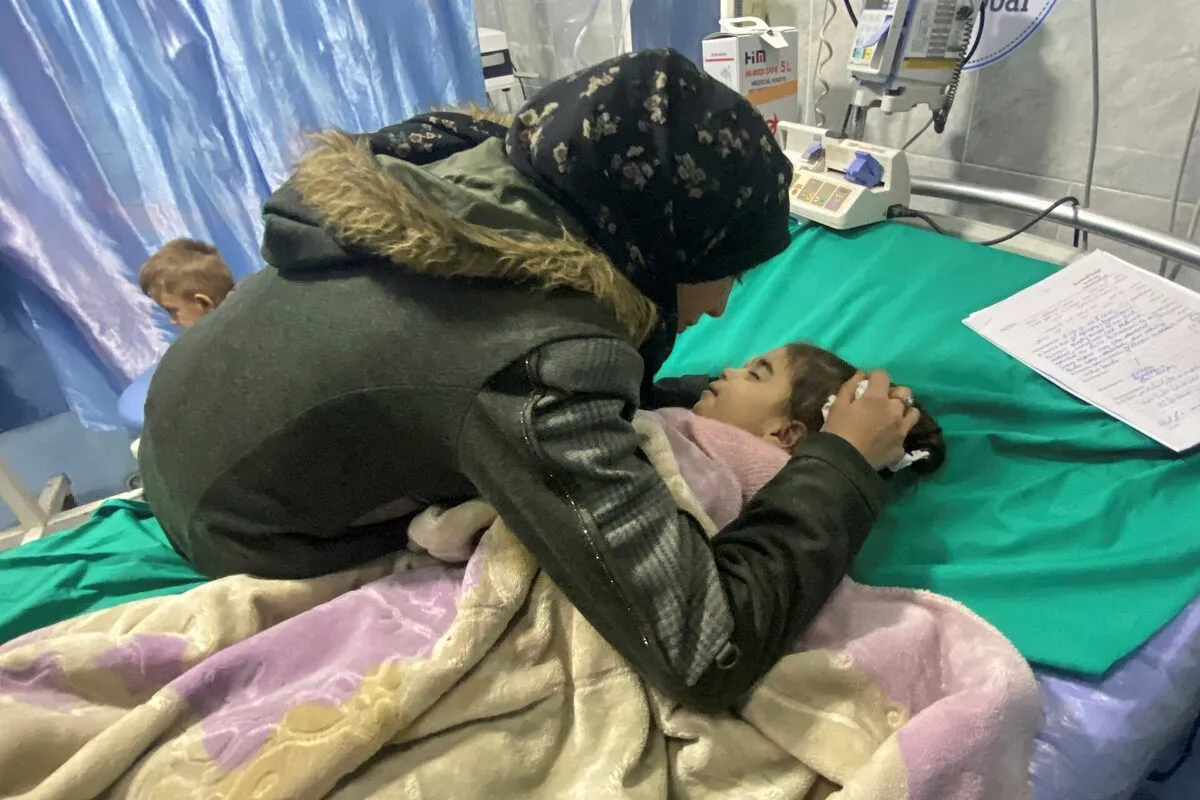
The Israeli newspaper Haaretz reported on Sunday that since the outbreak of the war in the Gaza Strip, Israel has barred patients in life-threatening conditions from being transferred to hospitals in the West Bank and East Jerusalem for medical care.
The paper stressed that during the war, the Israeli military has extensively destroyed Gaza’s healthcare infrastructure, effectively making access to life-saving treatment impossible.
According to the report, Gaza’s two specialized cancer hospitals—the European Hospital and the Turkish Hospital—have been taken out of service. As a result, children and adults suffering from cancer have virtually no access to treatment, and many are left waiting for death in conditions of extreme pain and suffering.
Haaretz quoted Dr. Khadra Salameh, a pediatric oncologist at Augusta Victoria Hospital in East Jerusalem, as saying:
“In recent weeks, my colleagues and I have been forced to watch from afar as children died—children who could have been saved, but whom Israel prevented from reaching treatment.”
Three children, three preventable deaths
In a written testimony, Dr. Salameh referred to the cases of three children:
- Ghazal, a six-year-old with acute leukemia;
- Hiyya, a child suffering from kidney cancer;
- Yousef, a twelve-year-old diagnosed with chest lymphoma.
According to Salameh, all three children died after enduring severe pain, despite the fact that a hospital located only a few dozen kilometers from Gaza was ready to admit and treat them.
“These were completely treatable diseases,” she wrote. “The delay in treatment amounted to a death sentence for these children.”
Haaretz emphasized that these three cases represent only a fraction of more than 16,000 patients—including cancer patients, people with serious illnesses, and the wounded—who urgently require medical evacuation from Gaza.
The newspaper noted that Israel has allowed only a limited number of patients to leave Gaza for treatment in third countries, a process described as slow, costly, and highly complicated, burdened by heavy bureaucratic procedures in receiving states.
According to Haaretz, the fastest and most effective way to save thousands of lives would be to allow patients to be transferred to Palestinian hospitals in the West Bank and East Jerusalem—facilities located roughly an hour away from Gaza and long integrated into the healthcare system serving Gaza’s population. Nevertheless, Israel has categorically rejected this option since the beginning of the war.
Failed legal efforts
The report also stated that about a month ago, five human rights organizations filed an urgent petition with Israel’s Supreme Court. However, as in other humanitarian cases related to Gaza, the judges chose to delay consideration of the case.
Haaretz added that even after a ceasefire was established more than three months ago, Israel has continued to block the entry of medical equipment, emergency tents, and the free operation of humanitarian organizations, while also preventing doctors from entering Gaza. The newspaper described these actions as a clear violation of law, ethics, and basic human logic, stressing:
“The death of children through pain and suffering adds nothing to Israel’s security.”
Warnings from international organizations
In this context, Mohammed Javid Abdulmunem, head of Doctors Without Borders, said last week that working conditions for medical staff in Gaza remain “extremely difficult” and that the volume of aid entering the territory is severely insufficient.
Hani Slem, the organization’s coordinator for medical evacuations, told Agence France-Presse that the number of patients accepted so far by other countries is “only a drop in an ocean of need.”
According to estimates by the World Health Organization, since the outbreak of the war on October 7, 2023, more than 8,000 patients have been evacuated from Gaza. However, over 16,500 patients still require treatment outside the territory—a figure that doctors say may in reality be three to four times higher.