Thousands in Gaza risk losing their sight under siege
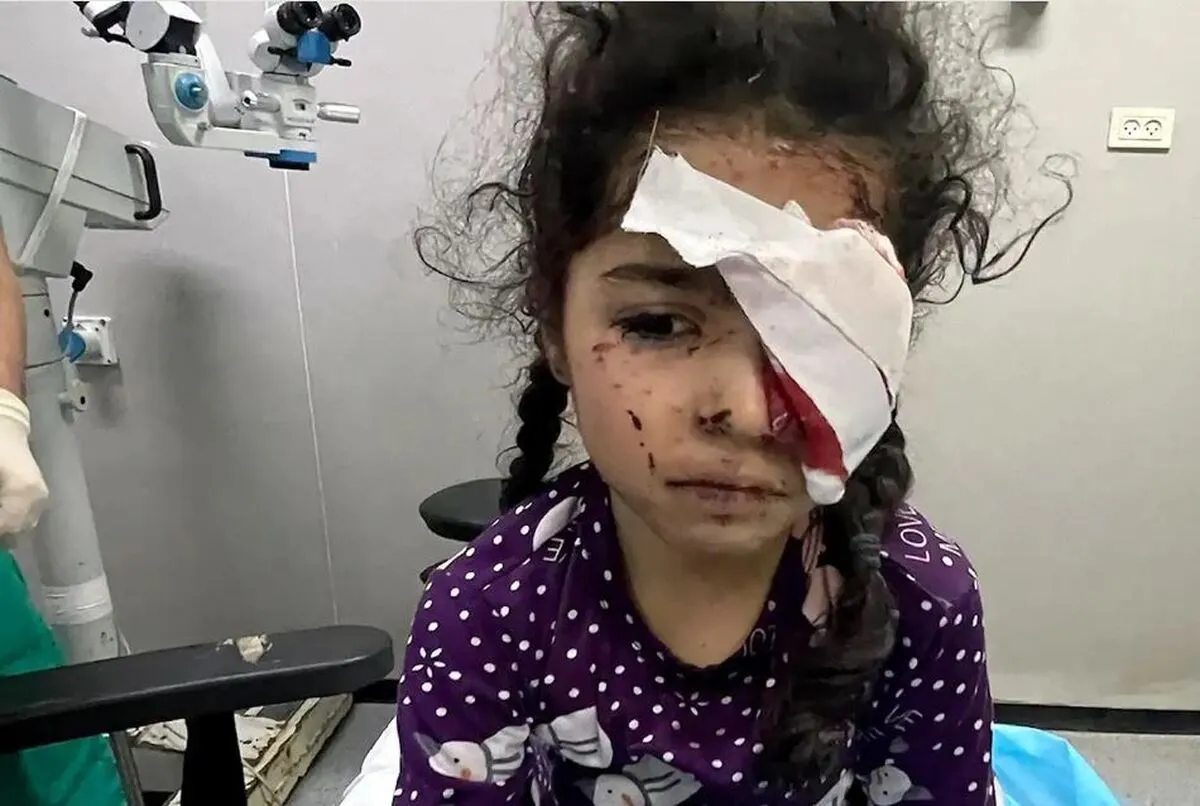
The genocidal war waged by the Zionist regime, which has devastated the Gaza Strip for two consecutive years and left countless people dead and wounded, has not stopped.
Meanwhile, patients with various illnesses remain under siege, and thousands of men, women, and children are grappling with the threat of blindness due to the lack of medication, the absence of sensitive surgical equipment, and the inability to leave Gaza for medical treatment.
Despite the efforts of medical teams to save many patients, the eyesight of thousands of Gaza residents is gradually deteriorating as a result of Israel’s blockade, shortages of medicine, the destruction of surgical equipment, and the closure of crossings that prevent patients from traveling outside Gaza for treatment. Without medical intervention, there is a real risk of complete blindness.
During the devastating war waged by the Zionist regime’s army, the specialized eye hospital in Gaza City, affiliated with the Ministry of Health, suffered extensive damage. This led to its closure for more than 14 months, until it was rebuilt with foreign funding and reopened in late December 2024—though not at its pre-war capacity.
Following the occupiers’ latest military operation in Gaza City last September, the hospital was once again forced out of service until a ceasefire agreement came into effect on October 10.
However, according to Abdul Salam Sabah, director of the specialized eye hospital, signs of destruction are still evident in several departments due to direct gunfire at the hospital as well as a fire that broke out in the power generator.
Speaking to Al-Araby Al-Jadeed, Sabah said the hospital is facing a severe medication crisis that threatens patients’ lives, particularly those requiring drugs for chronic and acute conditions, doubling their suffering.
He stressed that more than 4,000 patients suffering from high intraocular pressure (glaucoma), who depend on daily eye drops to keep eye pressure within safe limits, are now at risk of losing their eyesight due to the absence of proper treatment and the limited surgical options available.
He explained that glaucoma is a sight-killing disease, as patients will permanently lose their vision if eye drops or necessary surgeries are not available.
The Palestinian physician noted that after its partial reopening, the hospital admits around 200 patients daily. Meanwhile, approximately 2,400 to 2,500 patients are on surgical waiting lists, 70 percent of whom require cataract surgery, while the rest need retinal, corneal, and strabismus surgeries.
However, the most critical problem is that the hospital has lost all four cataract surgery machines, which form the backbone of surgical operations. In addition, equipment used for retinal surgeries and the removal of foreign bodies from the eye is completely nonfunctional.
Sabah added that there is currently no specialized equipment available to perform delicate surgeries, a situation that has catastrophically worsened the crisis and pushed waiting lists to unprecedented levels.
He emphasized that the Ministry of Health’s stocks of vital surgical supplies—such as artificial lenses, helium (a viscous substance injected into the eye), sensitive surgical sutures, and consumables for cataract and retinal surgeries—have been nearly exhausted.
According to Sabah, retinal diseases and diabetes-related complications are among the most critical cases requiring precise and immediate intervention. He added that before the war, retinal surgeries were fully performed in Gaza, but today they have been almost completely halted.
The hospital’s only retinal department regularly examines between 1,500 and 2,000 patients, many of whom require laser sessions, Avastin injections, and close monitoring to prevent bleeding and ocular discharge. However, Avastin injections are now almost entirely unavailable, and the sole remaining laser device—after the destruction of other equipment—is serving the entire Gaza Strip.