From security to politics: Inside Trump’s latest travel ban
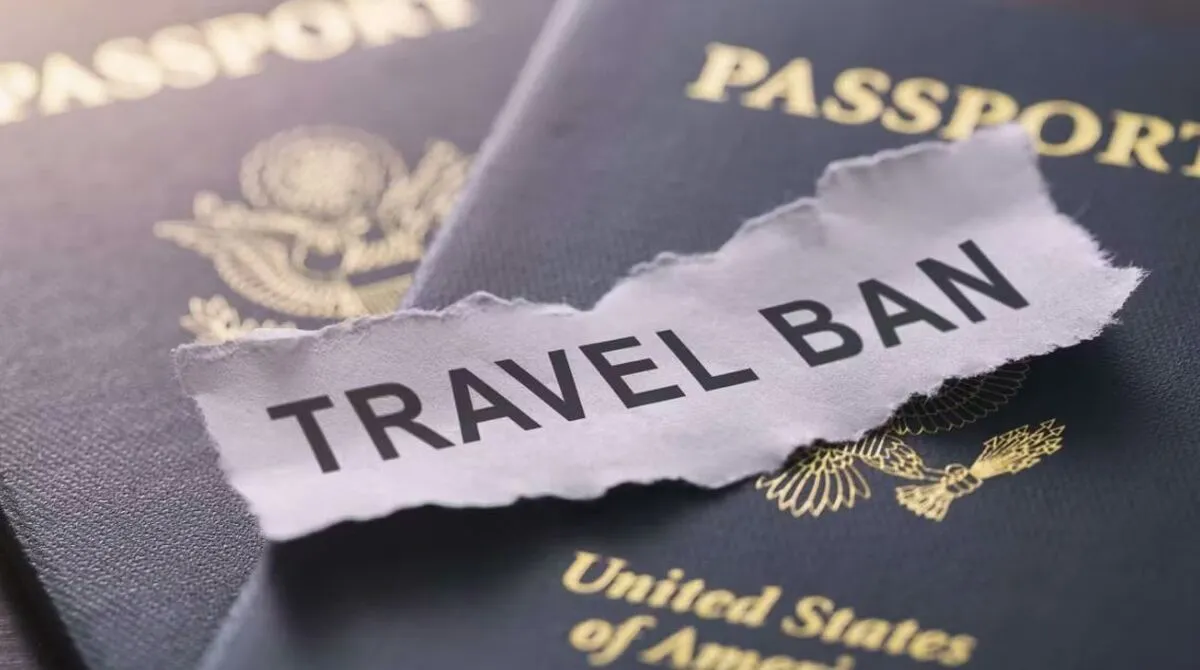
US President Donald Trump, continuing his anti–human rights policies, recently signed an executive order further tightening restrictions on the entry of foreign nationals into the United States.
Which countries are affected by the latest US travel bans?
Syria, along with the African countries of Burkina Faso, Mali, Niger, and South Sudan, are now subject to full travel bans.
The US government has also completely restricted entry for individuals holding travel documents issued by the Palestinian Authority. Washington had already made it nearly impossible for holders of Palestinian Authority passports to obtain US travel documents for business, work, tourism, or educational purposes.
Nationals of Sierra Leone and Laos, who were previously subject to partial travel restrictions, are now fully barred from entering the United States.
Citizens of Afghanistan, Myanmar, Chad, the Congo, Equatorial Guinea, Eritrea, Haiti, Iran, Libya, Somalia, Sudan, and Yemen had already been placed under a full travel ban in June 2025.
This brings the total number of countries subject to a full travel ban, including the Palestinian Authority, to 19.
Partial travel bans
An additional 15 countries—mostly in sub-Saharan Africa—have been added to the list of countries facing partial travel restrictions.
These African countries are Angola, Benin, Côte d’Ivoire, Gabon, The Gambia, Malawi, Mauritania, Nigeria, Senegal, Tanzania, Zambia, and Zimbabwe.
Nationals of Antigua and Barbuda, Dominica, and Tonga will also face partial restrictions.
Burundi, Cuba, Togo, and Venezuela remain under partial travel bans imposed in June 2025.
This means that following the lifting of partial travel restrictions on Turkmen citizens, there are now 19 countries subject to partial travel bans.
What do US travel ban mean?
These restrictions apply both to individuals seeking to travel temporarily to the United States—such as tourists, students, and business travelers—and to those seeking to immigrate.
According to Washington, individuals who already hold valid visas, lawful permanent residents (green card holders), or those with specific visa categories such as diplomats or athletes will be exempt from these restrictions.
Individuals whose entry is deemed to be in the interest of the United States are also exempt.
The US government has announced that these new restrictions will take effect on January 1, 2026.
Why is Trump further restricting travel to the United States?
While Trump has made immigration crackdowns a cornerstone of his presidency, the latest update to the travel bans appears to have been influenced by several recent events.
The US government first proposed expanding travel restrictions following the arrest of a suspect in the shooting of two National Guard members in November.
Since that shooting, the United States has suspended all asylum-related decisions and halted the processing of immigration applications from the initial 19 countries subject to travel restrictions.
Trump also threatened Nigeria with military action in early November, claiming that Christians in the country were being persecuted—an allegation Nigeria has denied.
In addition, Trump vowed severe retaliation against Syria following the killing of two US soldiers and a translator in that country.
In a White House statement, the administration claimed that vetting citizens from many of the newly affected countries is difficult due to what it described as widespread corruption, forged or unreliable property documents, and criminal records.
It also stated that some of these countries have high rates of visa overstays in the United States, or that certain governments refuse to accept the return of their own citizens.