Seraj: The silence of the UN Security Council in the face of the Zionist regime’s crimes is a black stain on its credibility
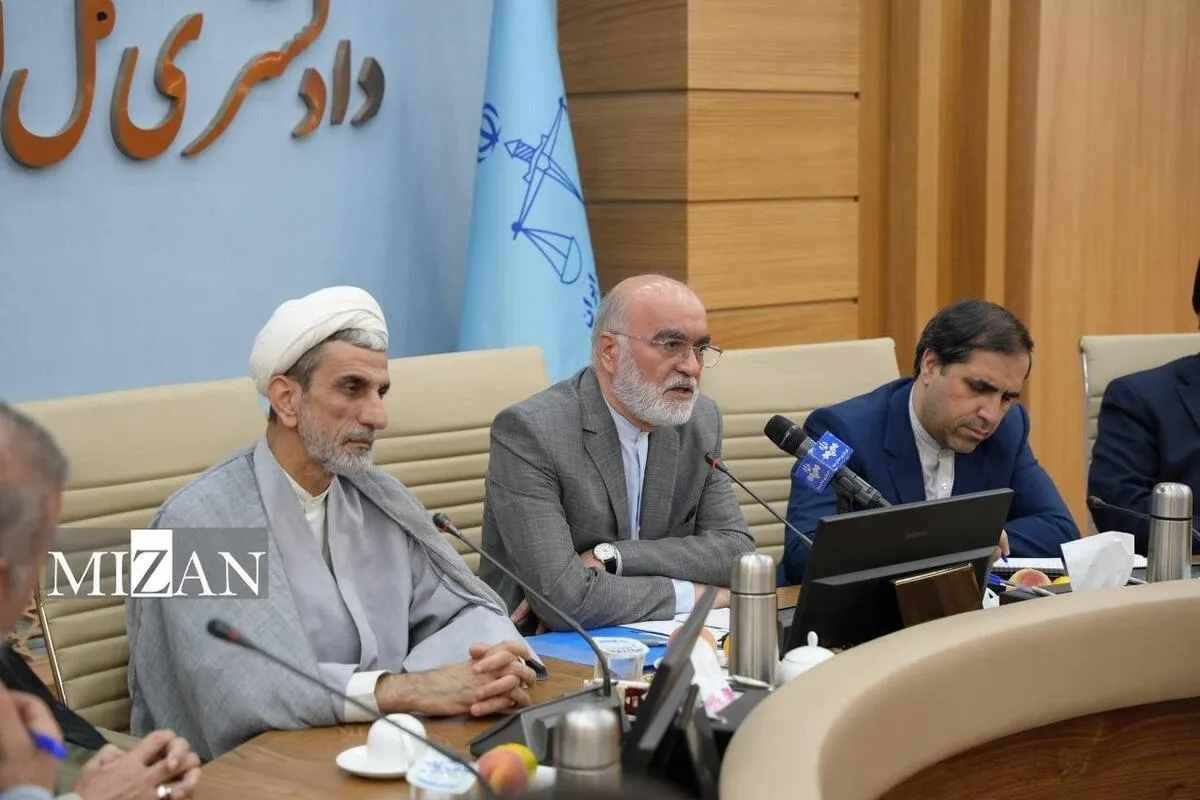
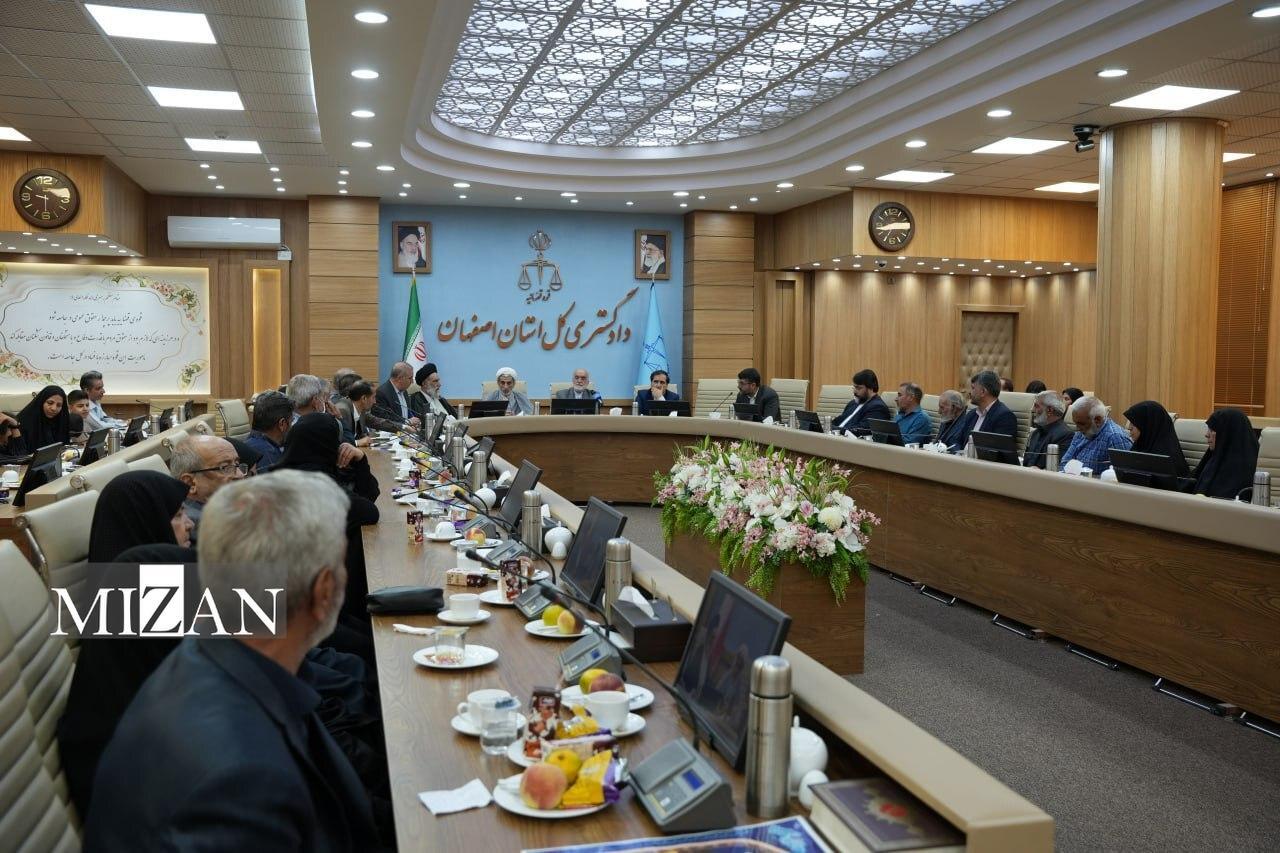
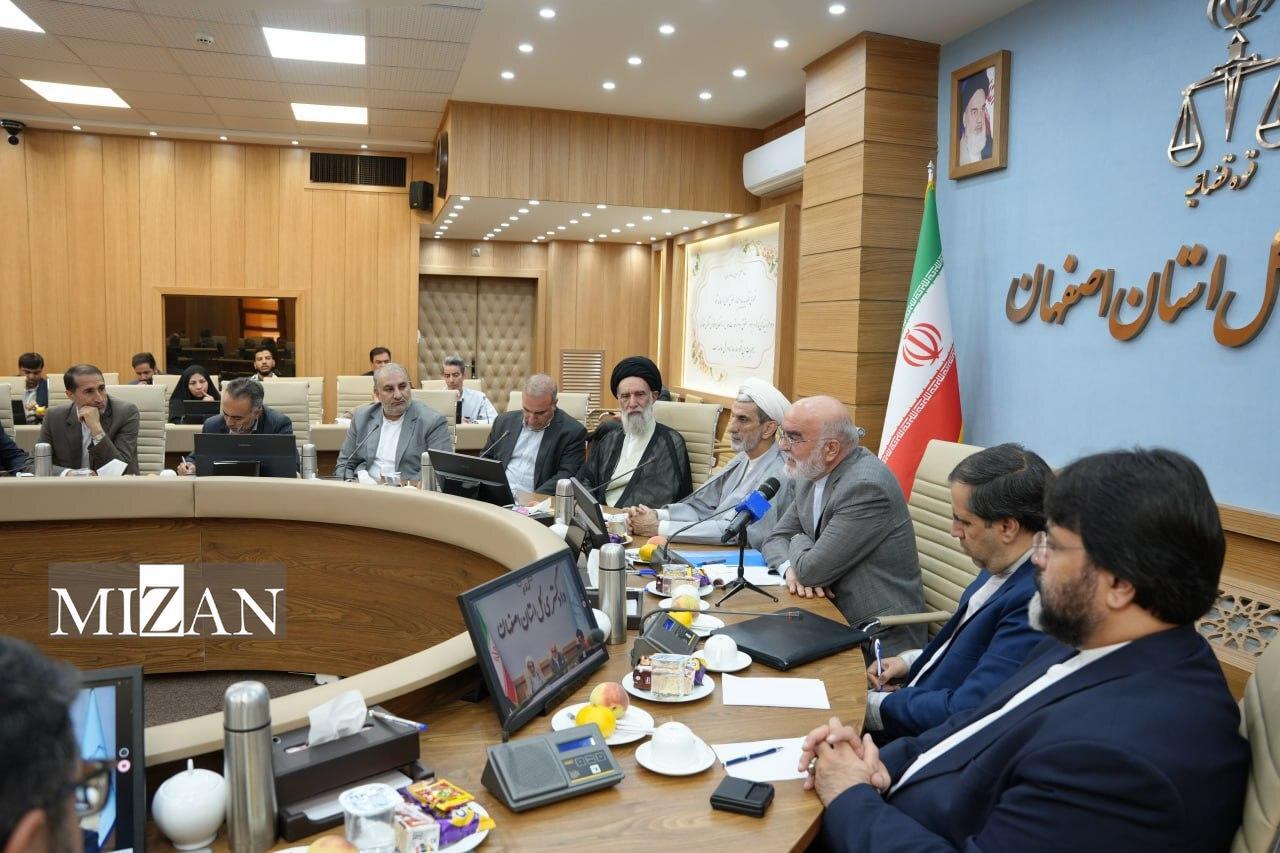
The meeting, held at the Judiciary of Isfahan Province with families of the martyrs of the 12-day war waged by the Zionist regime against Iran, also included the delivery of a message of condolence from Mohseni Ejei, Head of the Judiciary, to the families.
The Deputy for International Affairs of the Judiciary emphasized: “Considering the Supreme Leader’s emphasis on pursuing legal matters of this kind domestically and internationally, the purpose of this meeting is to ensure that the blood of the martyrs of this blatant aggression is not wasted, and that the suffering and voices of the martyrs and their families reach the global community.”
At the beginning of his speech, Seraj referred to the terrorist acts of the Monafeghin, noting: the Monafeghin, a few months after the victory of the Islamic Revolution, declared armed war against the Iranian people. Between 1980 and 1988, they killed approximately 17,000 ordinary citizens, and officially claimed responsibility for a total of 78,000 deaths resulting from attacks launched from Iraq.
He continued: “They even identified Iranian combatants on leave from the frontlines and assassinated them in their homes. In the early years of the Revolution, we also endured the Nojeh coup attempt, which fortunately was thwarted and the perpetrators arrested. Few young countries or revolutions can survive such events and emerge with dignity.”
Seraj also highlighted the imposed challenges and harms to Iran over four decades, including oppressive sanctions that affected the import of medicines and medical equipment. He noted: “The enemy sanctioned and harassed us daily under various pretexts. Two main reasons for our issues with the West and Zionists are Iran’s geopolitical position and the connection between our republic and Islamic system.”
Addressing the families of martyrs from the 12-day war, he said: “Today, we stand with you while the wounds from the Zionist regime’s brutal aggression remain fresh. The world has seen this regime repeatedly reveal its true face through nonstop bombing of homes, schools, hospitals, and shelters—a face of crime, bloodshed, and blatant violation of all humanitarian and legal norms.”
Seraj analyzed the Zionist regime’s aggression from an international law perspective, stating: “The recent attacks clearly constitute military aggression, violating the fundamental principle of the prohibition of the use of force in Article 2 of the UN Charter. Furthermore, the attacks flagrantly violate peremptory norms of international humanitarian law, including the principles of distinction, proportionality, and precaution, which are at the core of the Geneva Conventions and their Additional Protocols.”
He emphasized: “Targeting civilians, destroying medical and relief centers, and bombing critical civilian infrastructure are considered war crimes under international law, including the Geneva Conventions, and require prosecution in international courts.”
Seraj added that Israel has repeatedly shown it has no genuine commitment to peremptory norms of international law, fundamental human rights, or even minimal humanitarian obligations. He noted that reviewing Israel’s record in Gaza, the West Bank, Lebanon, and now direct aggression against Iran clearly shows its complete disregard for international legal order and its systematic undermining of global rule of law.
He cited the following figures as proof:
- Since October 7, 2023, over 66,000 people have been killed in Gaza, most of them women and children.
- Over 135,000 injured and around 14,000 missing under rubble.
- In Lebanon, since the ceasefire on November 27, 2024, over 3,700 ceasefire violations occurred, with thousands killed or wounded.
- In the recent aggression against Iran, nearly 1,100 people were killed and more than 5,600 injured, including dozens of children, women, scientific elites, and even a two-month-old infant, Rayan Ghasemian.
- In these attacks, seven hospitals, several emergency bases, and dozens of ambulances were targeted, including the Red Crescent’s “Peace” building, resulting in the deaths of aid workers.
Seraj highlighted three specific examples to illustrate the gravity of these crimes:
1 - Evin Prison attack (June 22, 2025): Civilian sections, including the visitation hall, infirmary, and ordinary prisoners’ wards, were targeted, killing at least 80 people including prisoners, visiting family members, administrative staff, and nearby residents. This attack on a non-military location violated the First Additional Protocol of the Geneva Conventions and constitutes a clear war crime.
2 - Qods Square bombing in Tehran (June 15, 2025): Two powerful explosions targeted a six-story building and Tehran’s most crowded square. Seventeen civilians were killed, including a 3-year-old child and a pregnant woman, and 46 others injured. This shows targeting civilians is part of a systematic pattern of war crimes, not a “military error.”
4 - Astaneh Ashrafiyeh attack (June 24, 2025): After the assassination of Iranian scholar Mohammadreza Sedighi Saber’s son, the family went to their hometown for the funeral. At midnight, coinciding with a ceasefire announcement, their residential area was bombed, killing 15, including the entire family, and injuring dozens. This demonstrates the Zionist regime’s deliberate policy of destroying families and intimidating Iran’s scientific community.
Seraj emphasized that these three examples are only a small portion of Israel’s heavy record of aggression, civilian killings, and widespread violations of peremptory norms of international law. He stressed: “These crimes provide clear evidence of the inhuman and illegal nature of the Zionist regime and the urgent need for accountability in international courts.”
He further stated: “These facts clearly show that Israel has committed not only military aggression but also war crimes. Continuation of such acts, especially with the direct support of the U.S. and some Western governments, undermines public trust in international legal institutions and mocks the principle of equality of nations under the law. Now, more than ever, the international community must demonstrate that international justice is not an empty slogan and that humanity’s conscience is still alive.”
Seraj said the world faces a historic test: “The UN Charter explicitly obligates all countries to act to preserve international peace and security and not remain silent in the face of aggression, occupation, and the killing of civilians. Yet, in the face of Israel’s clear crimes, many international bodies either remain silent or, through vetoes and indulgence, effectively legitimize these crimes.”
He posed critical questions: “Given the documented, ongoing crimes, can we still speak of a ‘human rights system’ or ‘international law’? Is there any institution capable of genuinely protecting nations’ rights and guaranteeing human dignity?”
Seraj emphasized that the 12-day Zionist aggression against Iran was not just an attack on Iran’s land and people but a blatant assault on all human values and fundamental principles of international law. It crossed geographic borders and challenged global order. He warned: “If the international community remains silent today, no nation anywhere in the world will be safe from similar atrocities tomorrow.”
He reiterated that Iran, while preserving its inherent and legal right to self-defense under Article 51 of the UN Charter, insists on international accountability for the child-killing regime and its supporters. “Silence and inaction do not legitimize the regime but increase the international responsibility of those claiming to uphold human rights,” he said.
Seraj stressed that Israel must be held accountable as a violator of peremptory international law and a perpetrator of war crimes and crimes against humanity, including before the International Criminal Court (ICC). Regarding the UN Security Council, he said: “Under Chapter VII of the UN Charter, the Council is obligated to confront such aggressions and use binding measures to stop the crimes and protect civilians. Its silence, especially in light of repeated vetoes by certain powers, is a black stain on its credibility.”
He added that responsibility is not solely on governments and official institutions; the conscience of humanity, NGOs, intellectuals, academics, and media must also amplify the voice of the oppressed.
Seraj emphasized that Iran has always adhered to the principle that the rights of the people and families of martyrs must be fully upheld and no crime should go unanswered. The Judiciary, High Council for Human Rights, and other relevant authorities diligently pursue cases related to the Zionist regime’s crimes and the harms inflicted on the people and families of martyrs, both domestically and internationally through legal and diplomatic mechanisms.
He cited, as an example, Iran’s active participation in the 60th session of the UN Human Rights Council in Geneva, where some families of martyrs attended with tearful eyes and heavy hearts. The High Council for Human Rights amplified their voices, exposing the systematic oppression by the Zionist regime and demonstrating Iran’s commitment to justice and international law.
Seraj stressed that Iran’s next steps go beyond legal and diplomatic efforts, focusing on addressing the practical needs of the families of martyrs, including legal, medical, livelihood, and social support, ensuring their suffering is alleviated and the martyrs’ blood leads to justice and dignity. Iran continues to stand with the families, amplifying their voices globally.
He concluded: “Through legal, diplomatic, and humanitarian support for the families of martyrs, Iran demonstrates that standing against oppression is not merely a slogan but a continuous, comprehensive, and deeply humane practice. Every step reflects justice, dignity, and commitment to the memory of the oppressed martyrs, who will never be forgotten. Be assured that no matter how brutal or systematic these crimes are, they will never defeat oppressed nations. The blood of martyrs and the sacrifices of their families illuminate the path for the oppressed, strengthening their courage, steadfastness, and resistance. These hard moments are the historic tests that our ancestors also faced, showing that sustained resistance ultimately brings victory and justice.”