252 voices silenced in Gaza: Truth still echoes on International News Day
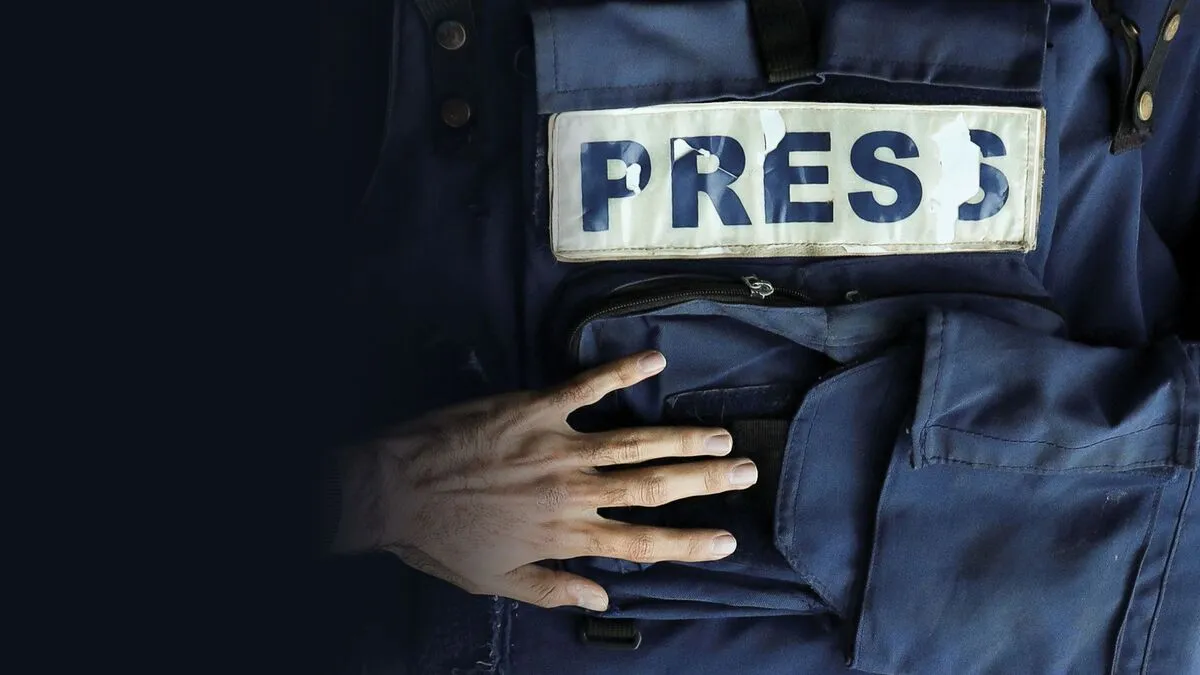
September 28 is marked globally as International News Day — a day established to emphasize the importance of facts. It is an annual campaign to celebrate quality journalism worldwide, promote media literacy, and recognize the vital role of fact-based reporting in society.
Every year, hundreds of news agencies and media outlets participate in International News Day campaigns. Yet, over the past two years, this commemoration has failed to sufficiently highlight the sacrifices of Gaza’s journalists, who continue to risk their lives to document and report on the realities of ongoing Israeli crimes in the besieged strip.
In 2025, International News Day came as Gaza’s journalists — after two years of relentless war and bombardment — continued sacrificing their lives to inform the world about the atrocities committed by Israel.
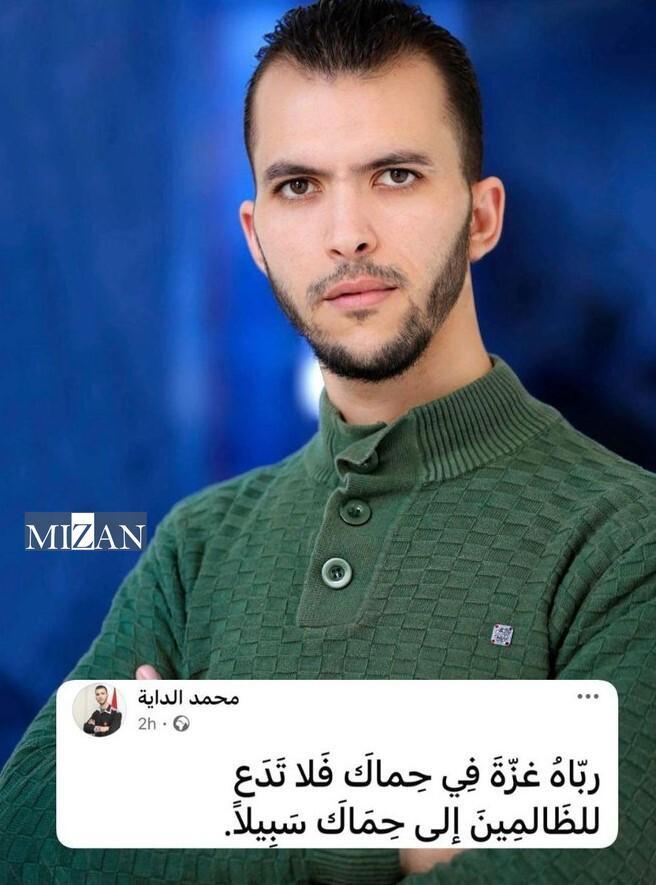
Just yesterday, Palestinian journalist Mohammed Hamza Al-Dayeh was killed in an Israeli airstrike on central Gaza. His death brought the total number of journalists and media workers killed in Gaza to 252.
The Gaza Government Media Office condemned Israel’s systematic targeting and massacre of Palestinian journalists, urging international press bodies and journalist unions to take a firm stance against these attacks.
Over the past two years, Israel has escalated its targeted campaign to silence and eliminate Gaza’s journalists in order to advance its strategy of genocide and ethnic cleansing under a media blackout. At the same time, it has employed disinformation and smear mechanisms — including its military’s “Legitimization Unit” — to justify and cover up these crimes by falsely accusing Gaza journalists.
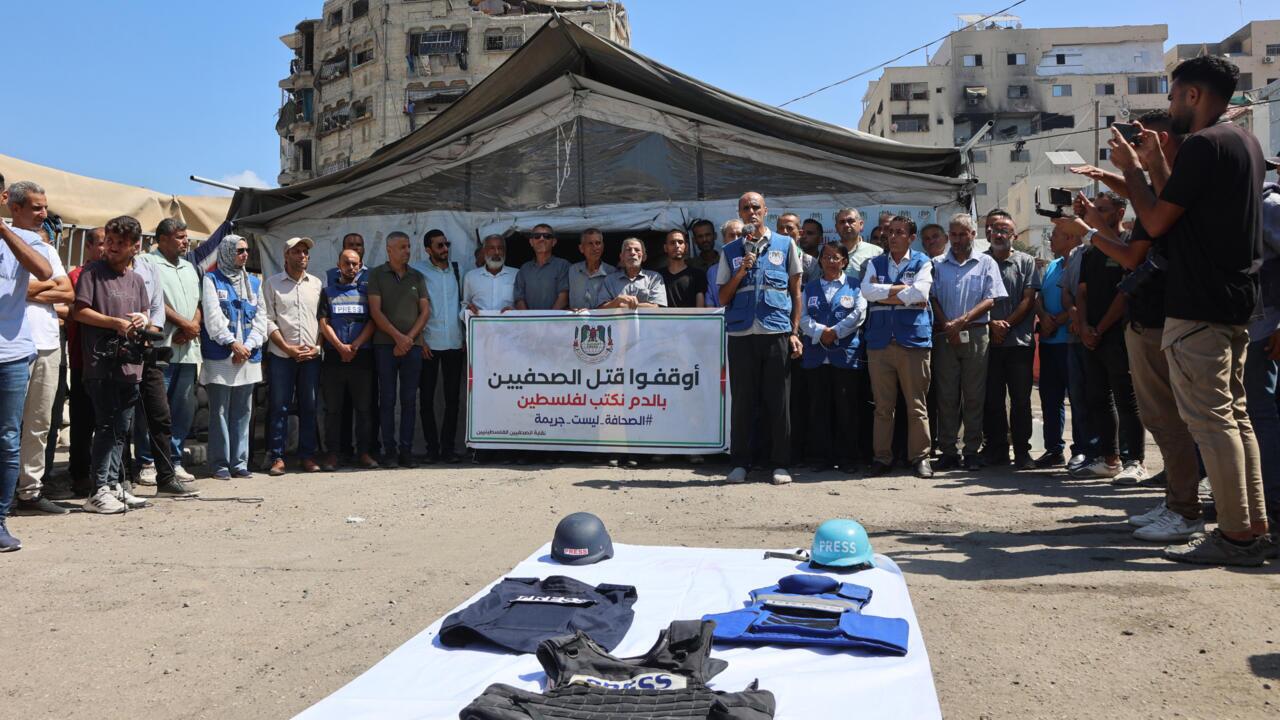
Despite this, Gaza’s reporters and media workers have resisted the journalist-killing campaign, striving to amplify the voices of their people to the world.
Meanwhile, Reuters recently published an investigation refuting Israel’s false claims justifying its drone strike on Nasser Hospital in Khan Younis. On August 25, five Palestinian journalists were killed in that attack.
Those killed included: Mohammed Salameh (Al Jazeera cameraman), Maryam Abu Daqa (reporter), Moaz Abu Taha (photojournalist), Ahmed Abu Aziz (reporter), and Hussam Al-Masri (photojournalist). Israel claimed the target was a camera allegedly installed by Palestinian resistance inside the hospital.
However, Reuters’ investigation — based on extensive visual evidence and over 20 interviews — concluded that the camera actually belonged to Reuters and had been in use for months by its journalist in Gaza.
Images revealed that the camera, owned by Reuters journalist Hussam Al-Masri, was found on a staircase inside the hospital. Since May, Al-Masri had placed it there at least 35 times to livestream coverage to a global audience, often protecting it from heat and dust with a carpet.
The head of Gaza’s Government Media Office rejected Israel’s claim that Palestinian resistance was filming Israeli troops from Nasser Hospital, calling it “a fabricated lie” aimed at covering up a full-scale war crime against patients and medical staff.
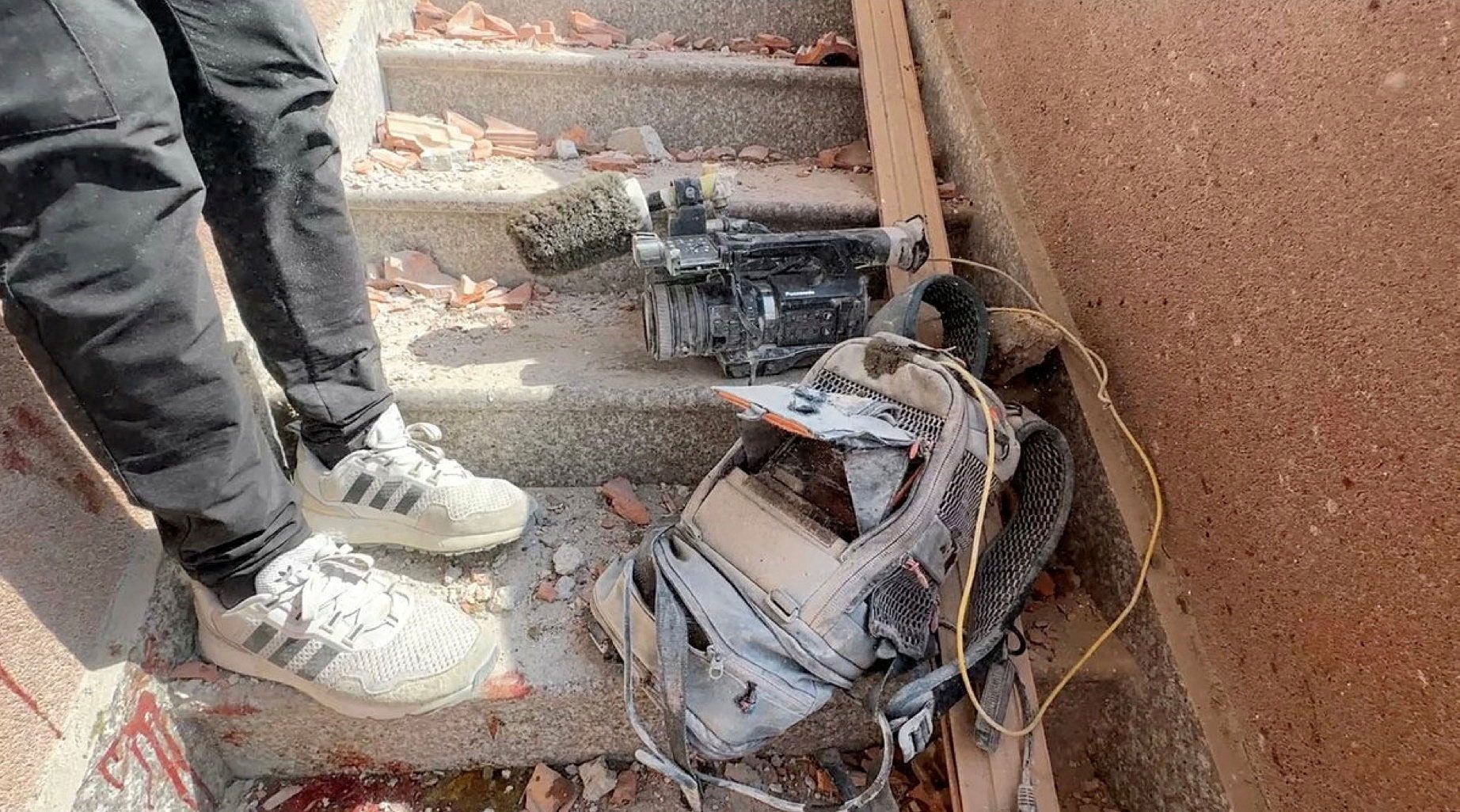
Reuters stated it had reviewed over 100 photos and videos and interviewed more than 20 people to reconstruct the events of the strike. Al Jazeera’s Ali Hashem described the staircase as a “makeshift newsroom” where journalists had gathered before the attack. Al-Masri’s live broadcast cut off moments before the explosion that killed him and several civil defense workers. A second explosion struck as rescuers rushed in.
Reuters cameraman Hatem Khaled recalled: “We were in the middle of evacuating the martyrs and wounded, then a massive explosion erupted among us.”
The Committee to Protect Journalists (CPJ) noted that Israel has never released the results of any official investigation nor held anyone accountable for the killing of journalists. Sherif Mansour, CPJ’s regional program coordinator for the Middle East and North Africa, stressed: “None of these incidents has led to a meaningful review of Israel’s rules of engagement, and international condemnation has resulted in no change in the pattern of attacks on journalists over the past two years.”