Gaza on the verge of total annihilation: Erasing a city under the guise of War
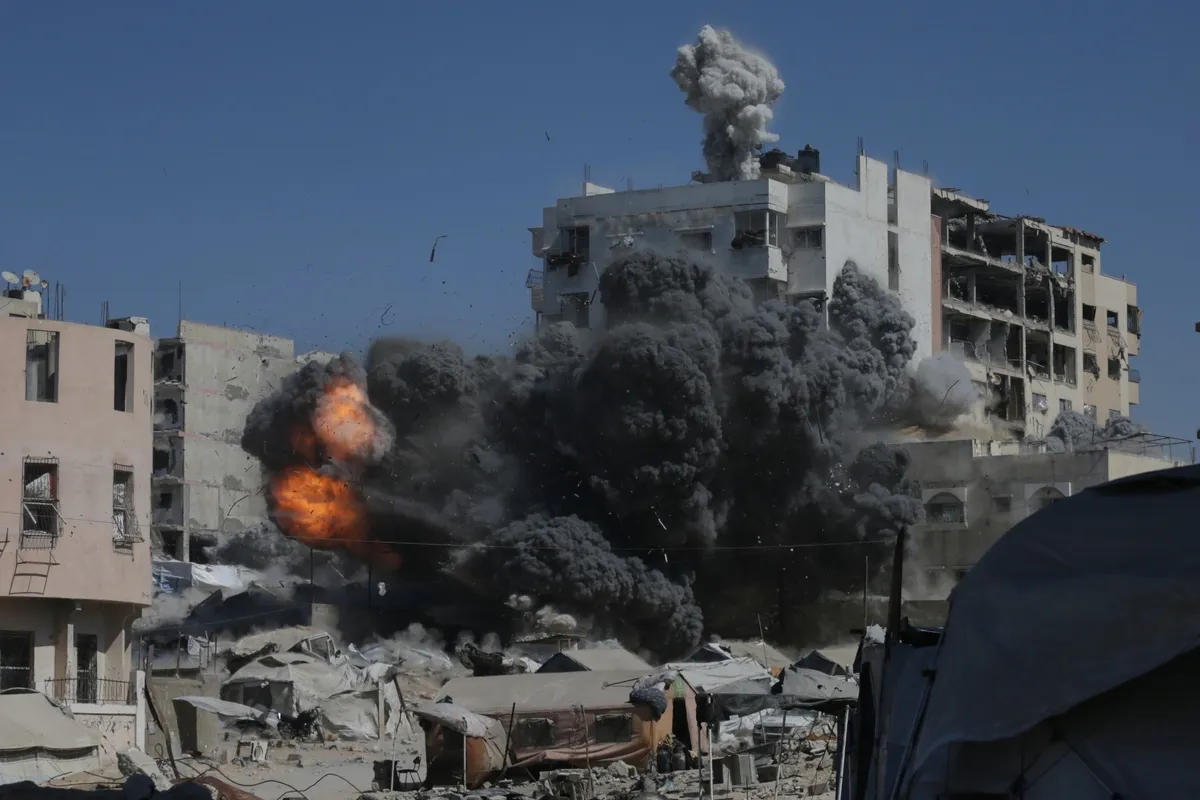
To seize Gaza, the Israeli army has targeted the urban infrastructure of the largest city in the strip, causing widespread displacement of residents.
Al-Ghafari Tower, which was considered the tallest building in Gaza City, collapsed like a house of paper on Monday, September 15. In seconds it vanished and huge clouds of gray smoke rose into the sky.
Over roughly the past ten days, as part of its campaign to seize Gaza, the Israeli army has systematically destroyed the urban infrastructure of Gaza’s largest city, and on Tuesday, September 16, it launched a new phase of ground attacks.
Le Monde wrote: towers, residential apartment blocks, local institutions, schools, and mosques have been targeted. Gaza — a city with thousands of years of history and home to one million people (one of the most densely populated areas in the world) — appears to be living out its final moments.
The Israeli decision to occupy this city (which has a population of more than one million) has been met with global condemnation.
Widespread destruction in Gaza city
An Israeli army official has estimated that 40 percent of Gaza City’s residents — about 350,000 people — have moved south, while many buildings have been destroyed and families must pass through rubble with bare hands to rescue trapped relatives.
The Israeli tactic is to squeeze anyone who remains in the city. The eastern part of Gaza has been cleared not only of buildings or physical structures but of its densely populated area. Residents who had moved west are now displaced again.
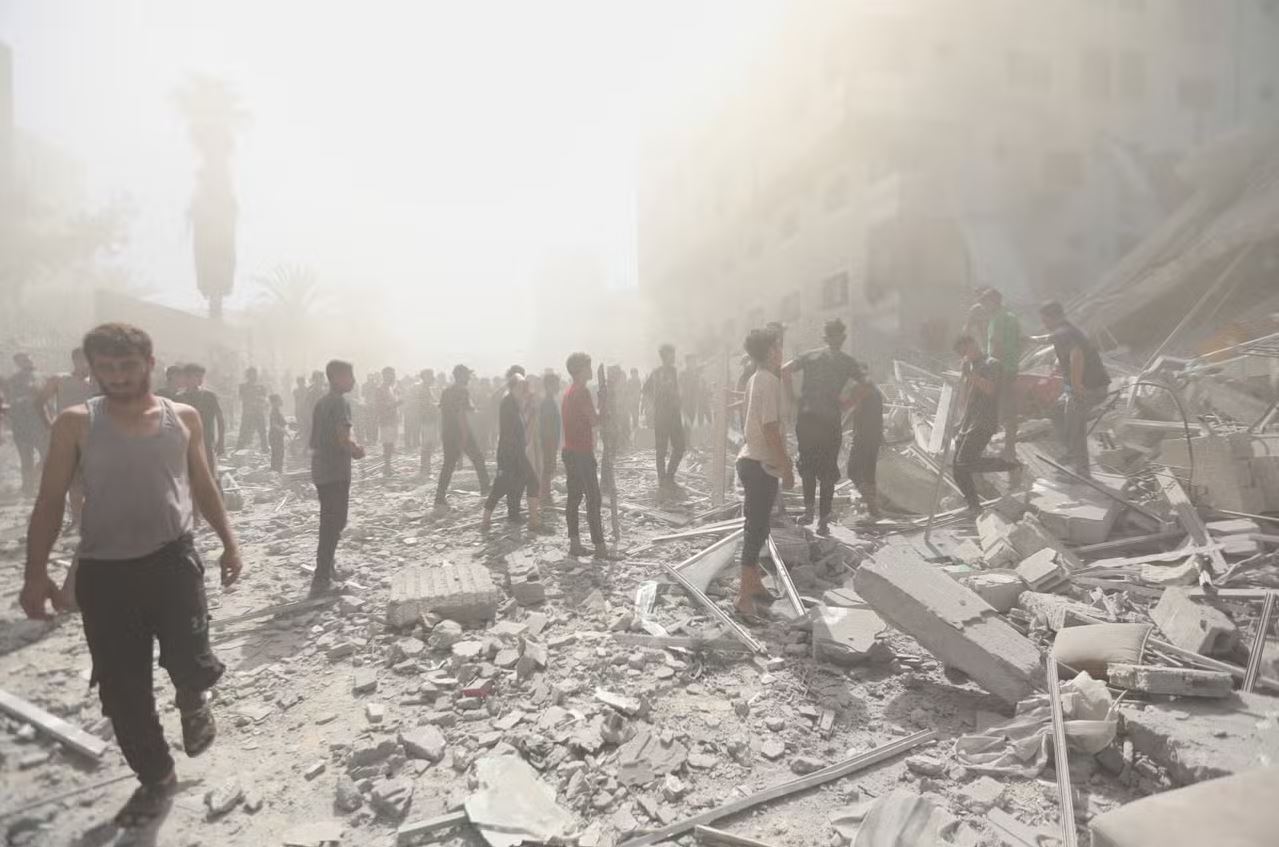
The Israeli ground assault on Gaza began while more than 20 aid agencies active in Gaza, after the UN commission’s first formal declaration of genocide by the Israeli regime in the devastated territory, urged world leaders to intervene immediately in the war.
In a joint statement these groups said Gaza’s inhumane conditions are unacceptable; they also warned that recent Israeli efforts to forcibly displace Gaza City’s population through a ground occupation are intended to deliberately render the largest urban area in the besieged territory uninhabitable.
These organizations said: as humanitarian agencies, we have witnessed firsthand the horrific death and suffering of Gaza’s people. Our warnings have been ignored and the lives of thousands more remain at risk.
New methods of killing
On the second day of its ground offensive into Gaza City, the Israeli regime sent two military divisions into the city from two different axes, while hundreds of thousands of Palestinians still remain inside the city. It is expected that in the coming days the 36th Division will also join operations.
As the ground advance continues, the occupying army is simultaneously carrying out intense aerial and ground bombardment, using aircraft, drones, tanks, armored vehicles, and engineering equipment to destroy anything in its path.
According to the Hebrew-language Channel Kan, based on occupier army estimates, the ground operation in Gaza will continue for 2 to 3 months, though fully confronting the resistance forces may take longer.
The sound of heavy explosions is being heard even in Tel Aviv and central areas of the occupied territories, and is noticeable in the Negev near Gaza as well.
The Israeli army has also adopted a new method called al-Munabbih to frighten civilians and force them to leave the city. This method involves dropping small munitions near residential complexes and creating large explosions with limited material damage — an action that, according to Hebrew sources, compels Palestinians to flee the area.