UN Special Rapporteur meets with Head of Iran’s High Council for Human Rights / Douhan: Unilateral coercive measures are human rights violations / Seraj: Sanctions are tools of collective punishment
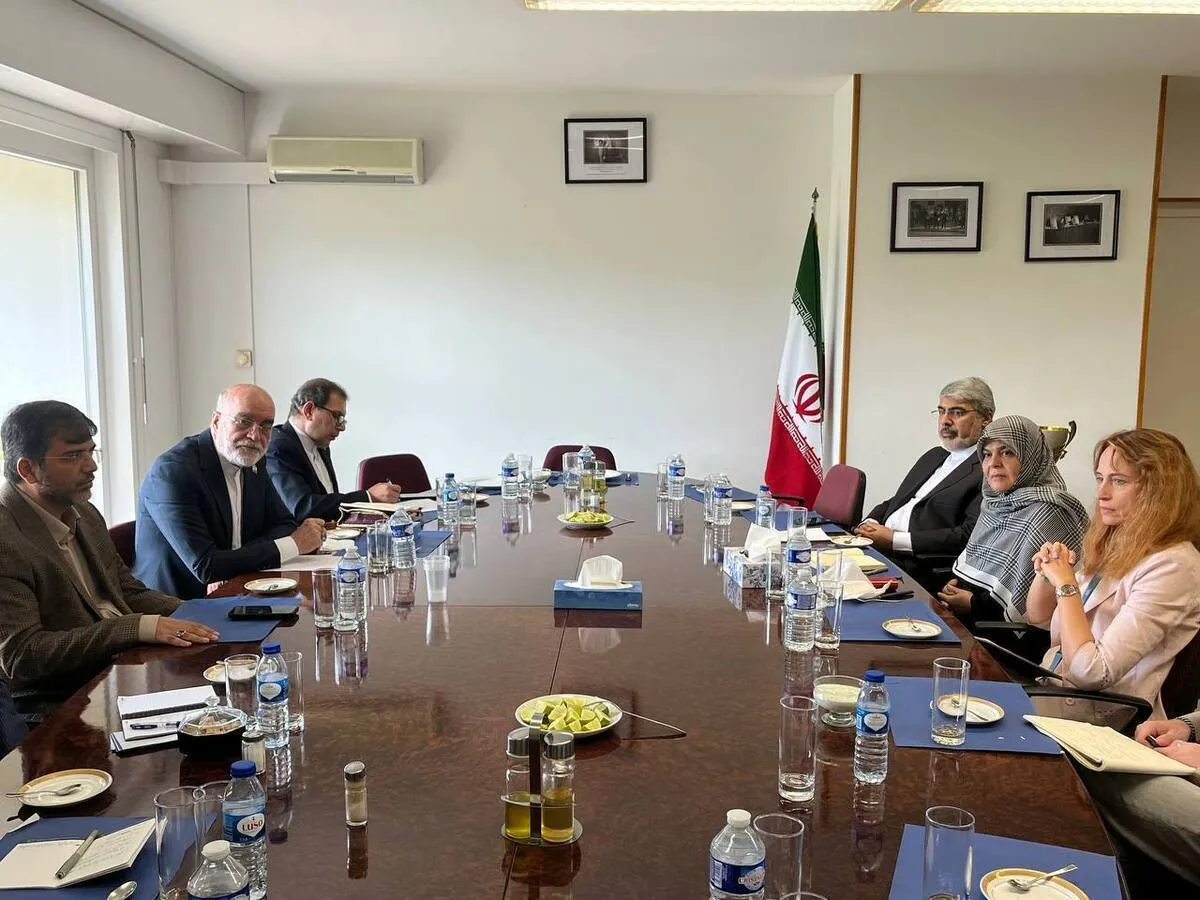
The Iranian mission to the UN in Geneva hosted the meeting and consultations on Tuesday afternoon, September 25, between Nasser Seraj, Secretary of the High Council for Human Rights, and Alena Douhan, the UN Special Rapporteur on the negative impact of unilateral coercive measures.
Seraj, who traveled to Geneva to attend the 60th UN session, stressed that sanctions destroy fundamental rights such as the right to health, food, and human dignity, deprive nations of access to medicine, vaccines, and vital medical equipment, disrupt public health systems, and halt economic development.
While appreciating Douhan’s efforts to counter unilateral sanctions, Seraj said the Special Rapporteur’s findings confirm the devastating impact of the cruel and inhumane measures imposed by those who claim to uphold human rights. He emphasized that U.S. sanctions against Iran constitute crimes against humanity.
Highlighting the consequences of sanctions on the economy, livelihoods, and especially patients, Seraj said sanctions endanger lives and block Iranian people’s access to basic rights, including healthcare, employment, and essential medicines for patients with serious illnesses such as thalassemia.
He added that sanctions have impacted Iranian workers and industries, noting that the lack of access to new machinery, spare parts, technology, and software has harmed Iranians’ economic and social rights — including the rights to health, life, food, and housing.
Seraj underlined that unilateral sanctions against Iran violate numerous international legal norms. He added that sanctions have reduced state revenues, increased inflation and poverty, limited resources for low-income and vulnerable groups, and obstructed Iran’s ability to finance infrastructure development and maintenance projects.
Referring to the recent Israeli aggression against Iran and the targeting of civilian facilities, Seraj stressed that in wartime conditions — such as during the 12-day conflict — sanctions added another layer of pressure, blocking access to essential medicines for chronic patients like those with thalassemia. He noted that the cancellation of Iranian airline flights during the Israeli assault compounded difficulties for patients who needed special medications.
He added that Israeli attacks forced the closure of some factories and workshops, leaving workers unemployed.
Seraj emphasized that the Islamic Republic of Iran is ready to cooperate fully with the UN Special Rapporteur on the impact of unilateral coercive measures on human rights.
For her part, UN Special Rapporteur Alena Douhan thanked Iran for its cooperation and for hosting the international conference on unilateral sanctions. She stressed that her visits to Iran played a crucial role in documenting the real impact of sanctions on different social groups.
Douhan criticized unilateral sanctions, calling them a direct cause of restrictions on access to food, medicine, and essential services, and a serious threat to global peace and security. She underlined that sanctions negatively affect multiple areas of human rights, including education, economic rights, labor rights, security, and health.
“Unilateral coercive measures are human rights violations,” Douhan said, stressing that they target ordinary citizens. She expressed hope that, with cooperation from countries such as Iran, she would be able to achieve her goals during the remainder of her mandate.
She further stated that over-compliance by companies with illegal sanctions directly contributes to widespread human rights violations. To counter this, she has prepared a set of guiding principles with interpretive commentary and called on states, companies, and international organizations to help refine and implement them.
Douhan noted that increased awareness has boosted government, academic, and civil society participation in interactive dialogues at the Human Rights Council, which she believes can help strengthen the global discourse against unilateral coercive measures.
She emphasized that one of her main tasks is producing legal literature and international documents to condemn unilateral coercive measures and reflect their illegality. She invited governments, academia, and civil society to actively contribute to enriching these documents and developing legal frameworks.
These, she explained, should cover obligations and responsibilities, accountability mechanisms, and compensation for harms caused by sanctions. She added that Iran, with its experience in initiating sanction-related cases before international courts and its extensive legal expertise, can play a valuable role in providing legal advice and support to other countries seeking to hold perpetrators accountable.
During the meeting, Mohammad Sargazi, head of the Iranian Parliament’s Judicial and Legal Commission, also spoke. He highlighted the direct effects of sanctions in border provinces, especially Sistan and Baluchestan, noting that sanctions have deepened poverty, unemployment, and deprivation, creating fertile ground for recruitment by terrorist groups.
He stressed that sanctions-related restrictions have prevented Iran from obtaining the necessary security and technical equipment to combat organized crime and terrorism. Referring to the terrorist attack on the Zahedan courthouse on July 26, 2025, and another attack on September 16, he said the lack of inspection and control equipment — among the sanctioned data-x-items — enabled terrorists to easily infiltrate public and governmental buildings.
Sargazi emphasized that such incidents prove that sanctions not only harm ordinary people’s lives but also directly undermine national and regional security, in clear contradiction with international law.
At the end of the meeting, both sides stressed the need to strengthen cooperation to confront the illegal consequences of sanctions and to continue joint engagements on human rights issues.
It should be noted that Nasser Seraj, Secretary of Iran’s Human Rights Headquarters, arrived in Geneva on Sunday at the head of a human rights delegation to attend the 60th UN Human Rights Council session. His activities so far have included attending the session on “The Human Rights Impact of the 12-Day Attacks on Iran by Israel and the U.S.,” participating in the interactive dialogue with the UN Special Rapporteur on unilateral coercive measures, and meeting with the Deputy High Commissioner for Human Rights.