Revealing the Monafeghin’s involvement in the Zionist Regime’s attack on Farabi Hospital in Kermanshah during the 12-day war
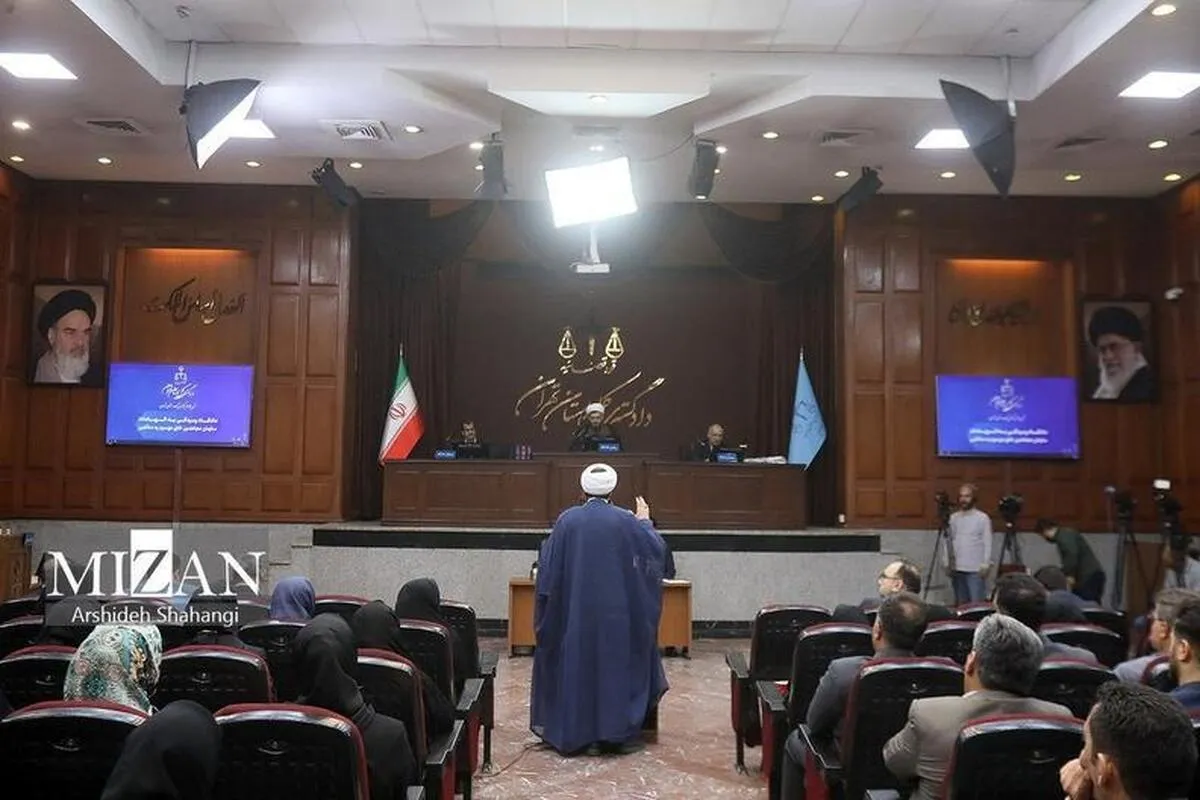
The session took place on Tuesday, August 5, in the presence of Judge Amir Reza Dehghani, along with court advisors Morteza Tork and Amin Naseri. Also present were the prosecutor’s representative Mr. Vaziri, families of the martyrs and their legal representatives, as well as defense attorneys of the accused, at the Imam Khomeini Judicial Complex. The trial was held publicly.
Judge Dehghani opened the session by condemning the Zionist regime’s crimes, stating that Iran’s armed forces have rightfully defended the country’s territorial integrity, independence, and freedom against state terrorism.
He emphasized: "What our country experienced during these 12 days has parallels in the past four decades. It is a new form of terrorism in the world—state or regime-led attacks on other nations under any pretext, involving the killing of civilians and military personnel without any formal conflict—clearly constitute acts of terrorism."
He continued: "Today, global powers use terrorist organizations and regimes with terrorist approaches to reduce their own costs and deprive other nations. The Judiciary’s reform-oriented approach has emphasized holding independent trials to address the complaints of victims and families affected by terrorism, establishing a unified judicial front among Islamic nations, continuing anti-terrorism efforts, exchanging judicial experience, combating organized crime, and confronting the catastrophic consequences of terrorist states."
Judge Dehghani then requested the plaintiffs' lawyer to take the stand.
Attorney Maddah, representing the plaintiffs, stated: "Throughout the world, terrorist groups infiltrate sensitive areas to gather intelligence and spy. This espionage often leads to assassination, threats, and targeting of influential figures."
He continued: "One of the central crimes committed by the Monafeghin is collaboration with hostile states. These terrorist groups operate inside target countries using the backing of intelligence agencies and support from certain foreign governments."
Maddah added: "The Monafeghin’s collaboration with enemy states is well-documented. The organization worked closely with Saddam Hussein’s Ba'ath regime and now maintains serious ties with the child-killing Zionist regime. One of the group’s main strategies has always been to align with hostile governments in order to advance its operations and receive military, financial, and intelligence support."
He emphasized: "According to Article 508 of Book Five and Articles 279 and 286 of the Islamic Penal Code, we can attribute charges of moharebeh (waging war against God) and corruption on earth to all members and leaders of the Monafeghin. The group formed an armed force and waged war against its fellow countrymen. In the 1980s, they aligned with Saddam's regime; at other times with the U.S.; and now with the Zionist regime. Wherever there is a front against the Iranian people, the Monafeghin is present."
Regarding the 12-Day War, the attorney said: "On behalf of the families of nuclear martyrs and scientists assassinated by the Zionist regime, I am filing a complaint, since the Monafeghin Terrorist Group was involved from the beginning in spying and selling nuclear information to the U.S. and Israel."
He added: "The charge is collaboration with a hostile enemy. The basis for this claim includes a statement by Massoud Rajavi, which was published on the Monafeghin Terrorist Group’s website and social media the day before the war. After the conflict began, it became clear that the Iranian people had not rallied around treachery and enemies."
"These individuals believed that, similar to the 1980s, if they could eliminate key government figures, they could incite the people to rise up. The post, which was published on Monafeghin-affiliated platforms, was removed a day later—perhaps because the enemies remain foolish enough to think the same worn-out tactics of 40 years ago could still undermine the Iranian nation’s resolve."
He continued: "Back in the 1980s, the Monafeghin Terrorist Group believed that by assassinating leaders and then inciting the public to revolt, they could overthrow the system. But our people quickly gave them a firm response. They hoped that, with the Zionist regime’s attack on our country, they could incite simultaneous armed insurrection from within. Like always, this dream failed."
Addressing the judge, the lawyer stated: "Given the presence of the family of Martyr Abbasi Davani in this session, I request that the court allow them to present their complaint."
He concluded: "The daughter of Martyr Abbasi Davani—one of the nuclear scientists martyred during the 12-Day War by the Zionist regime—is present in court to file her complaint."
Judge Dehghani said: “The daughter of the martyr Abbasi Davani, please take the stand.”
Zoha Abbasi Davani, the daughter of martyr Fereydoun Abbasi Davani, one of the martyred nuclear scientists during the 12-day imposed war, took the stand and said:
“I request that the court investigate the role of the terrorist group Monafeqin in the attempted assassination of my father in 2010, which resulted in injuries to both my father and mother, as well as the subsequent martyrdom of my father during the 12-day imposed war.”
She added: “The second terrorist attack, which led to the martyrdom of my father and once again injured my mother, also killed one of our neighbors. In that incident, 28 families lost their homes. My father was not a military man — he was a university professor who placed great importance on education and advancing the country’s scientific level.”
The judge of the court stated: “Given that the plaintiffs’ lawyer has filed a complaint regarding the involvement of the primary and other defendants in this case in cooperating with the Zionist regime in the assassination of nuclear scientists, some evidence and a statement issued by the second defendant have been submitted by the plaintiffs' lawyer to the court. The court will examine these documents and, if necessary, may refer the case back to the prosecutor’s office for further investigation.”
Next, Morteza Simyari, a West Asia affairs expert, took the stand and explained the MEK’s collaboration with the Zionist regime in committing crimes and exchanging information with hostile governments.
He stated: “Since the formation of the Monafeghin Terrorist Group, we’ve been dealing with a group that is ideologically eclectic, opportunistic, and possesses unprecedented operational methods.”
He added: “In a booklet the Monafeghin published in 1975 titled A Classless Monotheistic Society, the group emphasized that it opposed Zionism as much as it opposed imperialism.”
Simyari continued: “During the same period, the publication Mojahed issued a statement stressing that Zionists and imperialists (Americans) stood united against the people. At that time, the group’s military branch, in collaboration with the 'Ommat Sho'aybiyeh' group, released a joint statement declaring their alignment with Palestinian movements and their intention to engage in armed struggle against Israel. But over time, this structure evolved into a puppet and reckless agent in the hands of hostile states and movements.”
The political analyst added: “This group collects information from the public that may seem trivial at first glance, but is then processed at the group’s internal headquarters. These data are analyzed in Albania by Mahvash Sepehri, in Germany by Javad Deliran, in Norway by Parviz Khazai, and in the U.S. by Jafarzadeh (alias Behnam).”
He added: “Currently, terrorist groups have evolved, and their cyber units use the internet to gather intelligence. They use ordinary social media accounts to ask citizens about traffic conditions, weather, water or electricity outages, and other seemingly simple topics. In later stages, these simple matters are tied to terrorist activities. Their main targets are young people, teenagers, and individuals with weak security awareness.”
Simyari emphasized: “For this reason, the public needs proper education to avoid falling into these information traps. In the recent war, the Ministry of Intelligence and the IRGC, with the help of public reports, were able to arrest many terrorist operatives.”
He continued: “These groups, in their interactions with people, collect basic information like hospital locations, visiting hours, and peak traffic times. The goal of such actions is to maximize casualties in terrorist operations. When an enemy attacks kindergartens, hospitals, or nurseries during peak hours, the objective is to instill fear and increase civilian casualties.”
He added: “Today, we are no longer just dealing with the Monafeghin Terrorist Group — we are confronting a terrorist cartel fully controlled by foreign agents.”
Simyari emphasized: “To understand the Monafeghin Terrorist Group 's operational relationship with foreign agents — particularly its ties to Mossad — we need to examine the group's organizational structure.”
He explained: “The Monafeghin Terrorist Group, currently stationed at the terrorist camp Ashraf-3, is made up of several units it refers to as ‘headquarters,’ including: Foreign Communications HQ, Internal Communications HQ (also known as the Research HQ), Public Relations HQ, Intelligence HQ, and Cyber Units. These labels do not reflect their actual missions.”
Simyari pointed out: “For example, what is called the Public Relations HQ might seem like the group’s external communication arm, but in reality, it oversees terrorist cells known as ‘Rebellious Units.’ In the Foreign Communications HQ, the MEK maintains a list called the ‘Friends List’ — this contains the names of foreign hostile services and agents they collaborate with. For instance, the Zionist regime is labeled ‘Friend Aqdasi’ in this list to provide a covert disguise.”
He continued: “Whenever these foreign services need the Monafeghin 's help, they contact the Foreign Communications HQ, headed by Seyed Mohaddesin in Paris. Mohaddesin received training in intelligence and counterintelligence from French and Zionist services. He receives the list of required tasks from the Zionists and passes it to the Internal HQ, headed by Mahvash Sepehri. She then evaluates the requests and initiates the group's operations.”
He stated: “After receiving directives and identifying enemy intelligence needs, the Monafeghin Terrorist Group collects data using two methods: the traditional method of telephone elicitation and the modern method of establishing online contact through cyber units.”
Simyari warned: “The phone elicitation route is still active for the Monafeghin Terrorist Group. For instance, during the 12-day war, phone calls were made from Albania, Germany, France, and the U.S. to individuals inside Iran to collect hospital-related information.”
He added: “In one case, a woman living in Kermanshah, near a hospital, received a call asking during what hours the area was most crowded. She, being in a weak security circle, responded that there was no parking available around 9 to 10 a.m. Exactly at 9 a.m., the Farabi Hospital was attacked by the Zionist regime.”
The judge asked: “Was that phone call from Albania?”
Simyari responded: “Yes.”
The political analyst added: “This information is ultimately transferred to the foreign headquarters, namely Seyed Mohaddesin. He performs the final editing of the information and then passes it on to the Zionist regime.”
The court judge stated: “As an expert, if you have any documents or evidence related to your statements, please present them to the court. Also, if the lawyers in the case have any objections or comments regarding the evidence and points raised, they should express them.”
Simyari responded: “Regarding the attack on Farabi Hospital in Kermanshah, I will provide documentation and request that the court review eyewitness testimonies of this attack. The Monafeghin Terrorist Group is multifaceted and does not limit itself to intelligence activities alone. Depending on the circumstances, this group carries out various terrorist operations and exhibits dual behavior.”
He added: “The Monafeghin operates with foreign agents (such as the Zionist regime) in two ways: either openly and boldly, or covertly and unofficially. Their direct connection is similar to the relationship they have with the French government. Maryam Rajavi has repeatedly stated in her speeches that ‘we are slaves of our landlord’ and must obey any orders given by the French. In return for this obedience, they receive services such as identity changes, passports, transportation facilities, and more.”
The political analyst stated: “Another service the Monafeghin provide to the French is disrupting relations in their favor. For example, during recent nuclear negotiations, the French tasked the Monafeghin with lobbying in the U.S. to increase American demands in the talks. Maryam Rajavi ordered group members to establish contacts with members of Congress and U.S. senators. One such connection was made through the old channel of Rubio, the U.S. Secretary of State.”
The judge asked: “What do you mean by ‘old channel’?”
Simyari replied: “Rubio has communicated with the Monafeghin Terrorist Group multiple times over the past ten years, attended their meetings, and spoken at their gatherings in Paris. The Monafeghin use their dirty money to attract the attention of some American politicians to escalate anti-Iranian actions in these lobbying efforts. In fact, the French used the Monafeghin during the negotiations to create a rift between Whitaker and Rubio. This caused even divisions among U.S. officials in the final round of negotiations.”
Simyari continued: “To prove that the Monafeghin are not merely a terrorist group but an intelligence criminal cartel, it should be noted that besides their activities in internal killings and intelligence gathering, as a foreign agent, they also hold foreign cases, which is significant.”
He emphasized: “Currently, in the investigation of the Monafeghin Terrorist Group, we face a new phenomenon that has become evident since the 12-day war. This phenomenon shows an intertwined relationship with foreign agents, especially intelligence services and Mossad. This group engages in actions representing a genetic leap, operating beyond groups like Jaysh al-Zulm, Abdolmalek Rigi’s faction, or other Takfiri terrorist groups.”
He added: “For this reason, the Monafeghin hold a special position in the American-Zionist operations room during the 12-day war. In the second part of my remarks, I will discuss the Monafeghin’s connections with Mossad. The first link between the Monafeghin and the Zionist regime was established in December 1988 in Wales.”
Simyari continued: “This period was after the war and Operation Mersad, when the social atmosphere had calmed. At this stage, the Zionists turned to the Monafeghin to gather intelligence from inside Iran and Iraq. However, in that very first meeting, Mossad concluded that the Monafeghin were two-faced and that communication with them was impossible.”
He said: “The Mossad report stated that the Monafeghin were heavily dependent on Iraqi intelligence and that establishing contact with them was a mistake. This connection was severed in 1988. The second connection between the Monafeghin and Mossad was formed in 1996 in Manchester, England, in a secure building owned by the Zionists.”
Simyari added: “At that meeting, Mossad stated that it would pay the Monafeghin for their work but did not trust them because they had cooperated with Iraqi intelligence for years. To prove goodwill, Mossad requested interrogation of each Monafeghin member.”
He noted: “During this meeting, the head of Shabak (Israeli counterintelligence) spoke disdainfully to the Monafeghin members. After questioning them about Iraqi officials and their intelligence structure, he told them, ‘Take this money and leave; you don’t need to do anything for us.’ This meeting took place in 1996 in England.”
Simyari explained: “At that time, the Monafeghin members were uncertain about their fate after Saddam’s fall. At this point, a message from the group’s leadership was issued to members saying: ‘Do not worry. A new phase has opened before us, and whatever action is taken, we are in a secure position, so do not be concerned.’”
He added: “In 2009, the Rent security institute published a report on this historical phase. According to the report, when the U.S. Army reached the Ashraf terrorist camp, they asked Monafeghin members to surrender, but the group’s leaders, through their Mossad contacts and lobbying, bought time from the U.S. and managed to remain in the camp.”
The political analyst recalled: “Based on exchanges the Monafeghin had with the Zionist regime, they were required to carry out five tasks for the Zionists, while the Zionists guaranteed two demands of the Monafeghin. In the first meeting held in Baghdad in 2003, the Monafeghin were ordered to implement projects on conquest, missiles, nuclear, the resistance axis, and internal polling for the Zionists.”
He explained: “By ‘internal polling,’ they meant monitoring the situation inside Iran. For this purpose, they used telephone elicitation and cyber activities.”
He stressed: “Before the revolution, the Monafeghin had ties with the Fatah group, and the Zionists were aware of these relations. They asked the Monafeghin to gather information about Fatah, monitor Iran’s contacts with this group, and influence Fatah’s decision-making. These actions themselves are evidence of the group’s betrayal since they turned against their friends and allies. In return for these actions, the Monafeghin received money from the Zionists, and Mossad created lobbying for them in the U.S. A person named Jafarzadeh, alias Behnam, manages this lobbying in America. The outcome of these efforts was the removal of the terrorist label from the Monafeghin organization.”
Simyari said: “I will present documents about the Monafeghin’s connection with Mossad. These documents have been updated and are ready for media release to be used effectively. Both the Monafeghin and the Zionists should know that all their relations and actions are under full intelligence surveillance.”
He said: “In 2008, the head of the Iran desk at Mossad held a meeting, and from that time their connection was fully established. Bijan Rahimi (alias Khosrow) and Hadi Roshanravan (code-named Mahmoud) attended this five-hour meeting.”
Simyari stated: “The third meeting with Mossad officers took place in 2008. Two Mossad experts attended, whose names I withhold due to their current responsibilities. They told the Monafeghin: ‘The information you provided has been reviewed. Your data must be pure. This time, provide information on nuclear facilities, regional developments, finance, and information technology.’”
He added: “In that meeting, a Mossad officer emphasized their need for information about nuclear scientists, their addresses, emails, and movements. In a meeting held one month later, the Monafeghin provided information about Martyr Fakhrizadeh. This information was gathered not through infiltration of Iran’s intelligence or military systems but through phone calls, weak security circles, and cyber communications.”
He concluded: “In fact, this was the phase when the assassination of nuclear scientists was set in motion.”
The court judge said: Considering that telephone intelligence extraction, gathering of confidential and classified information, and providing it to others are among the charges against the defendants in this case, and based on the plaintiff’s lawyer’s petition regarding the complaint about cooperation with the Zionist regime, the court has initiated an investigation into this claim; therefore, whatever is stated by the court-appointed expert regarding these matters will be officially recorded.
Simyari stated: In this very session, when the initial information related to Martyr Fakhrizadeh is delivered to Mossad, the Mossad officer inquires about the source of the information from a Monafeghin member and asks him to bring the source to the next meeting. After the session, Bijan Rahimi said: “They (the Zionist regime) want to give us a bomb so we can carry out operations inside Iran, but we don’t have any forces inside the country, and this is very bad.”
He continued: According to a document, one week before Martyr Fakhrizadeh’s assassination, a press conference was held in the U.S. where Jafarzadeh presented a photo of Fakhrizadeh and introduced him as the person responsible for building the atomic bomb in Iran. One week later, Fakhrizadeh was martyred. Jafarzadeh is responsible for the Monafeghin foreign headquarters in America.
Then the wife of Martyr Masoud Ali Mohammadi, one of the nuclear scientist martyrs, took the stand and said: “Ten days before my husband’s martyrdom, he showed me emails and photos from nuclear sites and said that these images and emails were sent to him by the Monafeghin, asking for his opinion on them.”
She added: “Exactly ten days after this, my husband was martyred. When they saw that my husband was unwilling to cooperate, they killed him. Since the beginning of the revolution, the Monafeghin have proven that they are nothing but traitors to the Iranian nation. They played a role in the assassination of my husband. This was not only an assassination but also a scientific assassination against the country, which can have a significant impact on the destiny of the Iranian nation. I file this complaint before the court against the traitors and Monafeghin agents and ask you to bring them to justice for their actions.”
Hassan Eskandari, who had fought against the Monafeghin ideology since 1969 and whose wife was assassinated by this group, took the stand and said: “On the day of the incident, the Monafeghin were loudly banging on my door, and my 6-year-old daughter fearfully opened it. The Monafeghin pushed her aside, entered the house, and opened fire on my wife, who was 26 years old, a mother of four, a housewife with no specific political or social responsibility, and was having breakfast with guests.”
He said: “Before the assassination, they had sent me several letters threatening me, but I ignored them, thinking I was nobody to be harmed. I have pictures of the two terrorists who came to my house.”
Mohsen Eskandari emphasized: “That day, when my wife noticed their presence, she went to the hallway and shouted ‘Death to the Monafeghin’ and ‘Death to America,’ and was then assassinated. Afterwards, my nephew and my cousin’s daughter-in-law were also martyred.”
Iraj Salehi, a former member of the Monafeghin Terrorist Group who had defected, appeared as a witness and said: “The Monafeghin claimed that the Zionist regime was the enemy of Muslims, and that this idea was a product of imperialism, which they said was the most developed capitalist system hostile to the people and led by America. They claimed that Rajavi had been trained in Palestine and fought the Israelis, and that when Mr. Arafat came to Iran, Rajavi met him and gave him weapons, saying that once they took weapons from you to fight the Shah, and now they take weapons from you to fight the Zionists.”
Salehi stated: “After a while, they saw that the attitude toward Zionists had changed, and from the time Arafat came to Iran, Rajavi held a meeting where he cursed Arafat heavily and spoke against him, and announced regarding Zionists that ‘behind the Palestinians, we recognize Israel.’ This was the same person who previously said that Zionists were puppets of imperialism.”
He added: “The Monafeghin used codes to provide information to Iraq. Since Saddam had fallen out with the Americans after the Kuwait issue, and Rajavi was allied with Saddam, the Americans did not pay much attention to him. When Saddam died, Rajavi switched sides and stated that they would continue the parallel line to America and not interfere.”
Salehi noted regarding the Zionist regime’s attack on Iran: “On June 10 (20 Khordad) in Washington, Alireza Jafarzadeh and Samsami held a meeting to prove that Iran was pursuing a nuclear bomb. This was right before the night of the attack on Iran. As mentioned, Rajavi also sent a message that the Iranian leader’s time was over. This was all pre-planned.”
Madah said: Both the expert and the defector witness named some Monafeghin members who are not included in the indictment, and if you order, the prosecutor’s office should begin investigations into them. Individuals such as Alireza Jafarzadeh, who on August 14, 2002 (23 Mordad 1381) in Washington released images of our nuclear sites and was among the first to name and introduce Martyr Fakhrizadeh in espionage services. The child of Minouchehr, one of the martyrs of the 12-day imposed war, was present and came forward to provide explanations.
The son of one of the martyrs took the stand and said: “I file complaints about the martyrdom of my mother and father. My father had been threatened several times, and calls were made to his office at the faculty. Several videos had been made and sent to him, some of which I witnessed.”
He said: “The first threats before the assassination of Dr. Shahriari were directed at my father and continued afterward. I know of three cases. My brother was studying abroad and was detained by U.S. intelligence for three days; they first threatened him and then tried to bribe him.”
The judge asked: “What was your father’s profession?”
The martyr’s child said: “He was a professor at Beheshti University. He had no position in the Atomic Energy Organization.”
The judge said: “While at the university, was he still active in the fuel cycle group?”
The martyr’s child replied: “Yes. He was among the main professors of the fuel cycle group and simultaneously the dean of the faculty.”
The judge asked: “At what time and where did your father’s martyrdom happen?”
The martyr’s son said: “He was with my mother. At 3:20 a.m. on Friday, June 13 (23 Khordad), a rocket directly hit the house, destroying three floors completely and killing 18 people. I live independently and did not live in that house. I request domestic and international follow-up against the actions of the Monafeghin group and the Zionist regime.”