Exporting death: How Canada keeps Israel’s war machine running
A new report, recently published by the groups PYM, World Beyond War, and Arms Embargo Now, shows that over the past year, the Canadian government misled the public by declaring a halt to all new arms export permits to the occupied territories.
Available data shows that not only did shipments continue, but in fact they were carried out at a faster pace, sometimes routed indirectly via the United States. These findings point to Ottawa’s attempt—through the announcement of a halt to new arms permits—to placate voters increasingly dissatisfied with the Liberal Party’s handling of Israel’s war on Gaza, while leaving its policy of unconditional support for Israel unchanged.
The report’s authors wrote that arms shipments to Israel were allowed under hundreds of previously approved permits. This communications sleight-of-hand allowed Canadian companies to keep profiting from Israel’s genocide while the federal government misled Canadians into believing it was no longer arming Israeli occupying forces in Gaza.
The 58-page document, titled Exposing Canada’s Military Exports to Israel, details more than 390 shipments from 21 Canadian manufacturers in six cities. These included over 420,000 bullets, 735 cartridge cases (ammunition components for firearms), F-35 fighter jet parts such as navigation sensors and radar systems, and dual-use data-x-items like GPS antennas.
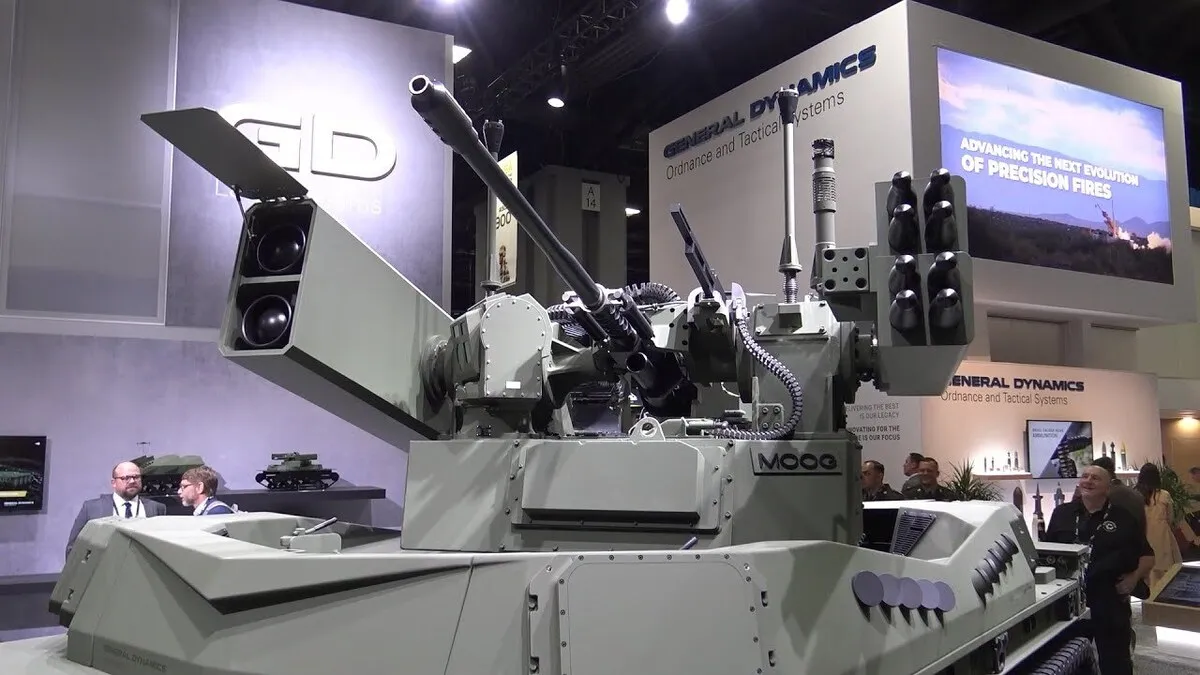
The deadliest weapons and military support systems came from companies such as General Dynamics Ordnance and Tactical Systems, Stelia Aerospace North America, and Pratt & Whitney, among others, supplying surveillance and tracking technology as well as aircraft landing gear.
According to the authors, for the first time two complementary methods were used to track Canadian arms exports: matching commercial shipping data with Israeli tax authority import records from October 2023 to May 2025.
They wrote: “This report reveals a reality very different from the government’s claims—a large and continuous flow of Canadian weapons directly reaching Israel.”
They added that Canada, by continuing to send arms to Israel, is violating both its domestic laws and its obligations under international law.
The report calls on Canada to immediately impose a full, two-way arms embargo on Israel. This would require cancelling all active arms export permits, closing loopholes for transfers via the U.S., banning surveillance and dual-use technologies, and cancelling all contracts and planned purchases of Israeli military goods.
The F-35 Program
One of the report’s key findings is that parts manufactured in Canada by three main companies make up at least $2.1 million of the value of each F-35 fighter jet—a jet designed by Lockheed Martin in the U.S. Apart from NATO and G7 partners and Australia, no country other than Israel has access to these jets.
Yara Shoufani, a human rights expert, said Canadian components have long been known to be critical to F-35 production.
The report identifies the three Canadian manufacturers as:
- Stelia – builds composite panels and precision structural components for the jets.
- CMC – makes Doppler speed sensors for targeting accuracy.
- Nexeya – supplies modular product testers to ensure jets are ready for combat.
Almost all of these parts went to Elbit Systems.
Shoufani said: “When you consider that Elbit, as a weapons manufacturer, is synonymous with genocide around the world, it’s deeply concerning. The fact that the Canadian government allows these Canadian-based manufacturers to send weapons parts to Israel’s largest arms maker should be setting off alarm bells.”
On July 13, 2024, Israel deployed an F-35 fighter jet to drop three 2,000-pound bombs on Al-Mawasi in Khan Younis—a southern Gaza area explicitly designated a “safe zone.” The strike killed at least 90 Palestinians and wounded 300 others.
The report cites this attack as an example of the scale of destruction only this specific fighter jet can carry out. While the F-35’s operational capability depends on a complex international supply chain, the report notes: “The F-35 cannot conduct airstrikes without Canadian parts.”
How these weapons reach the occupied territories
The authors traced Canadian arms exports not only to the primary recipient, Elbit Systems, but also to major Israeli companies such as Elta Systems and SNC Aviation.
They note that Canada’s foreign minister ultimately signs off on all export permits to any foreign entity, and such permits are typically valid for at least two to three years from the date of approval.
The report states that military goods flow between Canada and Israel in two ways:
1. Direct commercial exports from Canadian companies to Israel.
2. Indirect exports, in which Canadian weapons are routed via the U.S. before reaching the occupied territories.
The second route allows Canada to exploit a legal loophole exempting such transfers from its own licensing requirements—requirements that prohibit providing military support to parties likely to commit war crimes.
Shoufani added that of the 100 direct shipments they identified, 67 involved loading military cargo onto passenger aircraft.
She said: “So here we’re talking about major airlines like Lufthansa, Air France, Air Canada, Air Transat—basically, weapons parts being loaded onto planes that are also carrying passengers to their destinations.”