Baghaei: European parties have no authority to trigger the Snapback mechanism
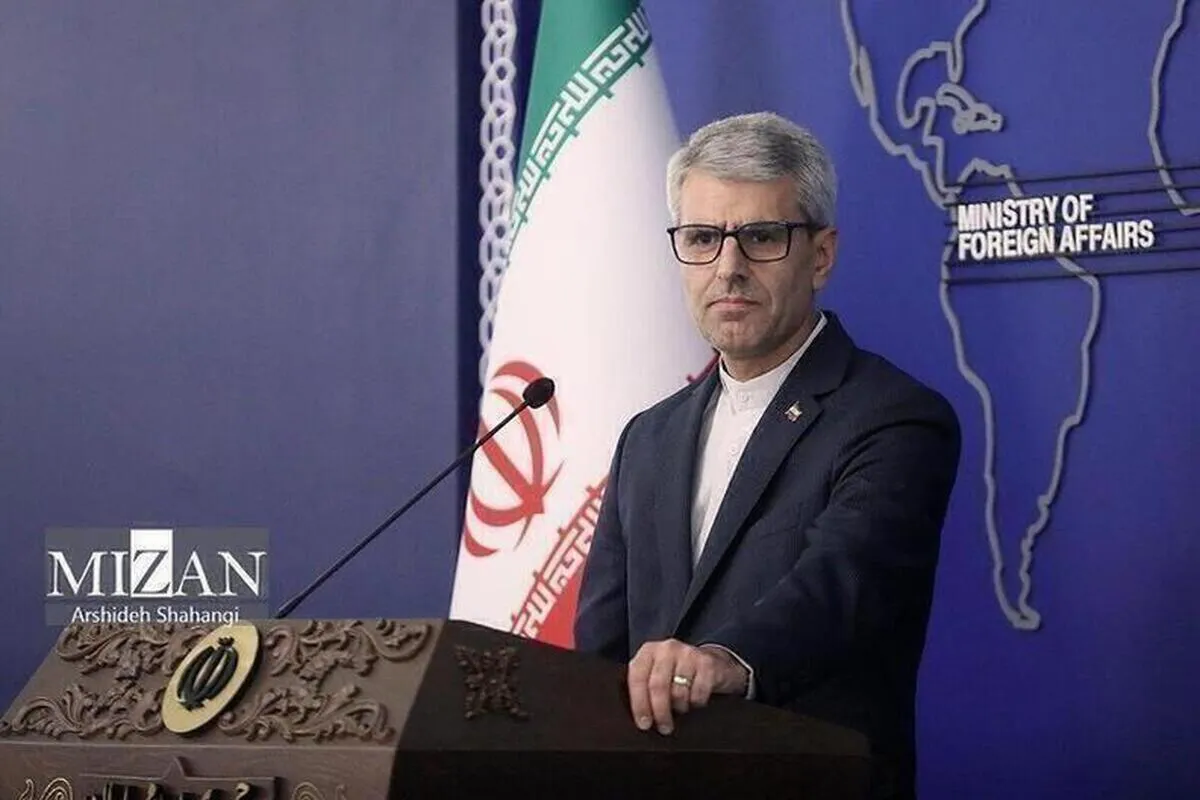
On July 27, 2025, Esmail Baghaei, the spokesperson for Iran’s Foreign Ministry, addressed domestic and foreign media in his weekly press conference, responding to questions regarding the latest developments in foreign policy.
At the outset of the briefing, Baghaei said: “We are witnessing the continuation of the Zionist regime’s crimes in Gaza, especially through the use of starvation as a weapon, in pursuit of their plan to erase the Palestinian people and state.”
He added: “Last week, we made various efforts to stop the crimes in Gaza, including consultations with regional officials and international organizations to seek solutions and halt the atrocities. We do not recognize the Zionist regime; our policy is principled—the Zionist regime was founded on the occupation of Palestine.”
On the topic of negotiations with the European Troika, Baghaei said: “The negotiations focused on lifting sanctions and nuclear discussions. It is natural for the Europeans to present their own narrative, but that narrative does not necessarily align with what actually transpired.”
He stressed: “The European parties are not qualified to invoke the snapback mechanism. We have clearly conveyed our position to the European sides.”
The Foreign Ministry spokesperson added: “For some time, the European parties have attempted to use a provision in Resolution 2231 as a pressure lever. This tool is ineffective; in fact, they undermined the credibility of this resolution by supporting aggression against Iran. Since then, a fundamental question has emerged: Can they still consider themselves part of the JCPOA after violating their commitments?”
He continued: “The Europeans know well that any misuse of this mechanism will face a decisive reaction from us, further complicating the matter and placing the non-proliferation regime under serious strain. They must understand the consequences of such an action, which would violate Resolution 2231.”
Baghaei further stated: “Our discussions with the European parties center on lifting sanctions and the nuclear issue. Raising unrelated topics only reflects the Europeans’ confusion. Given the recent aggression against Iran, we are now more determined than ever to maintain strong defense capabilities. It has become clear that we must rely on our own military strength for defense, and we will not negotiate on this matter under any circumstances.”
Responding to remarks made by U.S. Special Envoy Robert Malley’s European deputy (likely referring to Witkoff), Baghaei said: “We currently have no plans to negotiate with the United States. When the interests and priorities of the Islamic Republic require it, we will make decisions accordingly.”
Regarding Donald Trump’s claims of delivering a ‘heavy blow’ to Iran, he said: “These statements are made for domestic political consumption. Our position on the nuclear issue and uranium enrichment is crystal clear.”
Baghaei added: “Our greatest guarantee is power. The fact is, the United States committed an international crime and violated the UN Charter, dealing a severe blow to the principle of diplomacy and negotiation.”
He noted: “It is unprecedented for two countries to be engaged in negotiations, while one side encourages its proxy to launch military attacks on the other—especially when these facilities are under IAEA supervision. Our negotiators have made it clear that any negotiation must be based on a change in the other party’s behavior. Negotiations must not be a tool of coercion. When we are confident that our interests will be served through talks, we will not hesitate to engage.”
On the continuation of Iran’s enrichment activities and the entry of IAEA inspectors, Baghaei stated: “Our position on enrichment has been clearly outlined by the Foreign Minister. If Iran is to remain a member of the NPT, it must enjoy the rights stipulated under the treaty. The continuation of Iran’s nuclear program, including enrichment, is not in question.”
He added: “We are awaiting the Atomic Energy Organization’s report on the status of the targeted nuclear facilities.”
The Foreign Ministry spokesperson also said: “We remain a party to the Safeguards Agreements. A new protocol for cooperation with the IAEA is being drafted based on the parliamentary resolution. Within the next two weeks, an IAEA official will travel to Iran.”
Responding to a question from Mizan about Iran’s consultations with Islamic countries regarding urgent action to halt the Zionist regime’s crimes in Gaza, and the request for a special meeting of the Organization of Islamic Cooperation (OIC), Baghaei said: “Precious lives are currently being lost in Gaza due to starvation—or worse, being gunned down while standing in line for food. This is even more painful.”
He emphasized: “While our focus is on Islamic and regional countries—due to both religious and geographic affinity with the oppressed people of Palestine, and because we have a mechanism like the OIC—we also recognize that helping the people of Palestine is an international duty and responsibility.”
Regarding legal action against the U.S. and the Zionist regime for acts of aggression against Iran, Baghaei said: “The first step in this matter is the documentation of crimes and the registration of related evidence. We began this process on the very day the Zionist regime launched its aggression.”
He added: “We have submitted over 150 pages of documentation to the United Nations and relevant organizations. A special committee has been formed within the Presidential Legal Affairs Office, with the Foreign Ministry playing an active role.”
Regarding Israel’s attempt to accuse Iran of involvement in assassinations of U.S. officials, Baghaei said: “This disinformation campaign started about seven or eight months ago, and we have already clarified our position.”
He continued: “The Zionist regime shamelessly tries to invert reality. It is they who have targeted our citizens. Their attempts to play the victim are well understood. You cannot use vile and insulting language against officials of a respected nation and expect silence in response. Issuing vague fatwas without specific context reflects the anger of the religious community in Iran and abroad.”