Anti-Iran performances by Mai Sato and Sara Hossain: Special coordination for selective concerns
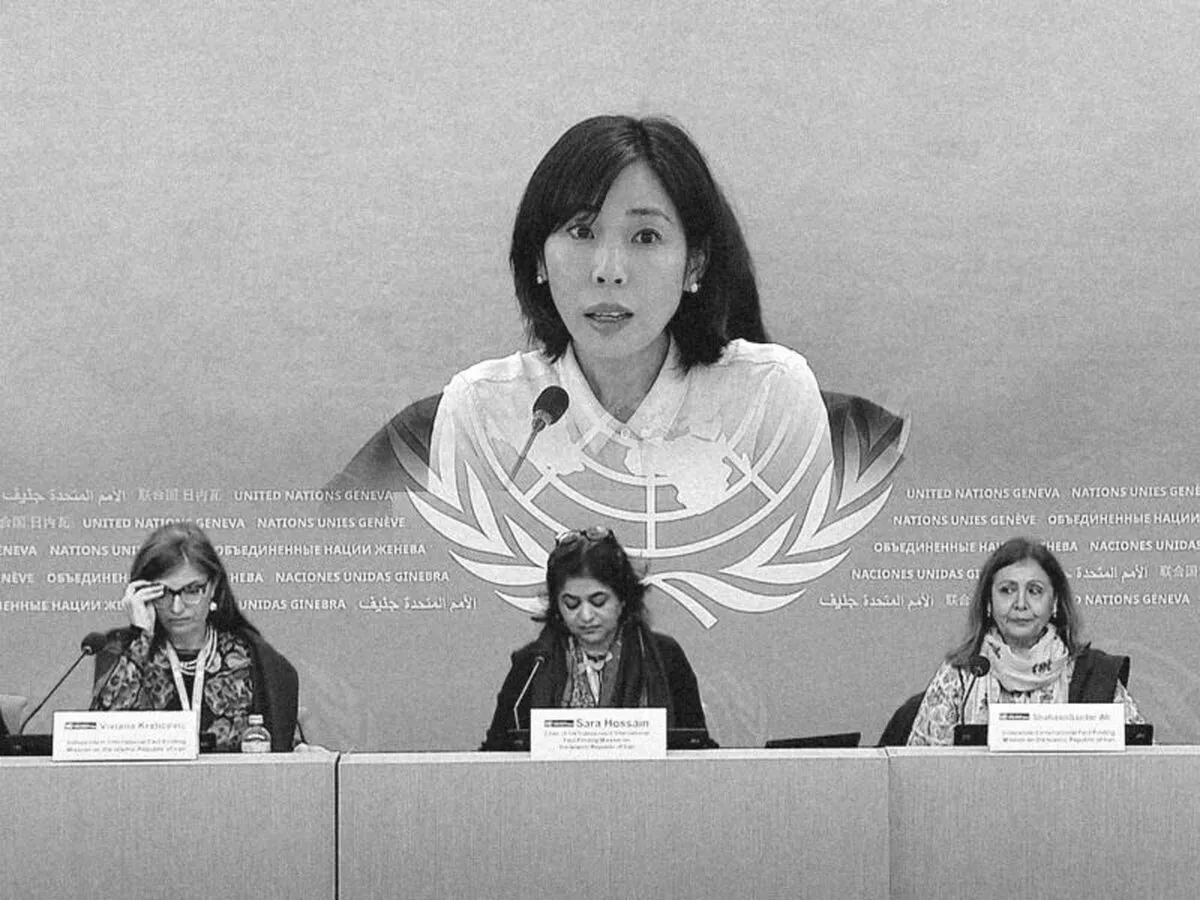
The recurring combination of phrases like “serious concerns” and “new report” in the publication of statements by Mai Sato—the so-called UN Special Rapporteur on Human Rights in Iran—and Sara Hossain—the so-called Chair of the UN Fact-Finding Committee on Iran—reveals a familiar anti-Iran script driven by political motives rather than facts.
Recently, hostile and anti-Iranian media outlets once again reported on “new reports expressing serious concerns” about what they called human rights violations in Iran—another episode in a long-running show of selective and theatrical concern for the Iranian people’s human rights.
The Third Committee of the UN General Assembly met in New York on Wednesday, October 30, 2025, where Sara Hossain presented her “new report” on the findings of the so-called Fact-Finding Committee regarding Iran’s human rights situation. As usual, this report was based on unfounded claims and baseless accusations circulated by familiar terrorist actors and media outlets.
However, this performance differed from Hossain’s previous ones in a significant way. Her deafening silence regarding the Zionist regime’s aggression against Iran in June–July 2025 was finally broken—but her subsequent statements, which distorted an UN-verified crime, deserve careful scrutiny.
In response to a question about the Zionist regime’s attack on Iran, Hossain adopted a deflective and evasive tone, attempting to turn this blatant act of aggression into yet another platform for leveling accusations against Iran.
She claimed that her committee was mandated to investigate airstrikes by both Israel and Iran, adding that while Iran had responded to her requests, the Zionist regime had ignored them.
Quickly moving on from the issue, she asserted that Israel’s aggression had significantly affected her committee’s work—without offering any explanation of what her so-called fact-finding body had done to address the human rights violations suffered by Iranians as a result of that attack. Instead, she accused some delegations present at the meeting of “double standards,” claiming they had decided their positions before even hearing her report.
The anti-Iran “new report” show staged by Sara Hossain continued, just as last year, with Mai Sato entering the scene—her assigned role being to reinforce Hossain’s narrative through predictable talking points.
In the only factual part of her report, Sato admitted: “The attacks by Israel and the United States on Iran in June 2025 constitute the unlawful use of force and a violation of the UN Charter. The 12-day attacks killed more than 1,100 people, including women and children, and injured over 5,600 others.”
She added: “Targeting nuclear facilities under IAEA supervision should never occur, as it risks catastrophic humanitarian and environmental consequences.”
This brief factual preface—mentioned and then quickly brushed aside by Sato—ultimately served only as a prelude to Hossain’s failed performance.
The scale of this failure became evident in Hossain’s complaints about other countries’ indifference toward her report.
It appears that Sato’s role in this performance was to attract attention and credibility by listing the human rights violations inflicted upon Iranians as a result of Israel’s aggression—without emphasizing the need for accountability—thus providing cover for the repetition of Hossain’s baseless claims.
This biased and anti-Iran collaboration, which began in the summer of 2024 with Sato’s appointment, has repeatedly surfaced in the interventionist and politicized reports produced by both mechanisms imposed on Iran’s domestic affairs.
Although hostile media outlets claimed that international observers had described Sato’s “new report” as one of the most “well-documented” in recent years, the so-called UN Special Rapporteur admitted on X (formerly Twitter) on October 20, 2025, that her main sources were Iran International and the BBC.
It is likely that she merely omitted the name of the Monafeghin Terrorist Group (Mujahedin-e Khalq) from that list—Sato has consistently shown gratitude toward the same sponsors and promoters who facilitated her appointment and amplify her unfounded reports.
These reports have been released while Iran, while rejecting the legality of such imposed mechanisms, has continued to cooperate constructively with international human rights bodies, submitting detailed and documented reports such as the Universal Periodic Review (UPR). At the same time, Iran has consistently provided precise responses to such politically motivated claims.
Asghar Jahangir, spokesperson for Iran’s Judiciary, commented on Sato’s previous report:
“This lady has claimed in her new report that human rights are being violated in Iran. A report built on lies is not even worth responding to.”
He added: “By following the lead of anti-revolutionary elements, she has merely copied and repeated old, discredited claims. In her report, she made only a token condemnation of the Zionist regime’s crimes in attacking Iran—crimes that killed innocent men, women, and children in their homes—showing that such reports cannot guarantee genuine human rights.”
Jahangir concluded: “We hope that the international system and the United Nations, true to their stated mission of promoting global peace and genuine rights for nations, will act on these ideals by appointing fair-minded and realistic experts.”
Ali Bahraini, Iran’s Permanent Representative to the UN in Geneva, responding to the reports by Mai Sato and Sara Hossain at the UN Human Rights Council on March 18, 2025, criticized the formation of the fact-finding committee on Iran, calling the decision political and legally unjustified.
Similarly, Hossein Mozafar, head of Iran’s Special Committee for Reviewing the 2022 Unrest, previously protested the false and accusatory report of the so-called UN Fact-Finding Committee to the Human Rights Council, describing its actions as biased, one-sided, and unfair. He questioned the committee’s involvement in issues beyond its mandate and authority, as well as the accusations it made against Iran.
Although such “serious concerns” about Iran have been repeated for years by these so-called human rights mechanisms, the reactions of various countries and delegations in related sessions show that Iran’s transparency and engagement efforts have played an important role in countering hostile narratives against the country.