Important remarks by the Head of the Judiciary on the publication of distorted and false News in the fight against corruption
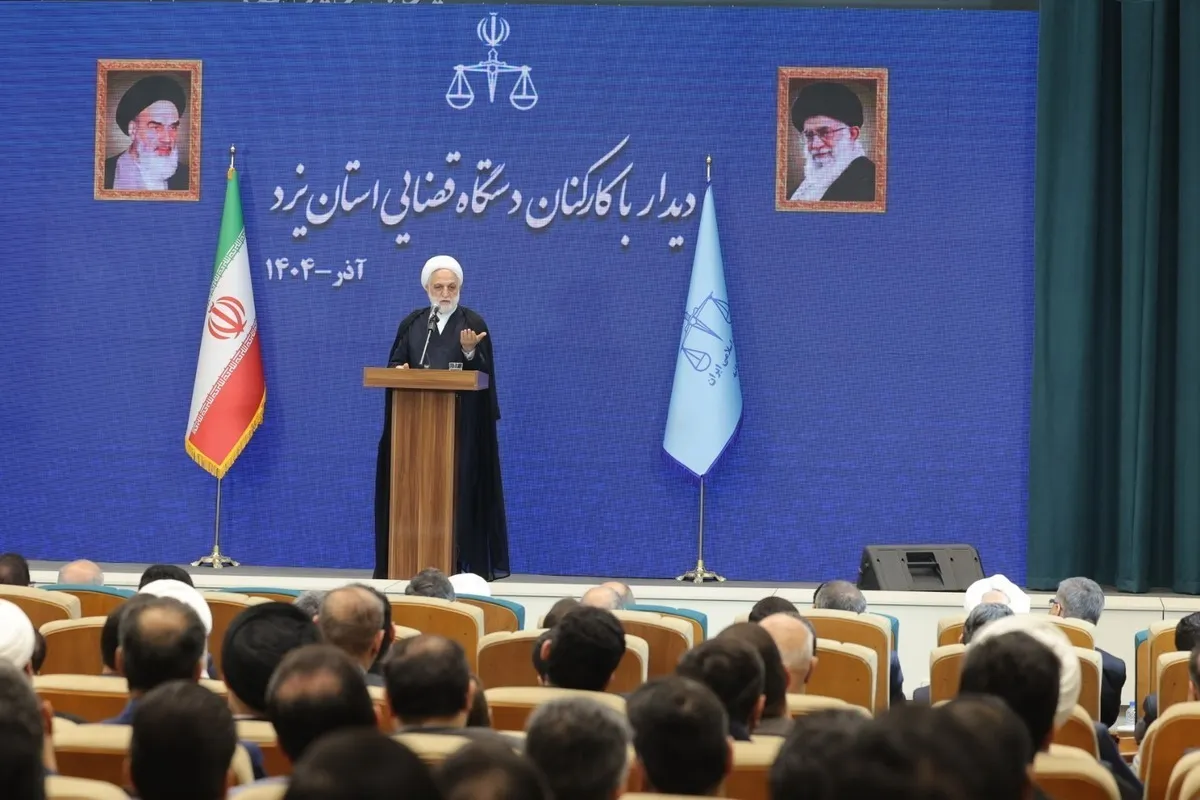
Mohseni Eje’i, during his 47th provincial trip since assuming the presidency of the Judiciary, this morning (Wednesday, December 3), on an unofficial visit accompanied by the senior judicial delegation, entered Yazd Province.
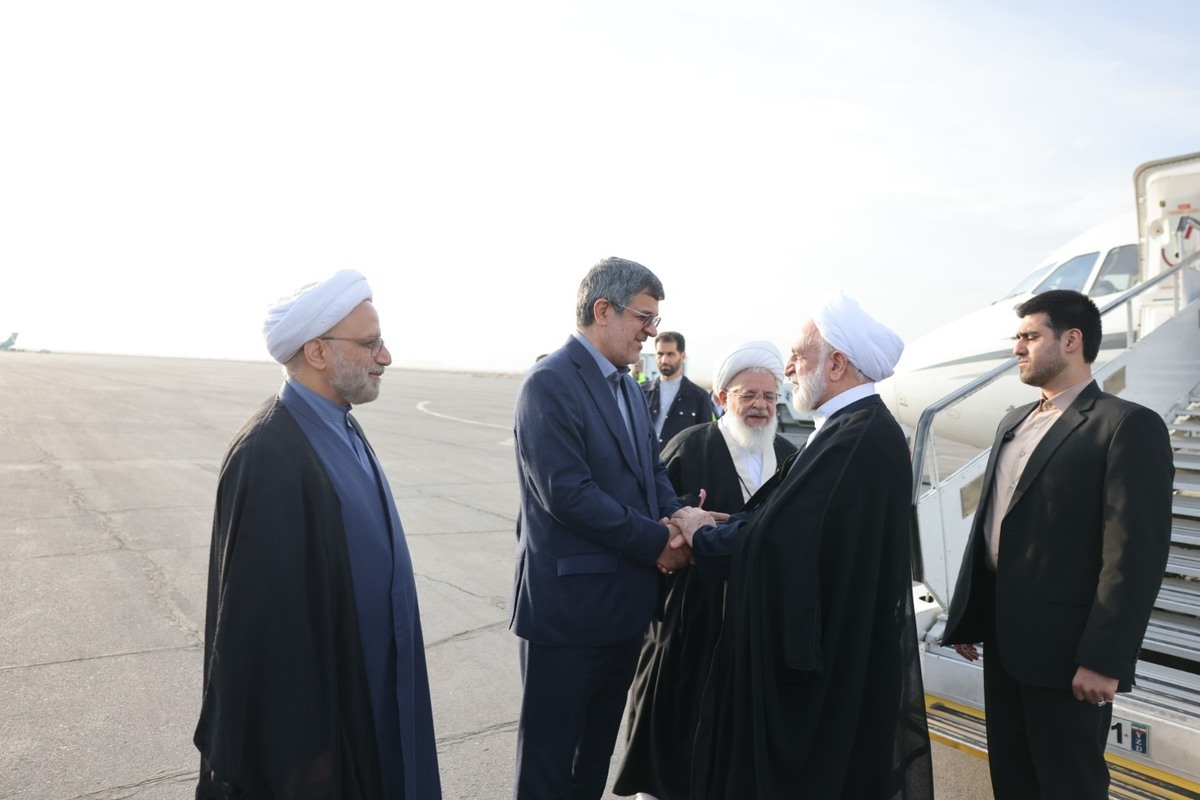
The Head of the Judiciary and other senior judicial officials, during the trip to Yazd Province, will arrange programs aimed at resolving the legal and judicial issues and problems of the people of this province.
Meeting with judges and staff of judicial units, holding a session with provincial officials, and also following up on the implementation of the resolutions of the previous trip of the senior judicial delegation to Yazd, are among the programs of the Head of the Judiciary during this trip to the province.
It is worth mentioning that Mohseni Eje’i, since assuming the presidency of the Judiciary on the 10th of Tir 1400 up to now, officially and at the head of the senior judicial delegation, has traveled to the provinces of Ilam, Qazvin, Khuzestan, Golestan, Razavi Khorasan, Sistan and Baluchestan, Qom, Yazd, South Khorasan, Zanjan, Markazi, Isfahan, Alborz, Kurdistan, East Azerbaijan, Kerman, Ardabil, Bushehr, Hormozgan, Kohgiluyeh and Boyer-Ahmad, and Chaharmahal and Bakhtiari, Semnan, Tehran, Kermanshah, Gilan, Lorestan, West Azerbaijan, Hamedan, and Mazandaran.
The Head of the Judiciary, in the new period, in addition to formal provincial trips which are carried out together with the senior judicial delegation, has also included unofficial and non-ceremonial trips in his work plans; the provinces of Alborz, Isfahan, Hormozgan, Bushehr, Kerman, Razavi Khorasan (2 times), North Khorasan (2 times), Mazandaran, Fars, Golestan (2 times), Khuzestan, Ilam, and Qom are also among the provinces which the Head of the Judiciary has, in recent times and without holding ceremonies and in an unofficial manner, traveled to in order to examine judicial issues in those regions.
Mohseni Eje’i, during the trip to Yazd Province, met with representatives of different groups of the people of this province and, in remarks during this meeting, stated:
“The people of Yazd are characterized by religiosity, hard work, and frugality, and I am very pleased to be present in this province for the second time since assuming the position of the Head of the Judiciary.”
The Head of the Judiciary, continuing and referring to the issue of decisive struggle against corruption, said: “A fight without discrimination and comprehensive against corruption and the corrupt is among the main priorities of the Judiciary; on this path, shouts are also raised, but we do not pay attention to these shouts. Of course, we emphasize that our fight against corruption must not be slogan-based; that slogans of fighting corruption be given and in the name of fighting corruption, the economic security and investment in the country be damaged is certainly not a correct and proper matter.”
The Head of the Judiciary stated: “For the past 4 years that I have assumed the responsibility of the presidency of the Judiciary, my effort has been that I combine the issue of firm and non-discriminatory fight against corruption with the issue of providing and guaranteeing economic security and investment.”
The Head of the Judiciary emphasized: “We have a firm emphasis on a knowledgeable, professional, and comprehensive fight against corruption and the corrupt, and we also believe that in this critical path all legal aspects of the matter must be observed and taken into account.”
The Chief Justice stated: “On the path of confronting corruption, sometimes some matters are also published which are incorrect and wrong. For example, some time ago it was announced that a fuel smuggler, within two hours, paid a fine of 11,000 billion tomans; I immediately followed it up; because fundamentally there is no such banking capacity for such a payment, and it is not such that a convict brings this amount of money and we do not investigate its source; in any case, it became clear that the published matter was incorrect; then a correction was issued by FARAJA that the intended amount was 11,000 billion rials; I followed that as well and it was determined that it was incorrect. This is an example of distorted and false news in the field of fighting corruption. In short, we cannot in the name of fighting corruption publish every incorrect and imprecise matter.”
Mohseni Eje’i, continuing and referring to the statements of a student who in this session objected to the issue of banks’ imbalance, said: “That concerned student speaks correctly and rightly complains about the imbalance of some banks, but do you know how much I have followed this up and shouted that this much has also been achieved and one of the imbalanced banks has been subjected to the application of the law and other related legal matters in this regard are in the course of being carried out?”
The Head of the Judiciary, continuing and referring to the plots of the enemy against the Islamic Republic of Iran, said: “The enemy had designed plans for the year 1404 and with a special hope had launched the 12-day war. We suffered damage in this war and lost great and dear ones, but pay attention that the enemy in the recent imposed war did not reach any of its goals.”
The Head of the Judiciary, at the end and referring to the issue of the development of dispute resolution, stated: “The Judiciary has full readiness so that the filed cases, as much as possible, be concluded in frameworks such as arbitration, mediation, and dispute resolution and be led to reconciliation.”
Mohseni Ejei, during the trip to Yazd Province, among the employees of the Judiciary of this province, in remarks, while referring to the importance of selfless service to the system and the people, stated:
“We must use our legal position to the utmost in the direction of service to the people and the system. This position that is at our disposal is in the sense of a success for service. If we do not serve the people and the system, in the end, we will be losers and we will reproach ourselves.”
The Head of the Judiciary, continuing and referring to the importance of the protective and physician-like approach in the matter of the protection and intelligence of the Judiciary, said: “The first and last duty of the protection and intelligence of the Judiciary is the safeguarding and protection of each and every employee and the judicial set.”
He added: “This matter applies in dealings inside and outside the Judiciary and regarding the officers and the protection and intelligence of the judiciary. We have repeatedly emphasized that when a report concerning the slip of an individual is sent, in the first step they should go after the individual who has slipped and with protective and physician-like measures prevent his fall; one must not allow a person to continue his slip until he falls into the abyss; one must not spread an intelligence umbrella over him and his family in order to find another slip from him; these cases are sometimes against Sharia and against the law.”
The Head of the Judiciary, continuing and while emphasizing the necessity of honoring those who refer, stated: “Good morals with the people have very many effects and blessings. We must honor those who refer under all circumstances. I have gone through all judicial stages and positions and I know that in some cases, especially at the time of handling heavy cases, honoring those who refer and respectful behavior toward all parties to the case is somewhat hard and difficult, but pay attention that ‘the best of deeds are the hardest ones.’”
The Head of the Judiciary, continuing and referring to the importance of speeding up in advancing the affairs of the people, stated: “Judges and judicial staff, as much as they can, should speed up in advancing the judicial and legal affairs of the people. Of course, I am aware that sometimes the delays and prolongations that occur are not due to the behavior of the judges, but rather expert opinions arrive late, or there is a need for financial tracing, or the summoned person does not appear at the judicial authority at the appointed time, and so on; I accept all these matters, but nevertheless I emphasize that judges, in advancing the judicial affairs of the people, while applying utmost accuracy, should also have speed and haste; if a matter is referred to expertise, a time should be set for the expert panel; if an inquiry is made from an institution, a time should be set for that institution. It should not be such that the expert authority and the inquiry authority respond to the judicial authority whenever they feel inclined. Observing these points will certainly be effective in accelerating the advancement of the judicial affairs of the people.”
The Chief Justice stated: “Judges should also have utmost accuracy in issuing detention orders; if sending an accused to prison is not necessary, judges should in such a way devise and manage that another order other than a detention order be issued for that accused. By no means should we say that going to prison for one night does not have any problem; sometimes going to prison for one night, changes the family life of an individual.”
Mohseni Eje’i stated: “Judges and the relevant judicial officials should also have special attention and consideration toward the solidity of verdicts; if an authority repeatedly issues rulings that are clearly against Sharia, or the rulings of an authority are repeatedly overturned in higher authorities, the relevant judicial officials should carry out firm examinations and follow-ups in this regard and find the flaw of the work.”
The Head of the Judiciary stated: “Judges and the relevant judicial officials should also exercise a great deal of care and precision in converting punishment sentences; sometimes a punishment of one year of imprisonment is converted into a very small amount of fine which is completely subjected to ridicule. Sometimes alternative imprisonment sentences are issued which fundamentally do not have the capability of execution.”