UN resolution on extending the lifting of sanctions on Iran fails
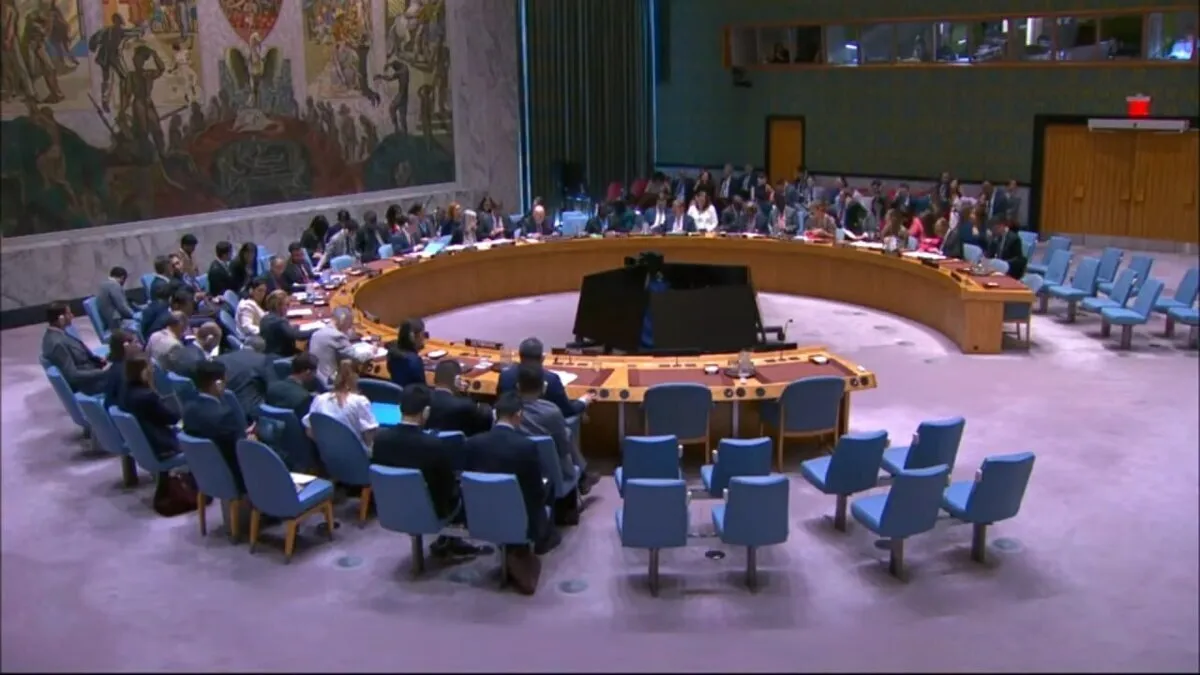
The Security Council session, chaired this month (September) by South Korea as the rotating president, convened to discuss a draft resolution on the “continuation of lifting sanctions against Iran.”
Russia’s UN envoy, Mikhail Ulyanov, said at the start of the meeting: “The signatories of the JCPOA have no right to reinstate UN sanctions against Iran. The European troika’s attempt to restore sanctions on Iran has no legal basis. Europeans are rejecting diplomacy regarding Iran’s nuclear program. There is no legitimacy for reimposing sanctions on Iran.”
The UK representative said: “The decision of the three European countries to trigger the snapback mechanism against Iran is justified, legal, and consistent with Resolution 2231.”
The French envoy stated: “Today’s session enables the proper implementation of the Iran nuclear deal and Resolution 2231; Iran has enriched uranium to 48 times the permitted level. France and other European countries have fulfilled their commitments under the Iran nuclear agreement.”
He continued: “Iran must allow IAEA inspectors access to sites; the Non-Proliferation Treaty is under threat. The IAEA is unable to determine the fate of Iran’s 60% enriched uranium.”
Russia’s ambassador said: “The draft resolution under discussion today directly violates Resolution 2231 and the Iran nuclear deal.”
China’s UN representative stated: “Iran’s efforts must be recognized, and sanctions should be suspended for a period. We must focus on a political solution to the Iranian nuclear issue and create conditions for it. The U.S. should reopen space for negotiations with Iran. U.S. attacks on Iran’s nuclear facilities have undermined the talks.”
The UN representative added: “The U.S. vote against lifting sanctions on Iran does not mean rejecting the diplomatic path.”
The U.S. envoy said: “President Trump has repeatedly emphasized America’s continued willingness for direct, time-bound talks with Iran. The international community should not accept Iran’s insufficient efforts on its nuclear file.”
The UN Security Council failed to adopt the draft resolution to extend the lifting of UN sanctions on Iran; the resolution did not pass with 4 votes in favor, 9 against, and 2 abstentions.
The rejection of South Korea’s resolution (as Security Council president) to extend the lifting of UN sanctions on Iran means that the snapback mechanism, which prevents the lifting of sanctions, remains in place.
Barak Ravid, Axios correspondent, wrote on X: “The UN Security Council has decided to reimpose UN sanctions on Iran that were lifted under the 2015 nuclear deal. These sanctions will take effect on September 27 at 8 p.m. New York time.”