Baghaei: Iran does not recognize Europe’s right to trigger the Snapback mechanism
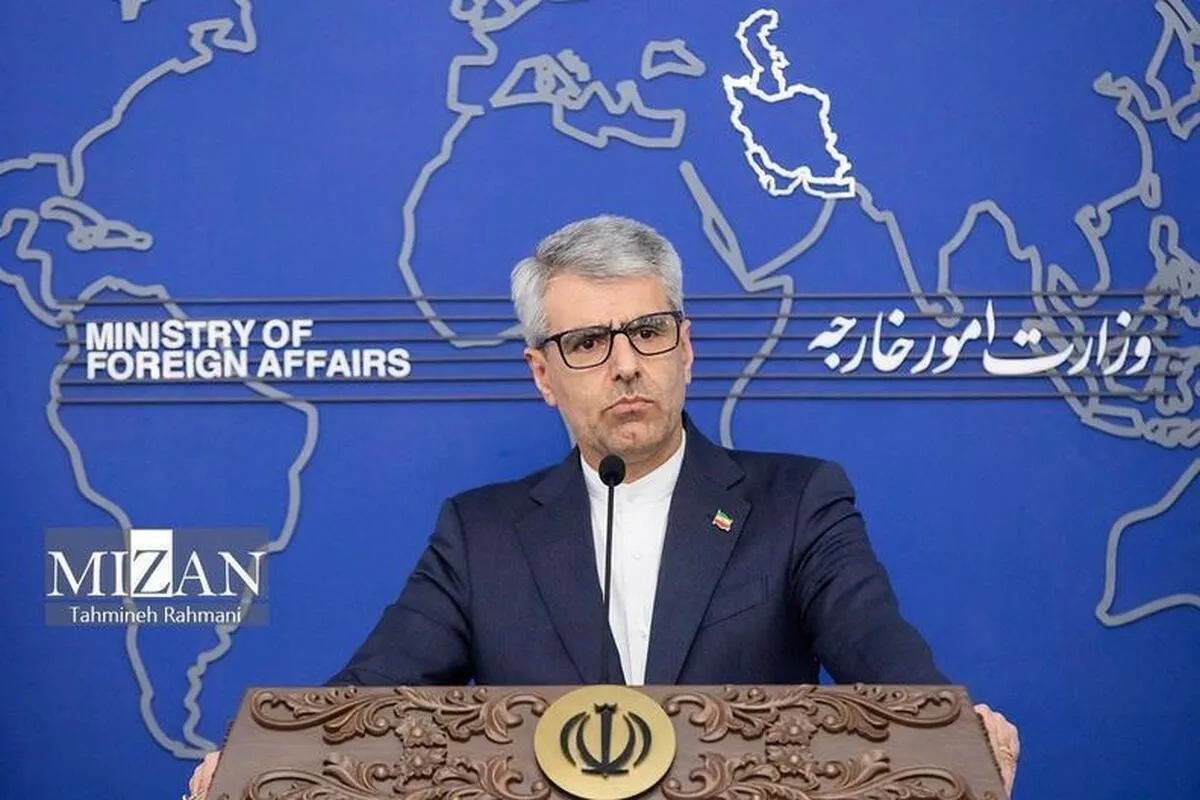
At the beginning of the press conference, held on the occasion of National Doctors’ Day, Baghaei honored the memory of five physicians killed in an Israeli strike. He also condemned the ongoing genocide in Gaza, noting that just yesterday five journalists were massacred there.
He emphasized: “Once again it has been proven that the Zionist regime has a problem with truth and public awareness regarding its crimes in Gaza and the West Bank. We expect international bodies, especially international criminal and judicial courts, to treat this as a clear case of war crimes.”
Regarding the recent emergency meeting of the Organization of Islamic Cooperation (OIC) in Jeddah, Baghaei stated: “This extraordinary meeting of foreign ministers, initiated by Iran and several other countries, was held yesterday. It is crucial to keep the issue of Palestine alive within the OIC. Such decisions should be assessed in their own context. The main reason this organization was established was to support the Palestinian right to self-determination, and in the past two years several such meetings have been held.”
Turning to the European threats to activate the snapback mechanism and the Russian draft resolution on the matter, Baghaei said: “We do not underestimate the snapback mechanism; we are fully aware of its negative consequences. We are concerned about its implications, but we will not allow it to become a tool of psychological warfare against our citizens. At the same time, we do not recognize the Europeans’ right to trigger the snapback mechanism. We have a clear plan to prevent this. Today’s Geneva talks, following Mr. Araghchi’s telephone consultations with his European counterparts, as well as with Callas, China, and Russia, are part of this effort. This has been on our agenda for some time, and we hope the efforts will be fruitful.”
He further noted that Iran is aware of Russia’s draft resolution regarding the JCPOA. “We are currently negotiating with the three European countries on sanctions relief and the status of UN Security Council Resolution 2231, in exchange for confidence-building measures regarding the peaceful nature of Iran’s nuclear program. The substance of these negotiations has not changed.”
Baghaei stressed: “We are not seeking to impose costs on any party, but we have never overlooked any tool or option in safeguarding national interests. We are in contact with China and Russia simultaneously with the Europeans. Our focus is on securing national interests and preventing costs from being imposed on the country. We are aware of both our own capabilities and the potential of Russia and China to help achieve our goals.”
On Australia’s recent accusations against Iran, Baghaei said: “Any inappropriate or unfounded diplomatic action will be met with a reciprocal response. Since this is a new matter, we are reviewing it and preparing a reply. However, this accusation is completely baseless. The concept of antisemitism has no place in our culture, religion, or history; it is a Western and European phenomenon. This scapegoating is an attempt to justify anti-Iranian policies. It appears to be influenced by Australia’s domestic developments, particularly the massive protests against genocide in Palestine. This move is against diplomacy and against relations between the two nations.”
On Iran’s relations with the International Atomic Energy Agency (IAEA), Baghaei said: “Our relationship with the Agency continues. We remain a member of the NPT and the Comprehensive Safeguards Agreement. Last week, senior officials from Iran and the Agency met in Vienna. We are discussing how to structure our future engagement. What happened to our nuclear facilities cannot be dismissed — the U.S. and the Agency bear responsibility. Previously, the Agency had not been involved in inspecting the targeted facilities, which is why new mechanisms must be designed.”
Addressing the case of Mahdieh Esfandiari, the Iranian citizen detained in France, Baghaei explained: “The Foreign Ministry has undertaken significant efforts regarding this case, though some have overlooked our months of work. The Consular Department has pursued this matter seriously, and the Iranian Embassy in Paris is consistently following up. The most recent consular visit with Ms. Esfandiari took place on August 18, and our colleagues remain in regular contact with her and her lawyers. As of the latest development, conditional release has not been approved. We maintain that the judicial process has not been fair, and we have not been provided with reasonable or legal grounds for her detention.”