The devastating consequences of malnutrition and starvation on Gaza’s population
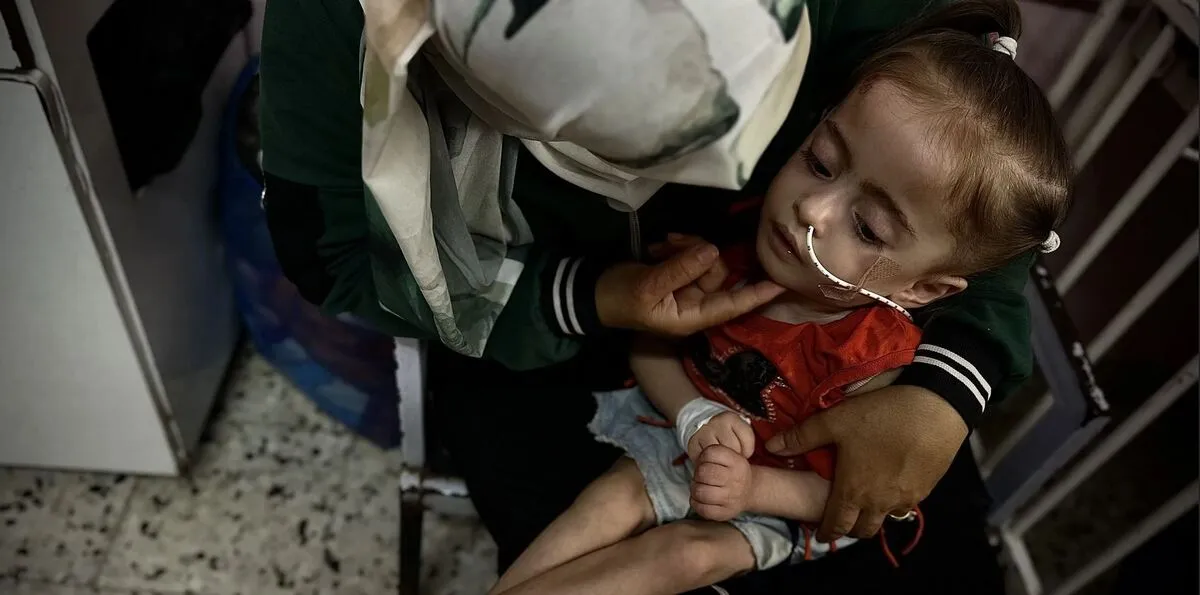
Since the beginning of the Israeli offensive on Gaza in October 2023, the blockade has imposed severe hunger on the people of Gaza. This situation intensified sharply after March 2025, when Israeli forces placed stricter limits on the already minimal aid allowed into the territory. Since then, hundreds of men, women, and children have died from severe malnutrition.
Doctors survive daily on meager scraps of bread and oil, often resorting to seawater for the electrolytes their bodies desperately need. Journalists are weakened to the point of being unable to perform their duties, and men risk their lives at humanitarian aid distribution centers due to extreme physical frailty.
Severe malnutrition of this magnitude is historically well-documented, with clear physiological consequences: organ systems fail one by one, victims succumb to exhaustion, and the body begins to consume itself to the point of death.
Yet what is often overlooked is that recovery from starvation can be equally devastating. Historically, one of the earliest recorded cases of this phenomenon was during the siege of occupied Jerusalem. This condition, now known as refeeding syndrome, describes a rapid and dangerous metabolic shift from a catabolic to an anabolic state.
During starvation, the body suppresses insulin and relies on breaking down fat and muscle, depleting essential intracellular ions. Upon resumption of nutrition, insulin spikes, driving glucose and electrolytes into cells. This sudden cellular shift dramatically lowers blood levels of phosphate, potassium, and magnesium. Insulin also causes sodium and water retention in the bloodstream, creating fluid overload. If untreated, these changes can devastate the heart, lungs, nerves, and blood, leading to arrhythmia, respiratory failure, and death.
It is crucial to note that refeeding syndrome is not merely “eating too many calories too quickly.” It is a metabolic shock. Controlling food intake alone is insufficient; patients require careful, planned medical management starting with electrolyte and vitamin supplementation before nutrition is resumed.
In the context of the genocide in Gaza, such care is almost unimaginable. The medical infrastructure is collapsed, doctors treat only urgent cases, anesthesia drugs are nearly exhausted, and vinegar is sometimes used to disinfect wounds. Children’s limbs are amputated while fully conscious and in agony. This is not a system capable of remotely rehabilitating two million starving individuals.
The Israeli regime deliberately imposes these conditions by blocking medical supplies and violently targeting healthcare workers, ambulances, and hospitals. Tragically, it is impossible to rely on the starving themselves to manage refeeding; hunger alters the mind, creating obsessive dependence on food.
Therefore, international pressure on Israel to allow immediate entry of medical equipment, laboratory facilities, and specialized teams into Gaza is critical. Equally important, Israel must halt its attacks on healthcare workers and medical facilities—an action as vital as the delivery of aid itself.