Water Apartheid: Gaza’s struggle for survival under Israeli blockade
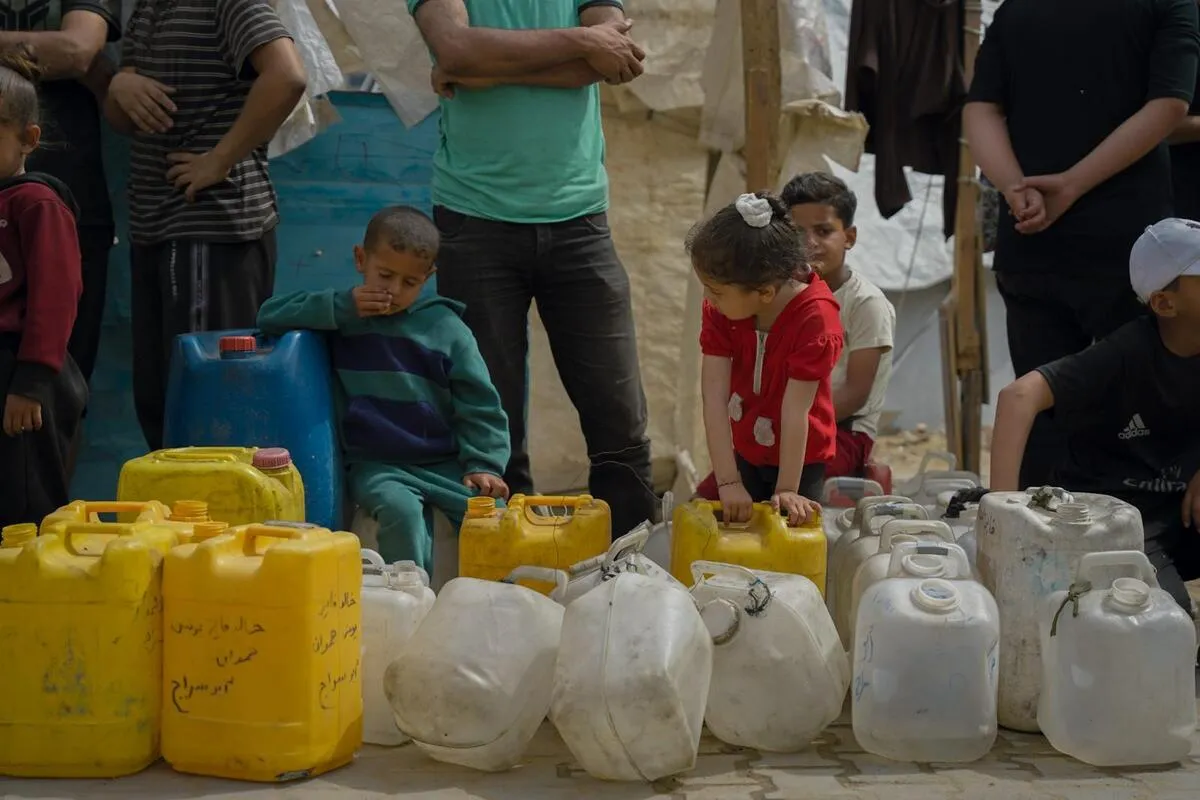
After decades of occupation and nearly two decades of blockade, the Gaza Strip is now facing what Israel’s Defense Minister described at the start of the war as a “complete siege,” with water, food, energy, and fuel cut off from its residents.
Around 2.3 million Gazans are struggling to survive, while even before the war, 70% of Gaza’s households were classified as “food insecure” and unable to meet their daily needs.
The water and agricultural situation has long been complicated by repeated airstrikes, occupation, and the blockade. According to The Conversation, Israel controls all water resources across Palestine.

Israel’s national water company extracts water from the coastal aquifer beneath Gaza’s bedrock to irrigate large-scale, concentrated agriculture in the occupied territories, then pipes water into Gaza and sells it back—yet even this drinking water supply has now been cut off.
What remains of the aquifer or other groundwater is contaminated with untreated sewage and nitrates? Over-extraction for Israeli use and irrigation has led to seawater intrusion, causing extremely high salinity levels that render the water unfit for human consumption.
Without fuel for pumps, water extraction is impossible, and the municipal desalination plant—which once provided 15% of Gaza’s water—has been shut down.
Even before the current crisis, Gazans struggled to access enough safe drinking water. Around 90% of Gaza’s water comes from the coastal aquifer, which stretches along the eastern Mediterranean coast from Egypt, through Gaza, and into the occupied territories.
However, due to seawater intrusion, over-extraction, and contamination from sewage and chemicals, this water is salty and polluted. As a result, Gazans rely on small desalination units and private water tankers, which can be costly and pose additional health risks.
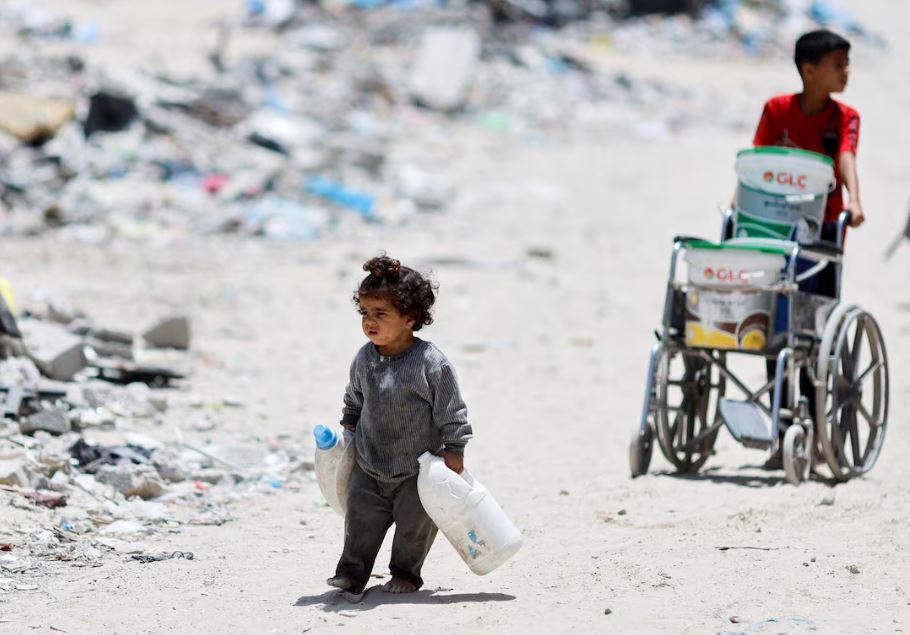
Water in Palestine is not a scarcity issue but a distribution problem. Israel exercises direct control over all water resources in the West Bank and significant indirect control over Gaza’s water resources. Israeli authorities extract up to 86% of the potential yield from the mountain aquifer—which lies mainly beneath the West Bank and is divided into several groundwater basins.
In 1967, Israel issued several military orders aimed at controlling West Bank water resources and preventing Palestinians from drilling new wells or building water infrastructure without Israeli permits. These policies have led to deliberate underdevelopment of Palestine’s water sector.
The right to access water is a fundamental human right, addressed in numerous international and regional treaties and conventions.
As an occupying power in the occupied Palestinian territories, Israel has specific obligations under international humanitarian law (IHL) as outlined in the 1907 Hague Regulations and the 1949 Fourth Geneva Convention.
The Hague Regulations prohibit an occupying power from exploiting the resources of occupied territory for the benefit of its own civilian population. The Geneva Convention requires Israel to take responsibility for the welfare of the Palestinian population under its control, ensuring that civilians have access to basic necessities for survival—including access to water—or are allowed to secure it themselves.