Israel’s silent campaign of abductions in southern Syria
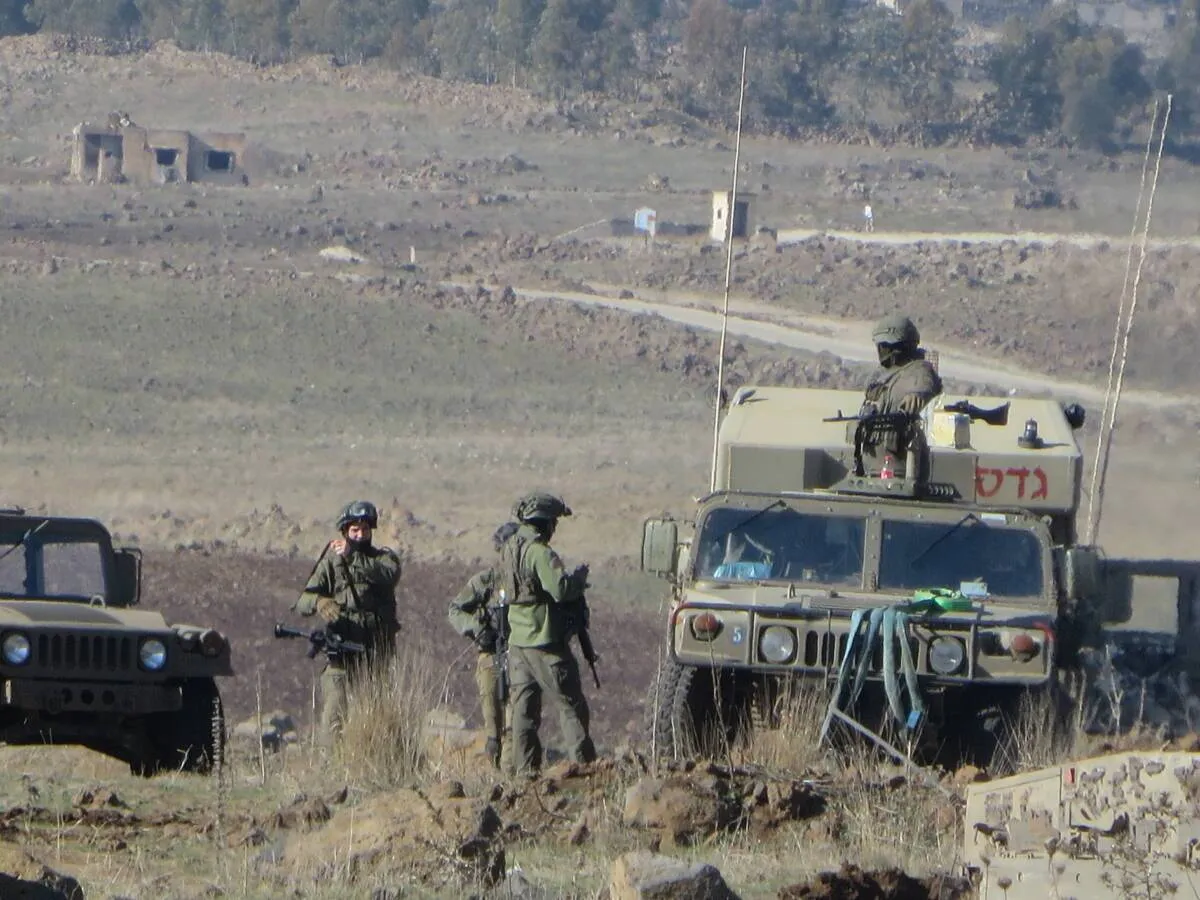
Since the fall of President Bashar al-Assad’s government and the rise of Abu Mohammad al-Jolani’s rule in Syria over the past year, the country has effectively become an open arena for Israeli operations. In addition to the complete destruction of Syria’s military capabilities, Israel has continued to expand its occupation inside Syrian territory. Over recent months, notable changes have occurred in Israel’s operational methods in southern Syria, including various forms of military and security intervention.
These measures include expanded aerial surveillance and large-scale assaults, along with the establishment of checkpoints at key road entrances in Quneitra and Daraa, as well as on the road leading to dams near the al-Bariqa Dam in Quneitra.
These systematic Israeli movements are part of broader efforts aimed at consolidating control over southern Syria following the fall of the Assad government. What has become particularly striking in recent weeks is the sharp increase in the number of Israeli checkpoints across southern Syria.
Abduction of Syrian civilians
Another issue carried out quietly by Israel in southern Syria—away from major media attention—is the continuous abduction of Syrian civilians from villages and towns across the region. Some of these individuals are held for short periods, while others remain in Israeli detention for lengthy and indefinite terms.
The mother of Mohammad Mohsen Ahmad, a young man from Quneitra province who was abducted by Israeli forces about ten months ago, told Al-Araby Al-Jadeed that she, her husband, and their children continue to endure severe hardship under Israeli aggression and occupation.
Following Mohammad’s abduction, Israeli forces even prevented his family from returning to their home in rural Quneitra. Mohammad is one of dozens of young Syrians abducted during Israeli attacks in recent months across areas in the Damascus countryside, Daraa, and Quneitra.
His family currently lives in the Jdeidet al-Fadl area near Damascus and fears returning to their home in Quneitra’s countryside. Jamila Mohammad Dhiban Saleh, Mohammad’s mother, said the Israeli army abducted her son twice, with the latest incident occurring in February 2025 while he was sleeping at home.
She recounted: “At two in the morning, while we were all asleep, Israeli occupation forces stormed the house, broke down the door, terrified everyone, and then abducted my son Mohammad, taking him to an unknown location.”
Saleh Ahmad, Mohammad’s father, said his son has three children and is the family’s sole breadwinner.
“Our situation became far worse after he was taken. I had already lost two sons before—Mohammad is my only remaining son,” he said.
The father of a 21-year-old Syrian from Tarnaja in Quneitra, who is also being held by Israeli forces, said:
“My son was arrested at an Israeli checkpoint on June 13 at 11 a.m. and transferred into the occupied Palestinian territories. Since then, we have had no news of him.”
He added: “We tried desperately to find out anything about our sons, but failed. The only thing we know is that they are being interrogated without any formal charges. We contacted the Red Cross, but it was to no avail. All we want is for our children to return home and to hear their voices again.”
The uncertain fate of dozens of abducted youth
Fadi al-Asmaei, editor-in-chief of the Golan Media Foundation, said the organization has documented the abduction of 39 Syrian civilians by Israeli occupation forces, which continue their attacks. These cases have been registered with the full names of the abducted individuals and the dates of their abduction. Minors are also among those taken.
He added that Ahmad al-Mousa, the foundation’s lawyer, has begun officially documenting the names of abducted Syrians and following up on their cases in coordination with relevant international institutions as part of human rights efforts aimed at uncovering their fate and ensuring their legal and humanitarian rights.
The media foundation called on the families of abductees to contact official and international bodies and human rights activists to document their children’s cases and demand their immediate release through legal channels.
Palestinian human rights lawyer Khaled Mahajneh, who specializes in defending Palestinian prisoners, commented on the situation of Syrian and Lebanese detainees, saying:
“Dozens of Syrian and Lebanese detainees are being held under the designation of ‘unlawful combatants,’ without any formal charges, and under harsh, inhumane conditions.”
He added that some of these Syrian and Lebanese detainees are being held in a secret underground section of Ramla Prison, known as “Rakefet” or “Ayalon,” in solitary confinement, where they are monitored around the clock inside their cells. He also stated that they are even prevented from speaking during court sessions.