Head of Judiciary: Legal capacities must be utilized to resolve the cases of insolvent prisoners and convicts unable to pay their debts
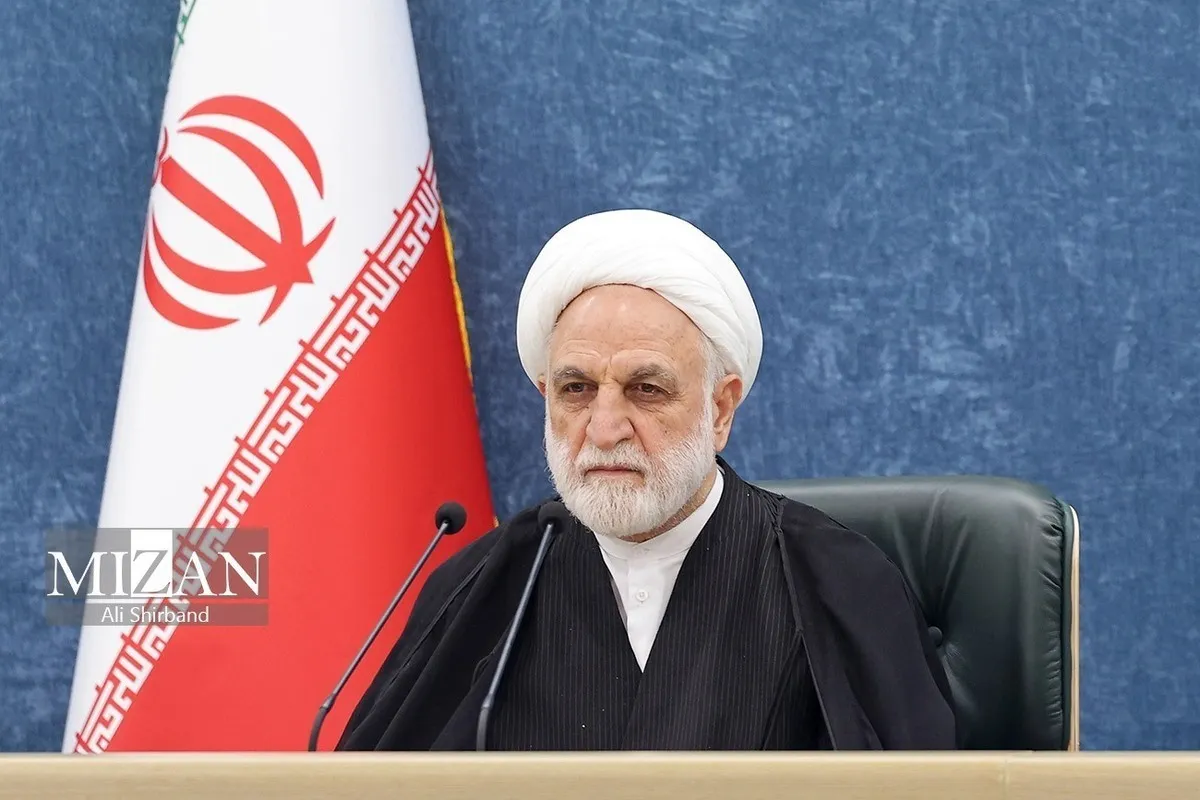
According to the Judiciary’s Media Center, Mohseni Eje’i, in a meeting held to review the situation of insolvent prisoners and those convicted but unable to pay their debts, as well as to secure the satisfaction of private complainants, set forth specialized and specific points and directives addressed to the relevant judicial authorities concerning how to determine the status of these prisoners and convicts while simultaneously safeguarding the rights of their complainants.
In his remarks at the meeting, referring to Article 429 of the Islamic Penal Code concerning the determination of the status of a person sentenced to retribution (qisas) who has been left in an indeterminate situation without justified excuse by the heirs of the victim, Mohseni Eje’i said that the existing legal capacities must be identified in order to accelerate the determination of the status of insolvent prisoners and convicts unable to pay their debts, and that legal authorizations, along with innovative approaches, should be employed in dealing with these prisoners.
Mohseni Eje’i further stated that a significant number of individuals who have remained in prison for many years and are not eligible for legal leniencies such as amnesty or furlough are those who have already served their prison sentences but are unable to pay the financial compensation owed to their complainant(s).
The Head of the Judiciary added that, given the rise in prices, these individuals are in no way capable of paying the amounts they have been ordered to pay; on the one hand, they do not qualify for amnesty or legal concessions because they have private complainants, and on the other hand, they are not granted furlough because they lack bail proportional to their convictions.
Mohseni Eje’i noted that some of these individuals, despite having completed the legally prescribed term of imprisonment, have in some cases remained in prison for more than 10 or 15 years due to their inability to pay the private complainant, and it is clear that even if they remain imprisoned for several more years, they still will not be able to pay the amount of their conviction.
In this regard, while issuing instructions to the relevant judicial authorities, the Head of the Judiciary emphasized that urgent measures must be taken, and that if the law in this area requires amendment, or if the legal mechanism of declaring insolvency (i‘sar) can be utilized in this matter, it should be pursued.