Three disputed cases in the relations between "Ahmed al-Shara" and "Erdogan"
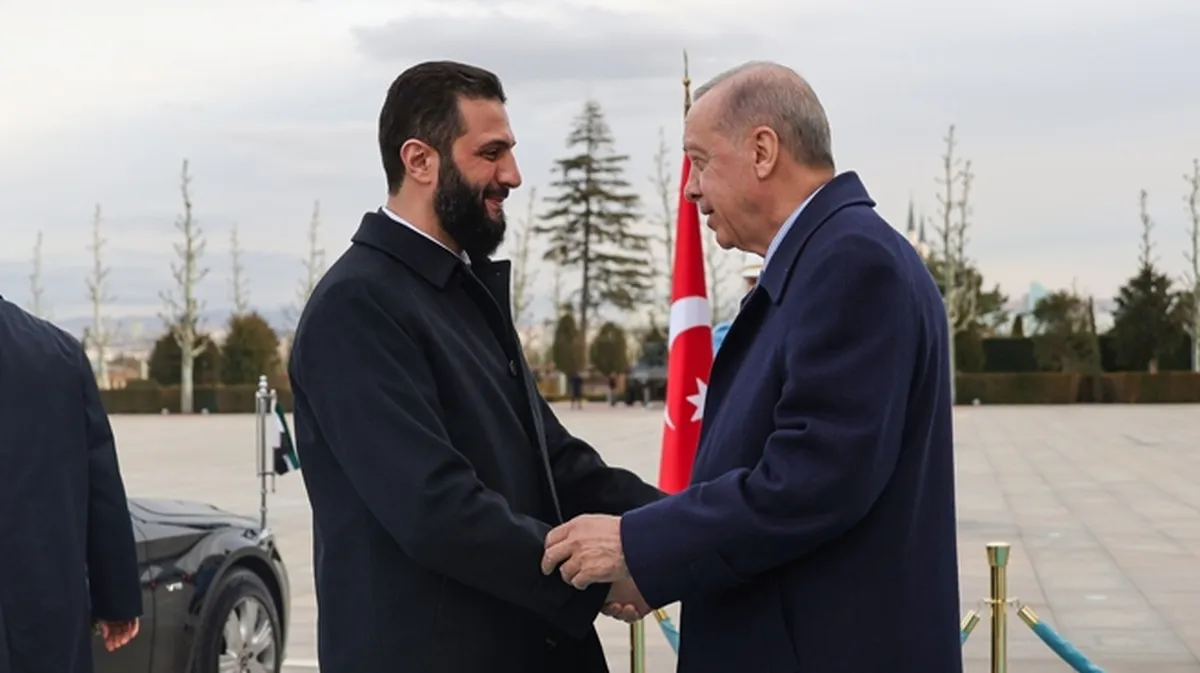
One should not exaggerate in analyzing the relations between the government of Abu Muhammad al-Julani (Ahmed al-Shara) in Damascus and the government of Recep Tayyip Erdogan in Ankara, because there are differences between the two that are particularly evident in three important cases.
First, on the issue of the Kurds, agreements have been reached between Ahmed al-Shara and Mazloum Abdi, the leader of the SDF, which have paved the way for the formation of a Kurdish region in northern Syria; whereas Turkey had occupied these areas in 2018 during Operation Olive Branch and had tried to change the demographic composition of Afrin for seven years. However, al-Julani has neutralized these achievements with a simple agreement.
The Kobani areas, the entire province of Hasakah, and even parts between Tal Abyad and Ras al-Ayn can also be handed over to the Kurds based on this agreement, on the condition that the SDF forces withdraw from Deir ez-Zor and Raqqa and that new negotiations with Turkey take place regarding the aforementioned areas. Of course, such a process contradicts Ankara’s permanent red line, as Turkey insisted that a buffer zone ten to 30 kilometers deep should be completely under the control of the Damascus army, not the SDF; but this condition has now been ignored, and this is crossing Turkey’s red line and a threat to the territorial integrity of this country.
In the second case, there is evidence of Ankara’s clear opposition to the normalization process known as the Abraham Accords. While Turkey recognizes Israel and welcomes the two-state solution, it considers the Abraham Accords to be part of the path to the formation of a new order in West Asia, which it assesses to the detriment of its interests. Turkey insists that Syria should not be involved in this process, while the Golani government is trying to play a more active role, paving the way for the expansion of this pact.
The third case concerns Golani’s important contracts with France and the UAE regarding the ports of Tartus and Latakia, especially the cooperation with the UAE’s DP World.
Turkey views these cooperations with concern, as they may strengthen the Alawite position in the region – especially if this group gains power outside the central government structure. The main concern is that the Alawites continue to pursue the liberation of the Iskenderun (Hatay) province in Turkey, and new measures could be risky for Turkey’s territorial integrity.
Although relations between Ankara and Damascus are largely close and harmonious, one cannot ignore the important differences that exist regarding the Kurdish issue, the Abraham Accords, and the Mediterranean coast agreements, and it must be accepted that the Golani government does not move completely in Ankara's orbit.