The West's diplomatic failure in the historic test of the Zionist regime's aggression against Iran
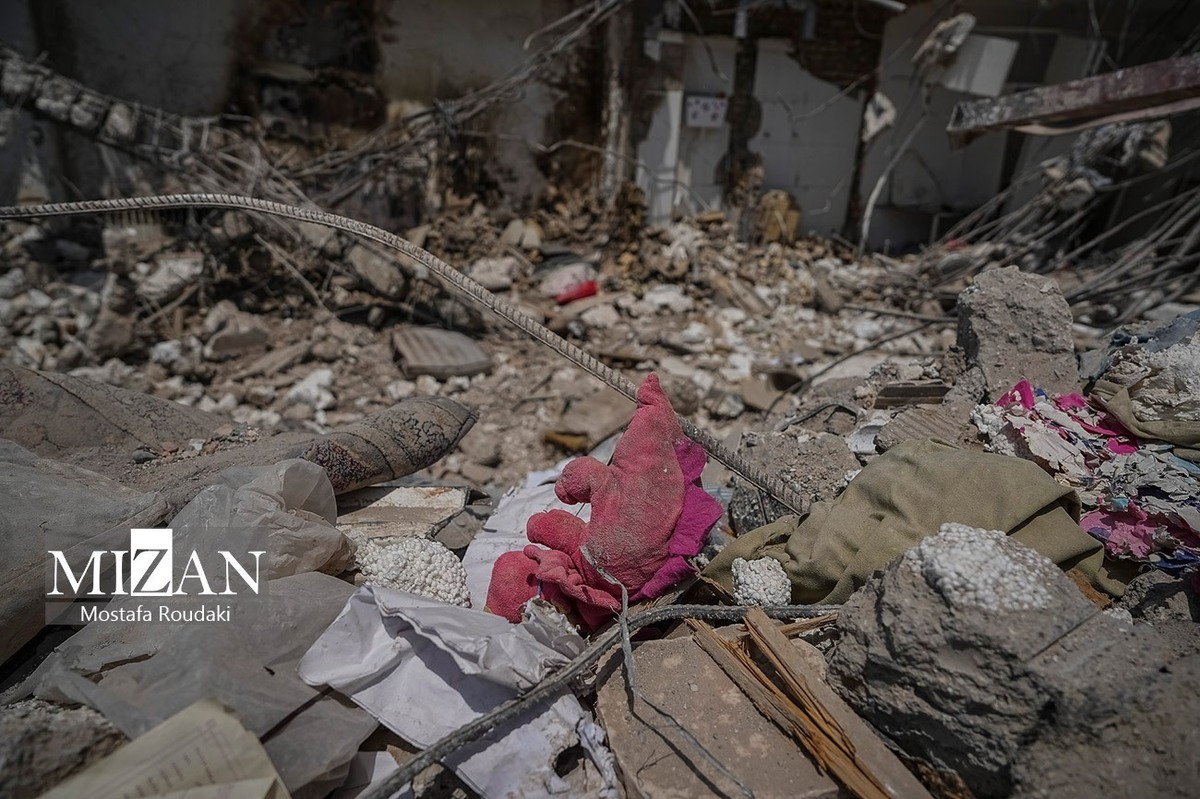
The Zionist regime's attack on Iran, which blatantly violates international law, serves as a significant test for many who claim to uphold diplomacy. It once again highlights the double standards of organizations and mechanisms tasked with maintaining and promoting diplomacy and peace.
From the very beginning of the aggression, Iran began its correspondence with international institutions and mechanisms to document the crime and inform about the details of casualties and damages; Iran's permanent mission to the United Nations also sent an official letter to Antonio Guterres, UN Secretary-General and President of the Security Council, presenting a comprehensive and updated report on the crimes of the Zionist regime, especially the child and female victims martyred during the 12-day military aggression against the Islamic Republic of Iran, and requested its registration and distribution as an official document of the Security Council.
Considering the correspondence of various Iranian officials with Antonio Guterres, UN Secretary-General, President of the Security Council, the Special Representative of the Secretary-General for Children and Armed Conflict, the Red Cross, the High Commissioner for Human Rights, ... there is no excuse or justification for adopting an inappropriate approach due to ignorance and lack of awareness of the dimensions of this crime.
The Zionist regime does not participate in any disarmament or non-proliferation treaties and invaded Iran, a country with peaceful nuclear activities, that is a member of the Non-Proliferation Treaty and is under strict supervision by the International Atomic Energy Agency.
The aforementioned military aggression, supported by the United States and carried out with baseless claims about the nature of Iran’s peaceful nuclear activities, was followed by a serious wave of condemnation from approximately 120 countries around the world.
Meanwhile, the positions of the European Troika (Germany, Britain, and France) as the legal document of the JCPOA, the Security Council, the International Atomic Energy Agency, and the Agency’s Board of Governors fluctuated between siding with the Zionist regime and remaining silent and ignoring the aggression.
The inconclusiveness of the Security Council and the IAEA Board of Governors meetings on the issue of the Zionist regime's aggression against Iran has confirmed the politicization of the so-called world peace-making and peacekeeping institutions and has sent a message to the world that these institutions have failed to fulfill their duties within the framework of diplomacy and that there is a possibility that the member states of the non-proliferation treaties will become victims of the aggression and excesses of Western actors and their allies.
The inaction of the Security Council on the issue of the Zionist regime's aggression against Iran is a violation of this institution's inherent duty to maintain peace, because, according to Chapter VII of the Charter, the Security Council is primarily responsible for maintaining international peace and security.
This is while the Security Council, despite Iran's official request to convene an emergency meeting and condemn the Zionist regime's aggression, has not taken effective action in this regard. In contrast, in similar cases, such as the Zionist regime's attack on the Iraqi reactor in 1981, it condemned that action by issuing Resolution 487.
The Security Council's inaction on this issue has exposed to the world more than ever the double standards and politicization of the implementation of international justice, a stance that not only undermines the trust of nations in international institutions, but also creates the basis for instability and lawlessness at the global level.
The IAEA, as one of the United Nations agencies tasked with overseeing the peaceful use of nuclear energy, has also rapidly moved down a political path and distanced itself from its technical responsibilities since the time of Director General Rafael Grossi, and was part of the campaign of ignoring diplomacy on the issue of the Zionist regime's aggression against Iran.
This is even though an attack on nuclear facilities under the supervision of the IAEA is considered a serious threat to regional and global security, and according to the IAEA's rules, no country has the right to attack peaceful nuclear facilities.
The Agency's discredit on this issue is better understood by considering Grossi's role in the domino effect that led to the Zionist regime's aggression. Under pressure from Western countries and the Zionist regime, the Agency's Director General prepared the way for the adoption of an anti-Iranian resolution by the Board of Governors by presenting a baseless report containing unrealistic claims about Iran's nuclear activities. This resolution ultimately became the Zionist regime's pretext for aggression against Iran.
Grossi refused to condemn this action even after the Zionist regime and the United States had attacked Iran's peaceful nuclear facilities.
At the same time, the three European countries that are members of the JCPOA and the European Union, adopting a policy that can at best be called diplomacy of ambiguity, refused to condemn the Zionist regime's aggression against Iran and claimed to emphasize diplomacy!
Continuing their undiplomatic and incorrect path, they claim to be pursuing diplomacy while still attempting to utilize the technical tool of the trigger mechanism, which has lost its legal basis due to the current status of the JCPOA, as a means of pressure on Iran to achieve their illegitimate goals.
Referring to the actions and statements of the European Troika, including their support for the recent aggression of the Zionist regime and the United States, Foreign Minister Seyyed Abbas Araqchi said: The three European countries cannot and should not be allowed to question the credibility of the UN Security Council by abusing a resolution to which they have not adhered.
The Quincy Institute, in a report titled “The European Union’s Pathetic Response to Trump’s Attack on Iran,” wrote: The European Union’s response to the US attacks on Iran has revealed something more than hypocrisy; this response demonstrates such a deep dependence that European capitals are now willingly undermining both international law and their strategic interests. The Trump administration’s apparent failure to consult with the European Troika despite their ongoing diplomatic engagement with Iran shows that US policymakers see Europe not as partners but as subordinates who can be ignored at will.
Putting together the puzzle pieces of the positions of the Security Council, the European Troika, the European Union, and the IAEA on the issue of the Zionist regime’s aggression against Iran demonstrates their failure to meet the historical test of priority and practice of diplomacy.
This failure has not only posed a major challenge to their tarnished political and legal credibility but also undermined trust in the international legal system, especially in the area of nuclear activities.