Bloody battle in al-Fashir: What’s happening in Sudan?
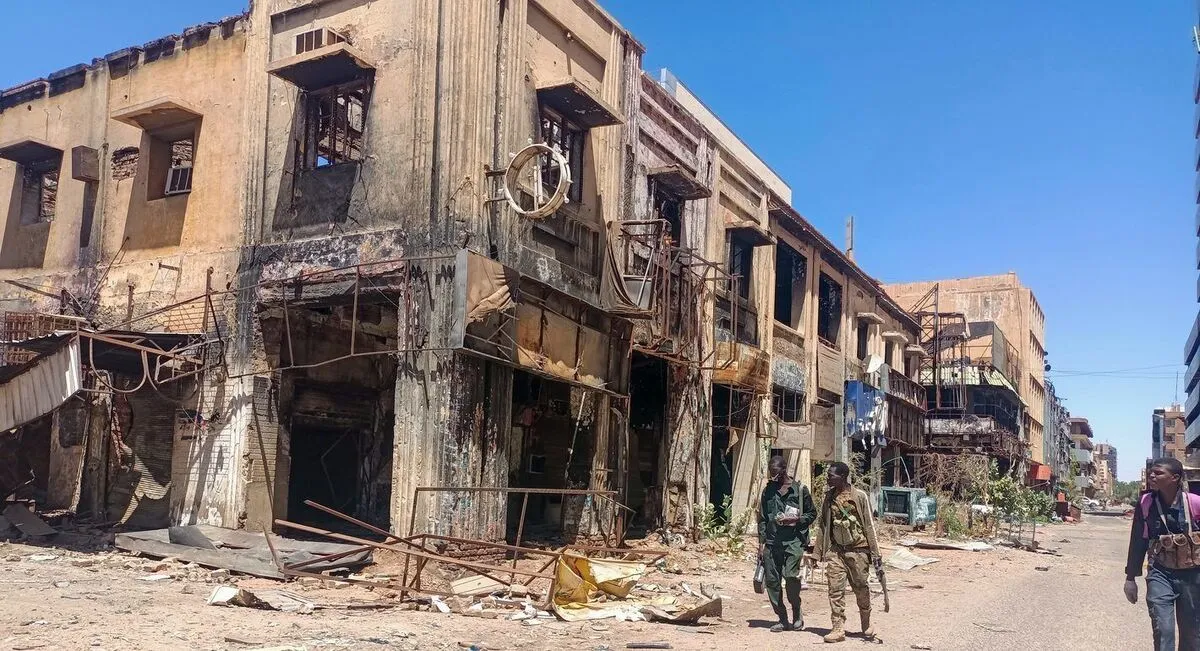
The civil war in Sudan began in April 2023, when former allies Abdel Fattah al-Burhan and Mohamed Hamdan Dagalo (known as Hemedti) turned against each other.
The two men had seized power together in the 2021 coup, but their alliance collapsed amid a plan to transfer power to civilians and integrate the Rapid Support Forces (RSF) into the national army.
Burhan, the army commander, pushed for rapid integration under the army’s authority, while Hemedti resisted, fearing the loss of his autonomy and control over vast military and financial networks.
What began as a power struggle between two generals has now become, according to the United Nations, the world’s largest humanitarian crisis — displacing over 12 million people, killing tens of thousands, and driving several regions to famine. Death toll estimates range from 40,000 to 150,000, though the UN confirms around 40,000 deaths.
According to Al Jazeera, thousands may have been killed in al-Fashir, the capital of North Darfur, since it was captured by RSF forces.
Fall of al-Fashir
On October 26, after an 18-month siege, the RSF overran al-Fashir — the last remaining stronghold of the Sudanese army in Darfur — cutting off food and essential supplies to hundreds of thousands trapped inside.
The Sudanese army reported that by October 30, around 2,000 people had been killed, while the Sudan Doctors Network estimated at least 1,500 deaths.
For 18 months, the city’s 1.2 million residents were trapped, surviving on animal feed, as a 56-kilometer barrier blocked the entry of food and medicine and prevented escape.
The UN Human Rights Office reported summary executions of fleeing civilians, noting possible ethnic motives behind some of the killings.
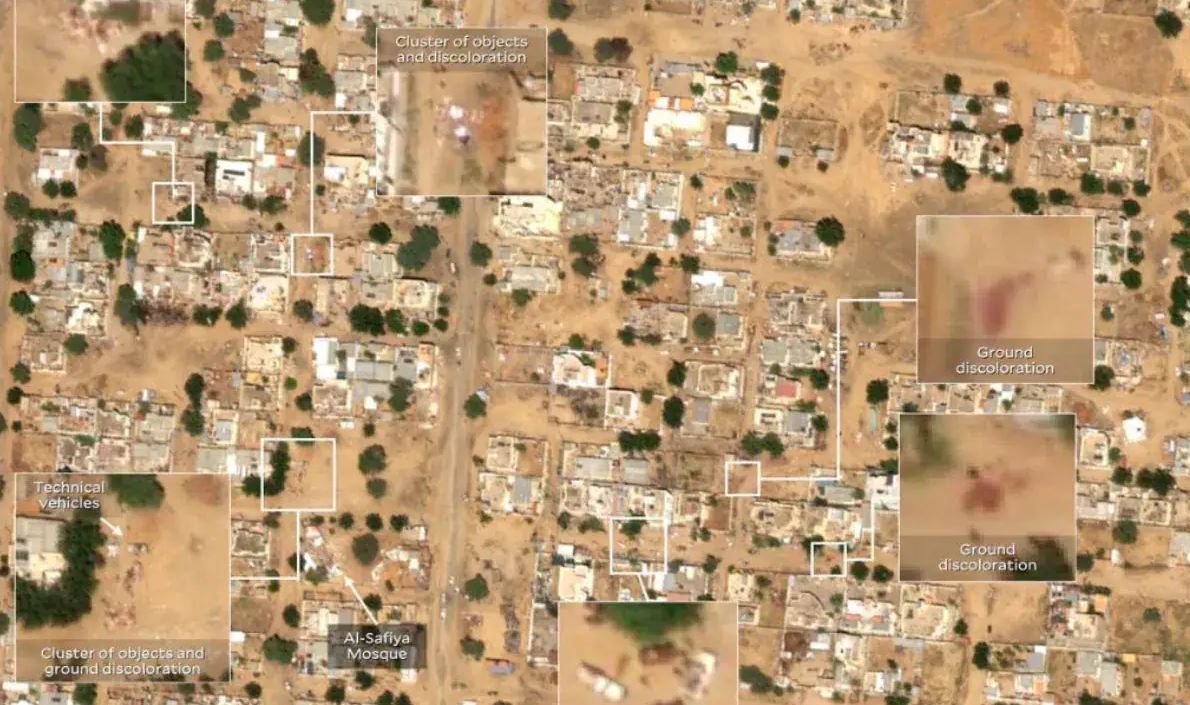
A study by the Yale Humanitarian Research Lab, using satellite imagery and remote sensing, confirmed reports of mass killings — identifying clusters of bodies and blood-stained ground, absent before the recent fighting.
The UN stated that over 26,000 people fled al-Fashir in just two days, mostly on foot toward Tawila, 70 kilometers west. Around 177,000 civilians reportedly remain trapped.
Meanwhile, in Bara, a town in North Kordofan province near El-Obeid, attacks on civilians and aid workers have also been reported. The Red Cross and Red Crescent Federation confirmed that five Sudanese volunteers were killed and three others went missing.
Meanwhile, Maryam Laroussi, Emergency Response Coordinator at Doctors Without Borders (MSF), described the humanitarian situation of Sudanese civilians who managed to flee the war-torn city of al-Fashir as “catastrophic in every sense.”
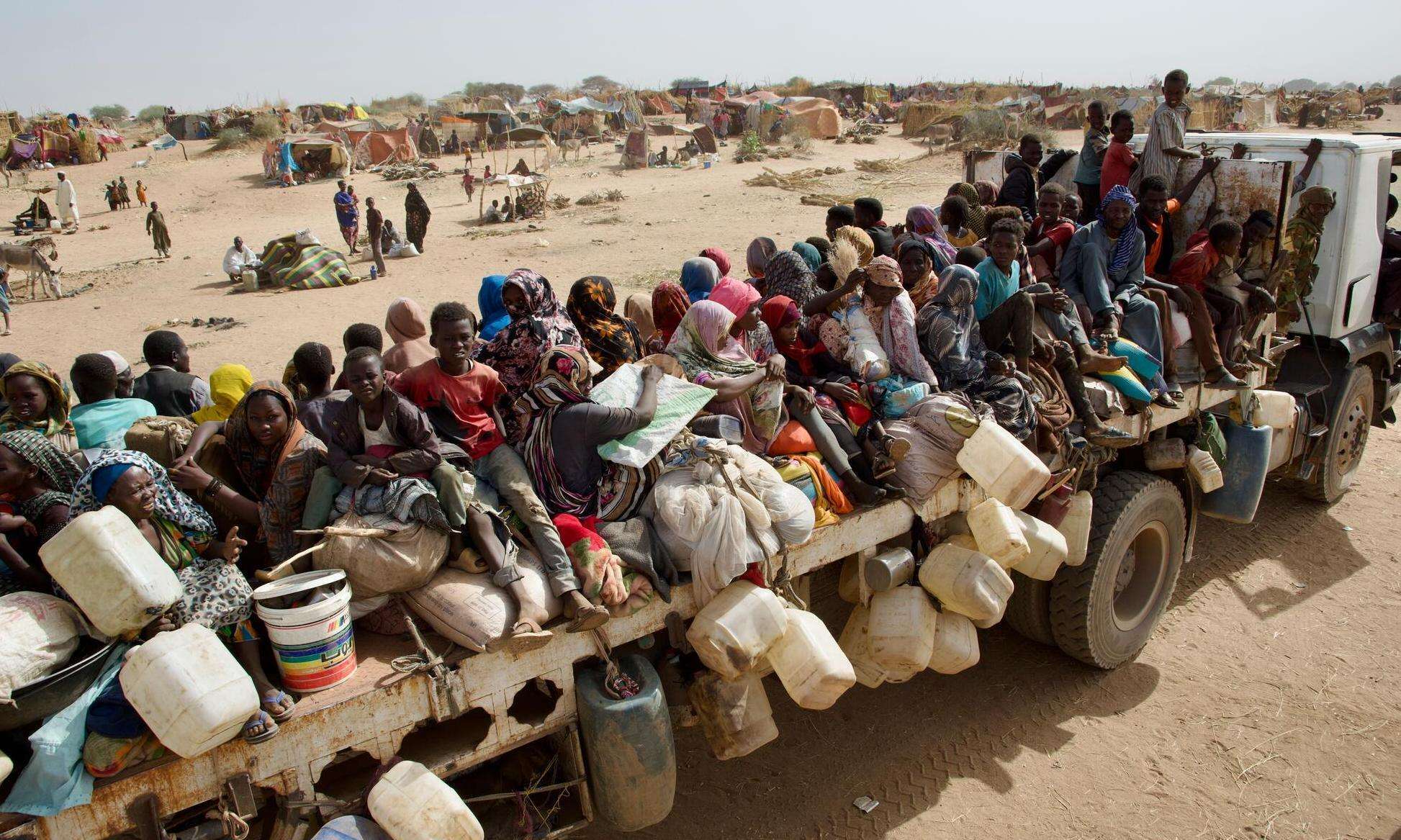
She said: “The displaced arrive in the town of Tawila (in western North Darfur) exhausted after days of walking, with nothing but the clothes on their backs. They are without shelter and in desperate need of immediate food and medical assistance.”
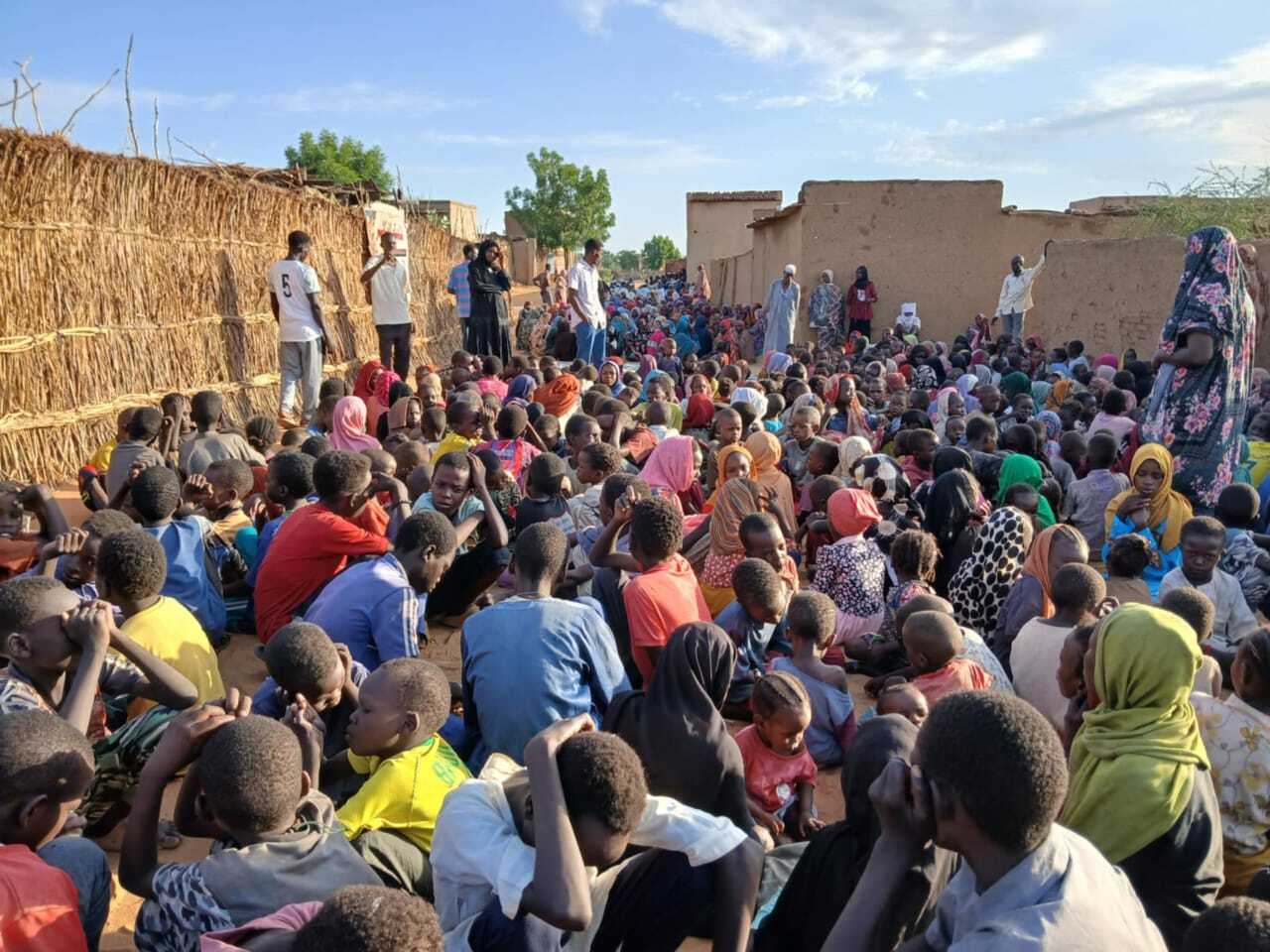
Speaking to Al Jazeera, Laroussi added that most of the displaced are women and children, noting that all children under five suffer from severe malnutrition. She also stressed that many of the displaced require urgent medical attention due to injuries sustained along the way.
Why al-Fashir and El-Obeid matter
Both cities are strategic strongholds in western Sudan. The RSF now dominates most of the west and seeks full control of the region, while the Sudanese Armed Forces (SAF) hold bases in the east and attempt to reclaim territory.
With the fall of al-Fashir, Sudan is now effectively divided — the east under the army’s control, and the west under RSF rule.
El-Obeid, capital of North Kordofan, is a key oil hub linking Darfur to Khartoum. Though still under army control, analysts warn that if the RSF captures it, the army will lose its vital buffer zone between Khartoum and RSF-held areas.
On October 25, the RSF announced it had recaptured Bara, just 59 kilometers from El-Obeid, and began attacks aimed at encircling the city, where over 137,000 displaced people had sought refuge by July.
UN Security Council’s response
On October 30, the UN Security Council issued a statement expressing deep concern over escalating violence in and around al-Fashir and condemned RSF attacks on the city and their impact on civilians.
The Council reaffirmed Resolution 2736 (2024), calling for an end to the siege of al-Fashir, an immediate ceasefire, and a de-escalation of hostilities, urging the RSF to comply.
It also condemned reported atrocities, including summary executions and arbitrary detentions, and warned of a growing risk of large-scale and ethnically motivated crimes.
Council members demanded accountability for all perpetrators, protection of civilians, and respect for international humanitarian law and Resolution 2736, as well as commitments under the Jeddah Declaration.
They further called on all parties to ensure safe humanitarian access, protect aid workers and facilities, and allow safe passage for civilians wishing to flee.
The Council emphasized the urgent need for a comprehensive Sudanese-led political process toward a sustainable ceasefire, urging all states to avoid foreign interference and to support peace efforts in line with international law and UN resolutions, including Resolution 2791 (2025).
Finally, the Security Council reaffirmed its commitment to Sudan’s sovereignty, independence, unity, and territorial integrity, and rejected the RSF’s establishment of a parallel governing authority in areas under its control.
Iran’s position
Iranian Foreign Ministry spokesperson Esmail Baghaei expressed deep concern over the armed clashes in al-Fashir, condemning the destruction of infrastructure and the killing of innocent civilians.
He also warned against dangerous efforts to re-divide Sudan, stressing the importance of respecting the country’s sovereignty and territorial integrity.