Writers rebel against The New York Times’ Gaza propaganda
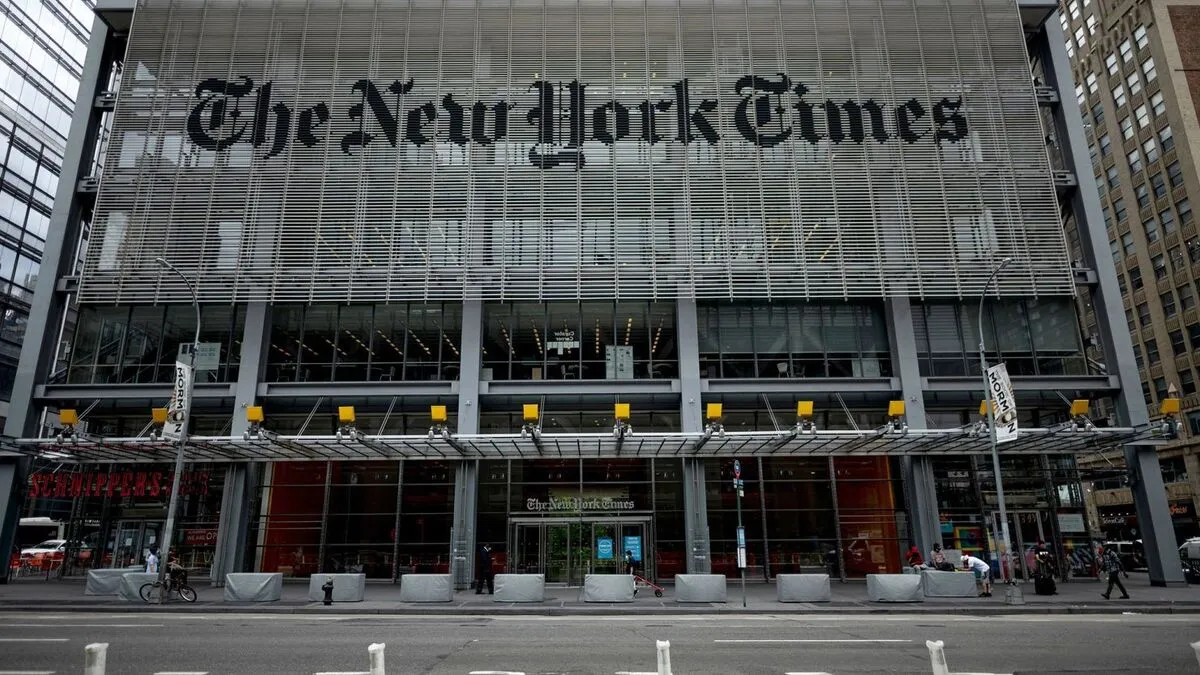
The signatories are demanding that the Times examine its editorial bias, update its style guide on coverage of Gaza, and call for a U.S. arms embargo on Israel.
In their open letter, the writers said: “Until The New York Times takes responsibility for its biased reporting and commits to honest, ethical coverage of the U.S.-Israeli war on Gaza, contributing an opinion piece would merely serve as a license for continued misconduct.”
They added: “Only by withholding our labor can we effectively challenge the hegemonic authority the Times has long used to sanitize U.S. and Israeli lies.”
The letter was signed by dozens of American activists, artists, and politicians, including Rima Hassan, Chelsea Manning, Rashida Tlaib, Sally Rooney, Elia Suleiman, Greta Thunberg, and Viet Thanh Nguyen.
The writers stated: “We owe it to Palestinian journalists and writers to refuse complicity with The New York Times and to demand accountability so that it can no longer manufacture consent for mass killing, torture, and displacement.”
Demands of the signatories
The signatories made three main demands of The New York Times:
1. Investigate anti-Palestinian bias within the newsroom and establish new editorial standards for covering Palestine.
2. Revise sourcing practices and language use, including a new style guide governing terminology for describing the Israeli-Palestinian conflict. They also called for a ban on employing journalists who have served in the Israeli military.
3. Retract the December 2023 article titled “Screams Without Words,” which claimed that Palestinians who took part in the October 7 (Operation Al-Aqsa Flood) attacks committed sexual violence against Israeli women.
That article heavily relied on the testimony of an anonymous Israeli special forces paramedic — a claim later discredited.
One of its authors, Anat Schwartz, was later investigated by the paper after it was revealed that she had liked a social media post calling for Gaza to be turned into a “slaughterhouse.”
Prior to that article, family members of Israeli settlers killed during the October 7 attack — who were cited as alleged victims of sexual assault — had given multiple interviews contradicting those claims. None of those testimonies were included in the Times report.
The signatories also urged the Times editorial board to advocate for a U.S. arms embargo on Israel, emphasizing that their demands were neither “impossible nor unreasonable.”
They noted that The New York Times had previously updated its style guide during the AIDS crisis of the late 1980s and issued an apology for its misleading coverage in the lead-up to the 2003 U.S. invasion of Iraq.
The letter concludes:
“Since Israel began its genocidal war on Gaza, The New York Times has obscured, justified, and outright denied the occupiers’ war crimes — continuing its decades-long tradition of serving as a megaphone for the Israeli government and military.”