Germany’s systematic suppression of Palestine solidarity
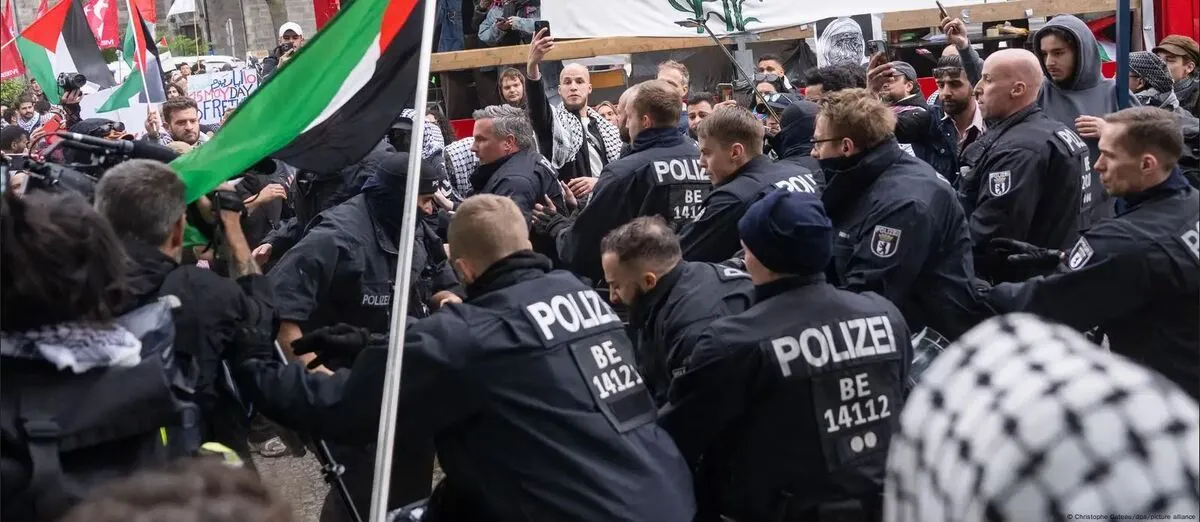
For several years, the Palestinian solidarity movement in Germany has faced severe repression. However, after October 7, 2023, these measures escalated to new levels. In the first weeks following the outbreak of the genocide, demonstrations in several German cities — especially in Berlin — were widely banned. Both Hamas and the Samidoun Prisoner Solidarity Network were declared illegal by executive order, and the slogan “From the river to the sea, Palestine will be free” was classified as a forbidden symbol.
To this day, censorship, criminal charges, and violent police actions against Palestinian solidarity demonstrators remain routine. Protest events are frequently canceled. Even Francesca Albanese, the UN Special Rapporteur on Palestinian rights, was denied access to university facilities in Munich in February 2025.
The German police have repeatedly conducted house searches over individuals liking pro-Palestinian posts, using the phrase “from the river to the sea,” comparing Israeli actions to Nazi crimes, or accusing German politicians of complicity in war crimes.
Estimates indicate that over the past 24 months, German authorities have opened approximately 10,000 criminal cases related to Palestinian solidarity. In May 2024, the Palestinian Congress in Berlin was forcibly shut down by city authorities, and prominent international guests were prevented from entering Germany.
Six months after the bans on Samidoun and Hamas, the Duisburg Palestinian Solidarity Group was also declared illegal. Reports indicate that further prohibitions are being prepared by German authorities, including against the international BDS movement.
Since the beginning of this year, several Palestinians and foreign supporters of Palestine have also been expelled. The legal aid organization Ezwa 3 estimates that thousands of individuals across Germany are currently at serious risk of deportation.
Criticism from NGOs, the EU, and the UN
This campaign of suppressing freedom of expression, which is explicitly racist and targets Muslim communities, has increasingly drawn international attention.
In late October 2023, Human Rights Watch (HRW) criticized German authorities for their treatment of pro-Palestinian demonstrations, among other concerns. Shortly thereafter, the UN Human Rights Council (UNHRC) also raised criticisms.
In mid-May 2025, the European Legal Support Center (ELSC) launched the first comprehensive database documenting anti-Palestinian repression in Germany. At that time, the database recorded 766 cases of censorship, surveillance, bans on demonstrations, arrests, workplace and financial repression, relevant laws and resolutions, intimidation, and retaliatory measures related to migration.
In June 2025, the Council of Europe’s Human Rights Commissioner was compelled to send a letter to Germany’s Interior Minister, citing reports of excessive police force against protesters, including minors, and reminding that EU member states are obligated both to refrain from undue interference in human rights and to take positive measures to protect these rights.
Recently, the UN intervened again. Six independent experts called for an end to criminalization and police violence against pro-Palestinian solidarity activities. They specifically criticized Germany’s criminalization of the slogan “From the river to the sea, Palestine will be free.” Their final statement emphasized that Germany should support measures to stop atrocities and genocide, not suppress them.
International media now consistently report on Germany’s state-controlled anti-Palestinian repression and violence. Images of police officers physically assaulting peaceful protesters are circulated globally.
Journalists and analysts strive to explain to international audiences why a government that typically champions human rights, freedom of speech, and the rule of law acts in such a repressive and inhumane manner.