Playing the old game: Mai Sato echoes anti-Iran narratives in her UN reports
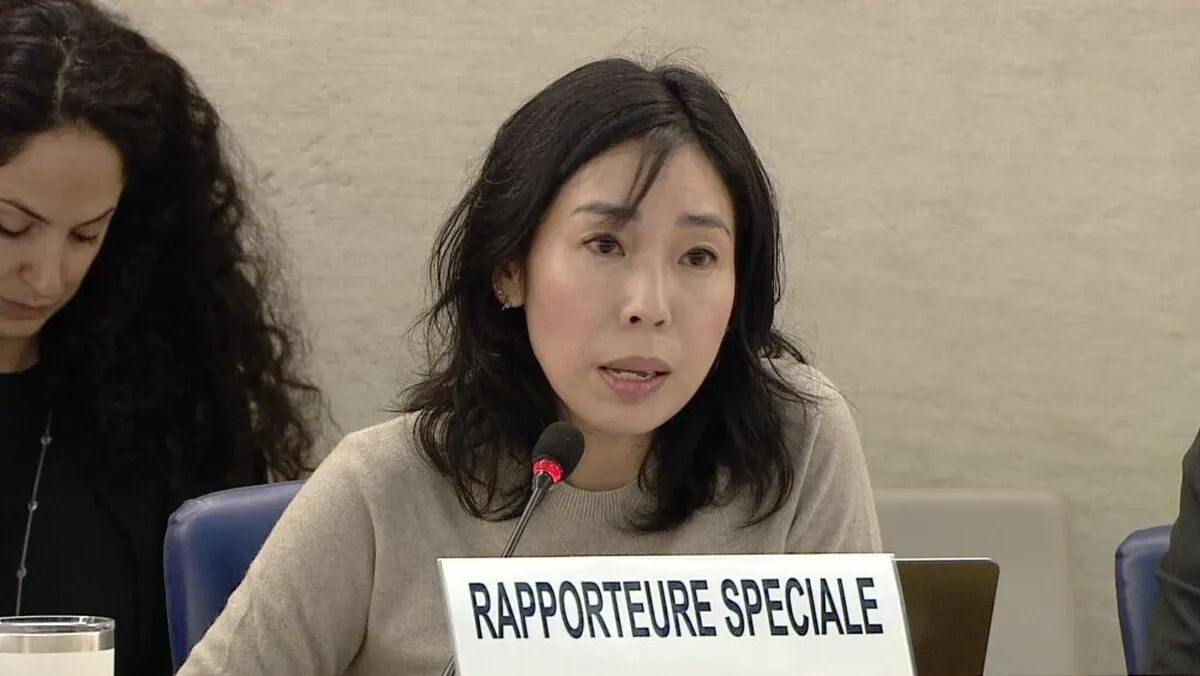
Since the start of her mandate in August of last year, Sato has published several reports filled with unfounded allegations against Iran, repeating baseless claims about the country’s human rights situation.
These reports closely resemble the drafts produced by her predecessors — documents crafted despite Iran’s explicit opposition, in line with the hidden political motives behind the creation of such mandates.
Iran has made it clear that it rejects the appointment of a Special Rapporteur, considering it a selective and politically motivated use of human rights mechanisms aimed at settling political scores rather than promoting genuine rights.
Asghar Jahangir, spokesperson for Iran’s Judiciary, stated on September 29, 2025, that Sato’s latest report accusing Iran of human rights violations was “based on lies and not worth responding to.” He added that her report had been dictated by anti-Iranian opposition groups and repeated long-debunked accusations.
Jahangir also noted that Sato merely issued a mild condemnation of the Zionist regime’s blatant act of aggression against Iran earlier this year, pointing out that such selective reporting does not serve the cause of genuine human rights.
A crucial issue, as highlighted by the Judiciary’s spokesperson, concerns the sources of Sato’s reports. In her latest report, released on October 21, 2025, Sato openly cited anti-Iranian Persian-language outlets such as BBC Persian and Iran International as her main sources.
These very outlets — alongside the terrorist group Mojahedin-e Khalq— were among the first to welcome Sato’s appointment as the UN Special Rapporteur on Iran, a combination that clearly exposes the credibility level of her so-called findings.
Following in the footsteps of her predecessors, Sato continues to play into the hands of hostile media and anti-Iranian groups, even though Iran has consistently pursued the promotion and protection of human rights domestically, while also engaging internationally to strengthen dialogue and cooperation in this field.
Within Iran, this includes human rights education across various sectors, enacting laws that safeguard civil and human rights, identifying violations within administrative and judicial systems, and building human rights infrastructure across all executive bodies. On the international front, Iran continues to actively counter the political misuse of human rights mechanisms, hold human rights dialogues with other countries, promote the concept of Islamic human rights, and call out so-called “claimant” states for their own violations.
Expert legal analyses of the reports issued by so-called UN rapporteurs on Iran — including Sato and her predecessor Javaid Rehman — clearly show that these documents lack credibility and cannot be regarded as reliable sources.
This same problem also plagues the so-called UN “Fact-Finding Committee” led by Sara Hossain, whose politically motivated establishment and recent mandate extension serve the same biased goals. The committee’s reports employ language that closely mirrors the false and slanderous rhetoric of Iran’s adversaries.
The issue has become so blatant that even Sara Hossain herself has admitted that her reports lack any scientific or verifiable foundation and are merely based on unsubstantiated claims. She attempted to justify this failure by blaming Iran’s alleged lack of cooperation — an excuse that ignores Iran’s consistent participation in international reporting processes.
It is a disappointing reality that UN human rights mechanisms concerning Iran have drifted away from dialogue and constructive engagement, instead becoming tools for political manipulation.
Mai Sato, who now acts as an ally of Sara Hossain in fabricating baseless reports against Iran, has shown that — contrary to her initial claims — she is continuing the same old, discredited pattern of false reporting to satisfy the political agendas of her sponsors.
Despite all these accusations and distortions, Iran continues to cooperate with UN human rights bodies. The election of Iranian diplomat Afsaneh Nadipour as a member of the UN Human Rights Council’s Advisory Committee demonstrates that the world — or at least the independent nations within it — recognize and acknowledge Iran’s human rights efforts despite all the obstacles placed in their way.