Only two days without killings: America’s grim policing record in 2025
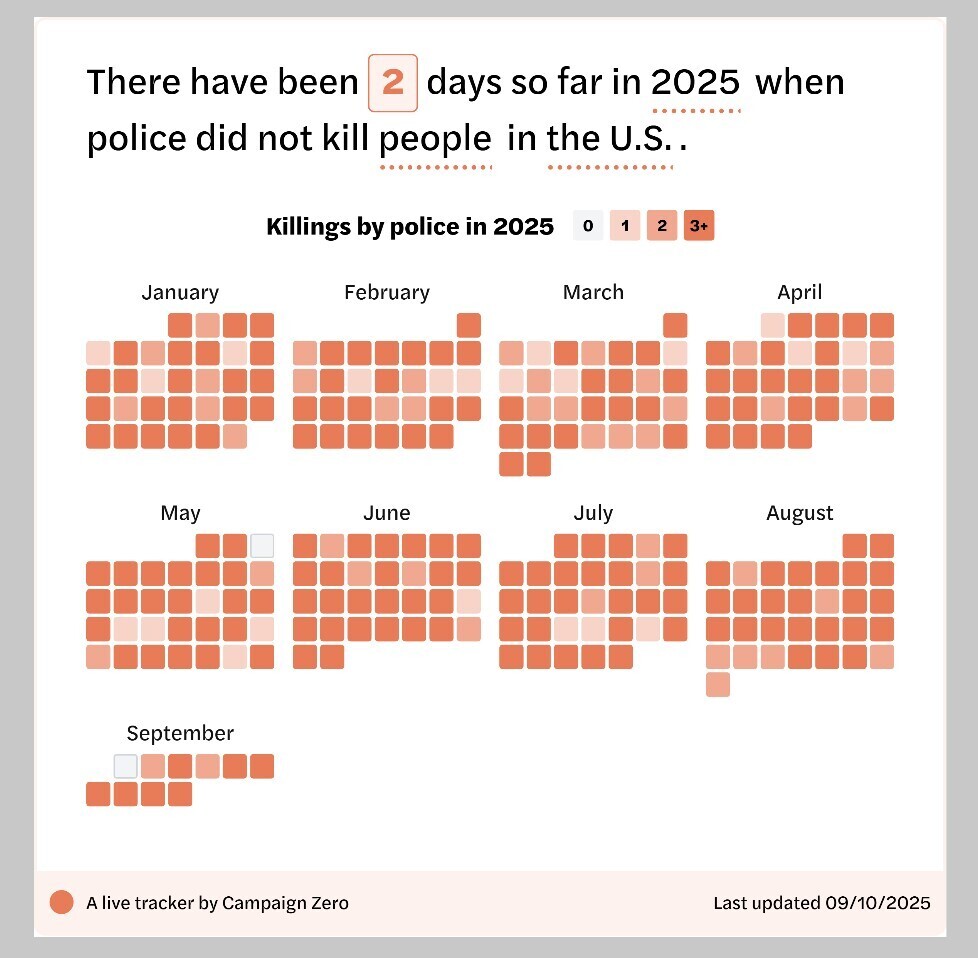
Updated statistics on fatal police encounters, published in the Mapping Police Violence database, highlight the scope of this ongoing crisis. According to the website’s report, since the beginning of 2025, U.S. police have killed 958 citizens.
Research further reveals that in the past 10 months, police refrained from killing citizens on only two days. The states of New Mexico and Alaska recorded the highest number of fatalities from police shootings.
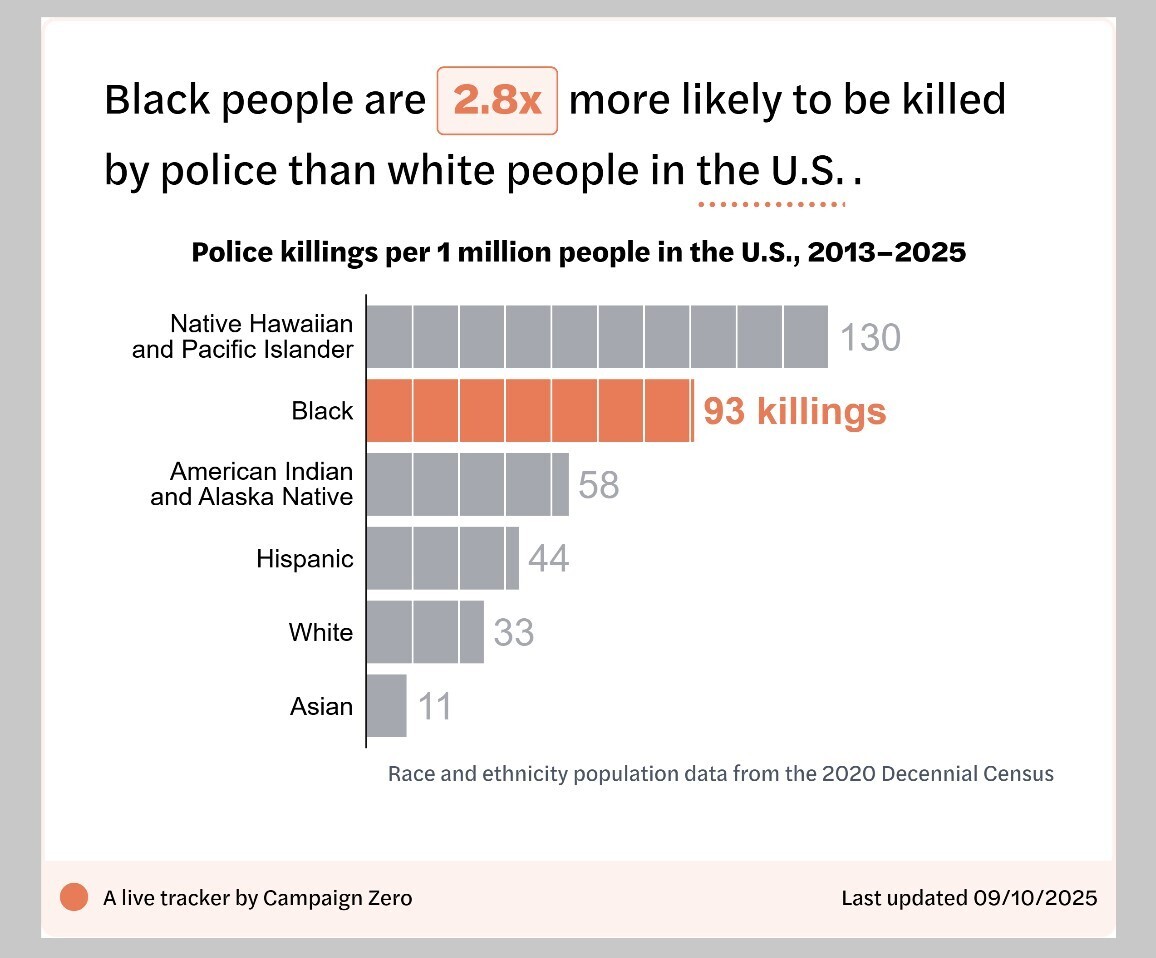
From 2013 to 2025, the rate of people killed by police per one million population has been:
- 11 for Asian Americans,
- 33 for White Americans,
- 44 for Hispanic/Latino Americans,
- 58 for Alaska Natives,
- 93 for Black Americans, and
- 130 for other Indigenous groups.
Black Americans were found to be 2.8 times more likely to be killed by police compared to their White counterparts.
Experts stress that the real numbers may be even higher, as incomplete reporting has left the full scale of the crisis obscured.
Meanwhile, The New York Times, in a report marking the anniversary of George Floyd’s killing by Minneapolis police, noted that the number of people killed by police has continued to rise.
The article stated: “Five years after Floyd’s death—and despite the largest racial justice protests since the 1960s, as well as waves of reforms intended to improve training and accountability—police killings remain on the rise, with Black Americans still dying at disproportionately high rates.”
A historical review of fatal police encounters reveals deep roots of this trend, tracing back to the evolution of policing in America modeled on British practices. Even in the 1830s and 1840s, the use of force in arrests was controversial.
Since police officers primarily enforced public order laws, public opinion largely supported restrictions on the use of force. However, the advantage of being armed—and the permission to use lethal force—served the interests of economic elites.
Experts emphasize that the stories of today’s police violence in the United States are not a modern phenomenon, but part of a long-standing systemic pattern.