Abolfath: Trump seeks to eliminate rivals from the Caribbean
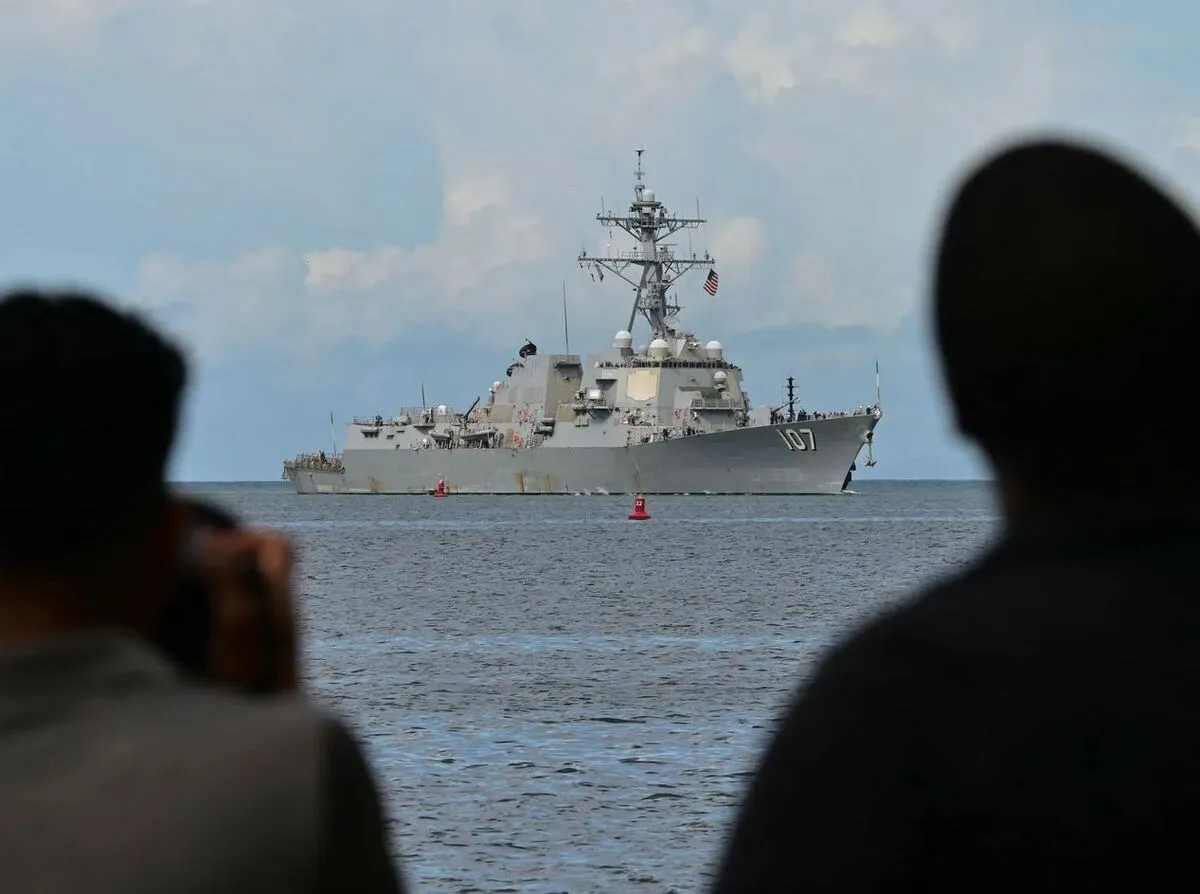
Over recent months, U.S. President Donald Trump has escalated tensions in the Caribbean by deploying warships near Venezuelan waters. Under the pretext of combating drug cartels, the U.S. has conducted provocative actions along Venezuela’s coasts, even targeting several boats.
Meanwhile, Venezuela has repeatedly condemned these maneuvers, reaffirming its determination to confront any threat from the United States.
In an interview with Mizan News Agency, Amir-Ali Abolfath, a U.S. affairs analyst, examined the motives behind Washington’s military movements in the Caribbean.
Trump’s political motives behind the “War on Drugs”
Abolfath explained that while drug trafficking is indeed a serious issue in the U.S., and cartels wield great influence and wealth, Trump’s actions are politically charged.
“The United States is the world’s largest consumer of narcotics, and this massive market has created powerful, well-equipped drug cartels,” he said.

He noted that although Trump claims to target drug trafficking, he has focused pressure on two countries with which the U.S. has had longstanding tensions.
“Even if Trump’s stated goal is truly combating drugs, the fact that he is targeting adversarial nations turns this into a political issue,” Abolfath said.
He added that several other countries are also complicit in the drug trade — some cooperating directly with cartels or serving as transit hubs.
“For example, Mexico is the main transit route for narcotics into the U.S., yet Trump chooses to confront Venezuela instead,” he said.
According to Abolfath, Trump’s deeper goal is to interfere in Venezuela’s internal affairs, pressure its government, or even attempt regime change.
Reducing the influence of U.S. rivals in Latin America
Abolfath emphasized that, beyond the drug issue, Washington is engaged in a strategic rivalry with China in Latin America and seeks to push Beijing out of the region.
“From Washington’s perspective, Venezuela facilitates China’s growing presence in Latin America,” he explained.
He added that the tensions in the Caribbean are multidimensional — involving drugs, political hostility with Venezuela and Colombia, and competition with China, Russia, and Iran.
“Trump wants to cut off the influence of countries like Russia, China, and Iran in Latin America and restore the region as the U.S.’s ‘backyard,’” Abolfath said.
The potential consequences of a war in the Caribbean
Discussing the risks of a potential conflict between the U.S. and Venezuela, Abolfath said the outcome would depend on the scale and duration of hostilities.
“If the war drags on and damages Venezuela’s energy infrastructure, it would certainly affect global energy prices and could lead to wider conflict,” he warned.
However, he argued that Trump is unlikely to seek a prolonged or bloody war: “Trump came to power promising peace and an end to foreign wars. He does not have domestic support for a long, costly military conflict,” Abolfath noted.
He added that while any reduction in cartel activity could be a short-term achievement for Trump, a full-scale war with Venezuela is improbable.
“Venezuela is not like Panama — it’s a larger, more resilient country with economic support from China and significant domestic backing,” Abolfath said.
He concluded that while limited strikes or symbolic military operations are possible, a full war would not serve Trump’s interests.
“Trump’s goal is to pressure Caracas into cooperation — not only on drug issues but also on reconsidering its relations with Beijing, Tehran, and Moscow,” Abolfath said.
“These moves are part of a broader strategy to project American power and influence in the region.”