The gordian knot of the Ukraine war: A difficult path to peace
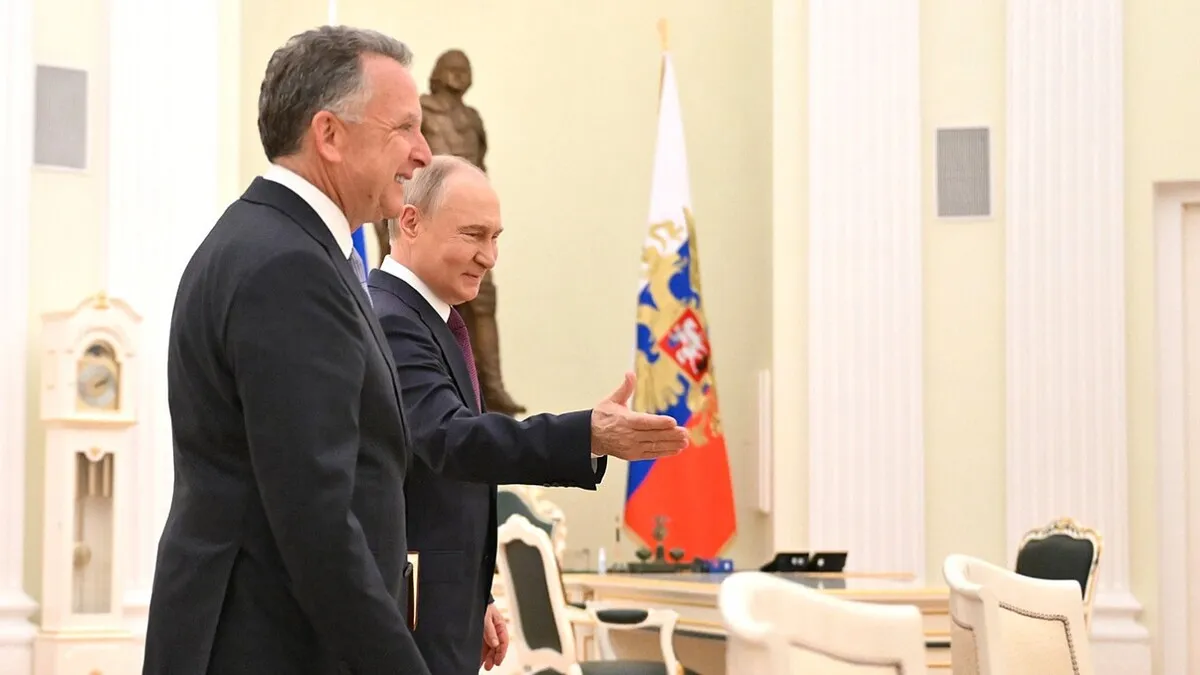
Steve Witkoff, Donald Trump’s special envoy, and Jared Kushner, Trump’s representative in Moscow, met with Russian President Vladimir Putin to discuss a possible path toward ending the Ukraine war.
Ahead of the meeting, Putin warned Europe that entering a war with Russia would result in a swift defeat, dismissing Europe’s counterproposals on Ukraine as completely unacceptable to Moscow.
The meeting comes as Donald Trump is attempting to fulfill his campaign promise to end the Ukraine war, though he has not yet succeeded.
Before the Putin–Witkoff talks, negotiations were held in Florida between U.S. and Ukrainian delegations.
In this context, Abed Akbari, an international affairs expert, discussed the events surrounding the Ukraine conflict and the prospects for peace in an interview with Mizan.
Goals of the Putin–Witkoff meeting
Akbari, referring to the meeting in Moscow, said: Witkoff’s meeting with Putin can be understood as part of a direct communication and strategic dialogue, not necessarily a sign of a final agreement. The main purpose was to enable de-escalation and coordinate positions so the parties could, through indirect talks or diplomatic pressure, stabilize their lines of contact and strategic interests.
He added that the tangible outcome of this meeting is still limited to exchanging views and examining possible areas of agreement, and it cannot be considered a precondition for peace or a resolution to the crisis.
Prospects for peace in Ukraine
Akbari noted that achieving sustainable peace in Ukraine is highly challenging under current conditions. The difficulties stem from the real imbalance of power between the parties, uncertainties in security guarantees, and the absence of robust multilateral monitoring mechanisms.
He stressed that peace may come in the form of a temporary ceasefire or a tactical agreement, but without binding guarantees and active involvement of international actors, the likelihood of renewed tensions remains high.
How far will Russia and Ukraine accept the conditions?
Commenting on the conditions proposed by the U.S., Akbari said: Russia, given its strategic goals, may reluctantly accept certain parts of an agreement, provided its vital interests and red lines are respected.
Ukraine, on the other hand, is under heavy domestic and international pressure and will agree only if it receives real security guarantees, sustained economic and military support from the West, and preservation of its key territorial and political lines. Therefore, full acceptance of the proposed conditions is unlikely, at least in the short term.
Message behind Ukraine’s attack on Russian tankers
Regarding the recent Ukrainian attack on Russian oil tankers in the Black Sea, Akbari said: This move was aimed at sending a deterrent message and pressuring Russia, reflecting the use of unconventional leverage to raise Russia’s economic and logistical costs.
He added that the consequences could include heightened military tensions, potential Russian retaliation, and increased sensitivity in global energy markets.
Russia’s focus on direct pressure
Akbari said Russia's intensified attacks show its focus on direct pressure to weaken Ukraine’s deterrence and operational capacity.
He explained that these actions convey a clear strategic message: the costs of continuing the conflict are high, and the opposing side must either show flexibility in negotiations or face increased vulnerability. From a security analysis perspective, these are more pressure and deterrence tactics than an attempt at a full-scale attack on the entire country.
Europe’s role in the Ukraine crisis
Akbari emphasized that Europe’s role—beyond providing economic and military support to Ukraine—remains limited. Europe seeks to prevent the war from spreading to its own territory while using sanctions and diplomatic pressure to persuade Russia to scale back hostile actions.
However, Europe lacks sufficient leverage to impose binding guarantees or directly control the peace process; thus, its role is primarily supportive or secondary mediation rather than main decision-making.
The U.S. claim of mediating in the Ukraine war
Akbari said the U.S. role—despite its claims of mediation—is essentially a mix of diplomatic pressure and military deterrence. Washington is trying to bring the parties back to the negotiating table while simultaneously limiting the opponent’s maneuvering power through sanctions and economic pressure. This dual approach allows the U.S. to present itself as a “champion of peace” while maintaining real tools for its strategic objectives.
He added that, in other words, U.S. mediation is less an act of pure peacemaking and more a mechanism for crisis management and projecting geopolitical dominance.