Berlin’s hypocrisy: Germany publicly halts arms exports, privately expands deals with Israel
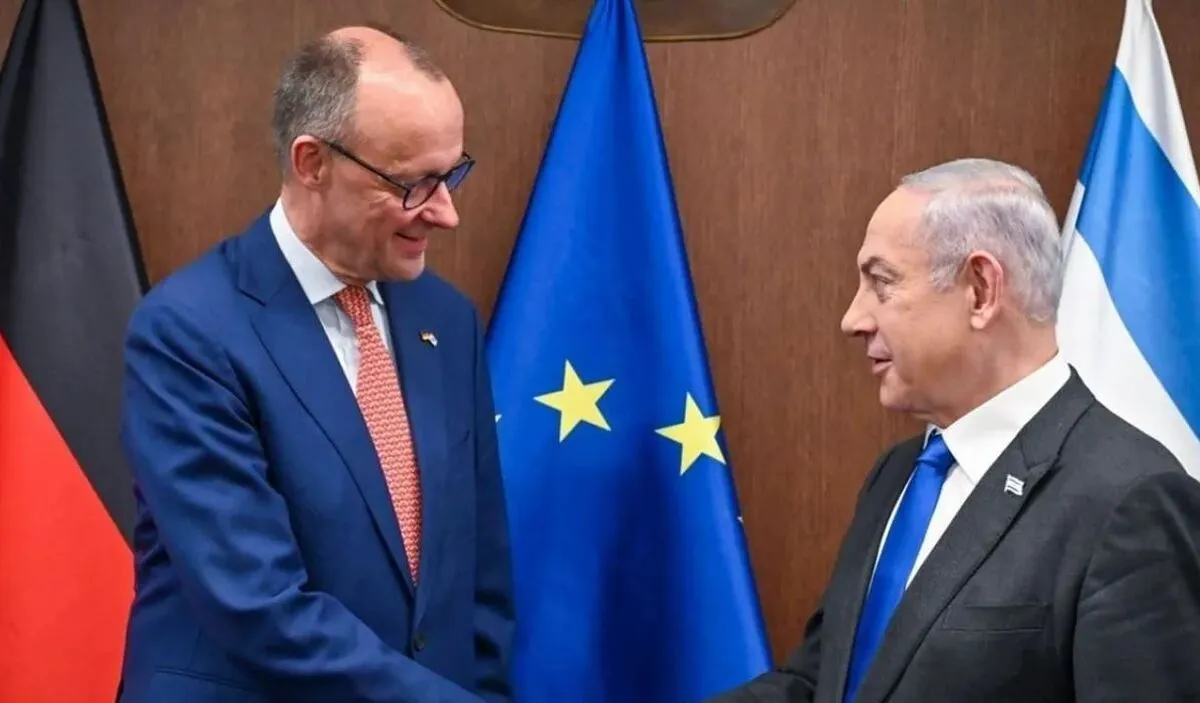
Israel’s Rafael company recently announced that the German parliament approved the purchase of 90 Litening-5 reconnaissance and targeting systems for use on the German Air Force’s Eurofighter Typhoon jets.
According to German media, the parliament’s budget committee had already allocated €350 million for this deal.
This comes despite German Chancellor Friedrich Merz declaring in early August that Berlin would suspend military exports to Israel that could be used in Gaza.
Rafael said the approval reflects its longstanding cooperation with Germany and Berlin’s continued trust in its systems.
While Merz’s August 8 announcement about halting weapons deliveries to Israel made international headlines as a supposed policy shift, the fine print told a different story. What seemed like a major change in Germany’s support for Israel’s genocide in Gaza may be largely symbolic, given key loopholes that allow German firms to continue profiting from the assault.
The critical detail—overlooked by much of the media—is that the German government’s decision only applies to future contracts, without revoking existing export licenses. This point, highlighted by the independent media outlet Jung & Naiv and confirmed by the Hebrew newspaper Haaretz, means that most German arms deliveries to Israel will continue without interruption.
Merz further clarified that only deliveries of weapons “directly used in Gaza” would be suspended, while broader military cooperation would go on. The duplicity became immediately apparent: on the very day of his announcement, German arms giant ThyssenKrupp revealed that Berlin had issued a second export license for the INS Drakon, the newest submarine in Israel’s fleet, worth roughly €500 million.
Germany’s strategic role in Israel’s war machine
Germany’s role in Israel’s military operations cannot be ignored. According to the Stockholm International Peace Research Institute (SIPRI), Germany is Israel’s second-largest arms supplier after the U.S., providing about 30% of Israel’s weapons between 2019 and 2023.
German arms exports to Israel include submarines, Saar-6 corvettes, Matador anti-tank missiles, Merkava tank engines and gearboxes, artillery propellants and fuses, and rifle optics.
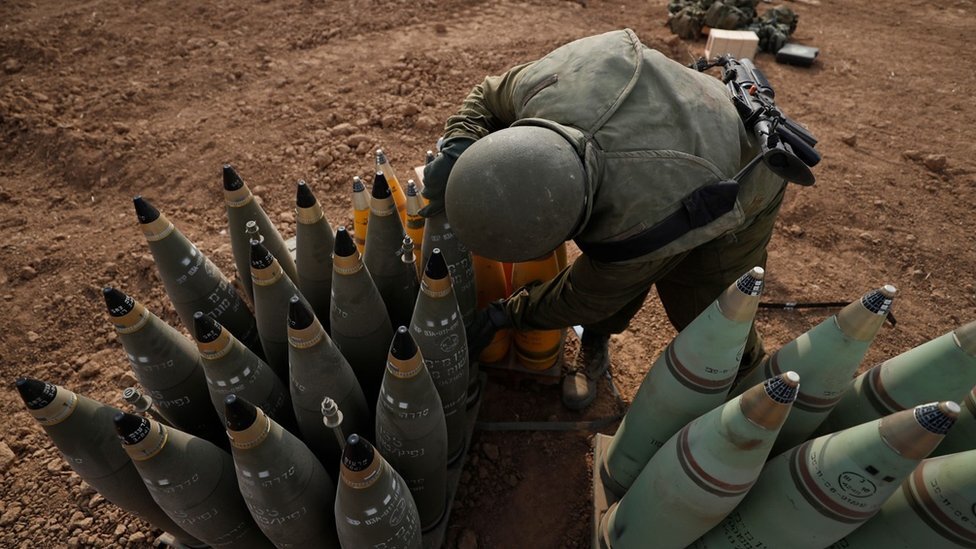
Additionally, Heron TP combat drones, produced in Israel, were leased to Germany and later returned to the occupied territories for use in Gaza bombings.
German shipping companies supply explosives and rocket engines to Israel. Joint ventures also facilitate tech transfer, such as the 155mm self-propelled howitzer program developed between Germany’s Rheinmetall and Israel’s Elbit Systems. Unconfirmed reports suggest sales of small-caliber ammunition and 120mm tank shells are under review.
Crucially, Israel is heavily dependent on German-made parts and munitions—items that U.S. companies, already strained by Ukraine and European demands, cannot supply.
Germany also hosts subsidiaries of Israel’s three largest arms companies, producing weapons and parts for their parent firms in the occupied territories. This makes Germany’s role not just important, but in some areas irreplaceable.
Industrial genocide and German technology
Israel’s assault on Gaza has been described as an industrial genocide. In November 2023, investigative journalist Yuval Abraham revealed how Israel used AI-based surveillance systems to generate tens of thousands of bombing targets in Gaza. His follow-up in April 2024 showed that the automated system had nearly depleted Israel’s munitions stockpiles.
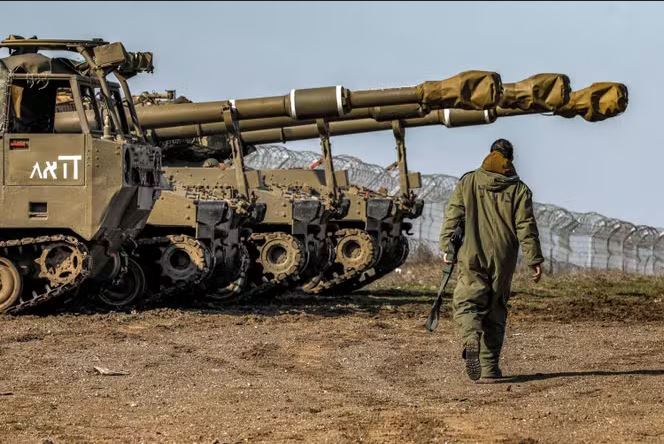
German technology is critical to this killing machine. The deadliest weapon Israel has used against Gaza is the 155mm howitzer, and German engineering enables the efficient loading of 45kg (99lb) shells, precise targeting, and continuous 24/7 shelling. This relentless bombardment depends directly on German know-how.
The human cost has been devastating. German Renk engines power Israel’s Merkava tanks—the same tanks that on January 29, 2024, killed six-year-old Hind Rajab, her family, and the paramedics who tried to save her. The same tanks took part in the February 29 massacre and continue shelling starving Palestinians at food distribution centers.
Loopholes
German arms manufacturer Sig Sauer, which supplies rifles to Israeli infantry in Gaza, produces them in the U.S., bypassing Merz’s declaration entirely. Similarly, Renk has announced it may relocate production to the U.S. to avoid restrictions.
Under the Arms Trade Treaty (ATT)—which Germany signed—the decisive factor is the territory from which weapons are physically delivered, not the nationality of the producing company. This loophole creates clear opportunities for circumvention, which German arms makers are already exploiting.