The hidden bill: How U.S. is paying for Israel’s war with Iran
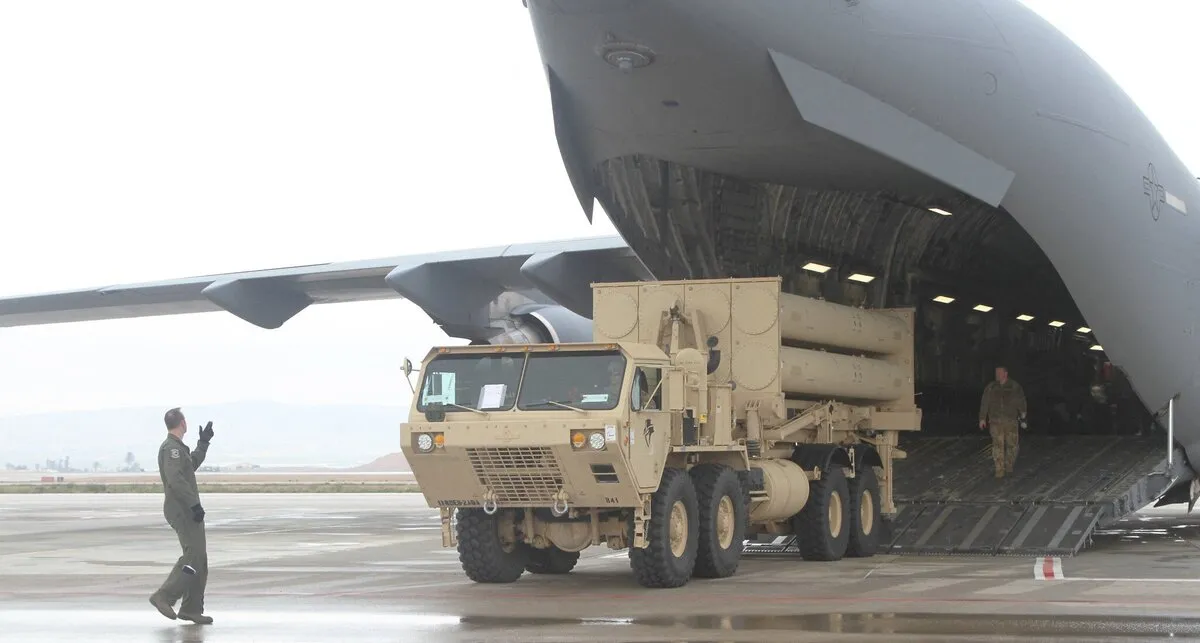
Yedioth Ahronoth reported in its Wednesday edition that the costs of U.S. presence in the Middle East are increasing day by day, especially after a potential war between Israel and Iran.
Daniel Edilson, a journalist for the outlet in the United States, wrote in his report: The costs of U.S. presence in the Middle East continue to rise, while reports of depleted U.S. missile stockpiles have exacerbated the situation. The Pentagon has currently requested $3.5 billion in emergency and immediate funding to purchase defensive and interceptor missiles, as most of the U.S. military’s stockpiles have been used up while defending Israel in its war with Iran. American experts warn that commitments to an ally can harm U.S. readiness, and this situation may continue.
The report continues: The costs of U.S. presence in the Middle East are rising, and the United States is facing difficulties in replenishing its missile stockpiles.
The Pentagon has submitted a “special emergency budget request” to the U.S. Congress worth approximately $3.5 billion to replenish missile interceptor systems deployed in occupied Palestine since October 2023.
Yedioth Ahronoth further reported: Documents obtained by Bloomberg News indicate this is not the first request but one of several, raising questions about the U.S.’s ability to keep pace with the speed of equipment delivery to Israel and the potential costs Washington may bear to support its ally. Meanwhile, experts have warned: “This situation cannot continue.”
According to the report, financial requests were made in several stages from late 2023 after the sudden Hamas attack and the U.S.’s initial intervention, as there were fears the conflict could escalate into a multi-front war against Israel.
The peak of these requests occurred in April 2024, after Iran’s first attack (Operation “Va’de Sadeq 1”), during which hundreds of drones and ballistic missiles were launched toward Israel. The latest request is also being submitted this month.
Documents submitted to Congress indicate that the rising costs of U.S. military presence in the Middle East have raised concerns in Washington about the United States’ ability to replenish and produce missiles at the required speed, especially amid regional tensions and Iran’s series of attacks during the “Twelve-Day War.”
Yedioth Ahronoth also acknowledged: This is not the first time such concerns have been raised; last month, experts warned that the U.S. had used about a quarter of its missile stockpiles and emphasized: “This should not happen again.”
The Pentagon’s emergency request includes $1 billion to purchase SM-3 interceptor missiles manufactured by RTX—the same missiles that U.S. Navy ships used in April 2024 to counter Iran’s missile attack.
The cost of each missile is estimated between $9 and $12 million. The Pentagon has also requested replenishment of THAAD systems, which had deployed an additional battery in April to intercept missiles launched from Yemen in the region.
Additionally, $2.9 million is requested for the maintenance of TPY-2 radars, as well as amounts for “special flight missions, ammunition transfer, and ship maintenance.”
According to these documents, the U.S. Navy had deployed destroyers in the eastern Mediterranean—including the USS Arleigh Burke and USS Sullivan—which fired SM-3 missiles in coordination with THAAD systems and Israel.
Yedioth Ahronoth, citing U.S. military experts, admitted that despite multiple layers of the most advanced defense systems, casualties and damage in Israel were still significant.
Pentagon data shows the U.S. faces serious difficulties in replenishing its stockpiles.
During the “Twelve-Day War,” more than 100 THAAD missiles were used, representing roughly one-quarter of the system’s operational inventory.
However, production levels do not match demand; last year only 11 new THAAD missiles were produced, and this year only 12 more will be added.
U.S. experts stress that these munitions are extremely scarce and represent a critical part of America’s deterrence, even against rivals such as China.
Current budget requests do not include equipment sent to Israel since October 7, 2023, valued at approximately $4 billion.
According to the report, these budgets are necessary to cover the costs of U.S. Central Command (CENTCOM) forces deployed “at Israel’s request or in coordination with it, to protect its territory, forces, or assets” from Iranian attacks and its allies.
The Pentagon has announced that the 2026 budget includes a plan to significantly expand the production capacity and purchase of 37 new THAAD missiles, in addition to investing several billion dollars to improve the supply chain. Nevertheless, the agency acknowledged that extensive commitments to Israel have had a heavy cost on U.S. force readiness.
A senior former official concluded: “Stockpiles are decreasing, and we immediately need more missiles.” The latest budget request highlights the duality between deep commitment to an ally like Israel and growing concern over its impact on U.S. deterrence and readiness on other fronts.