Homelessness or Crime? Trump’s controversial plan to ‘Clean Up’ the capital
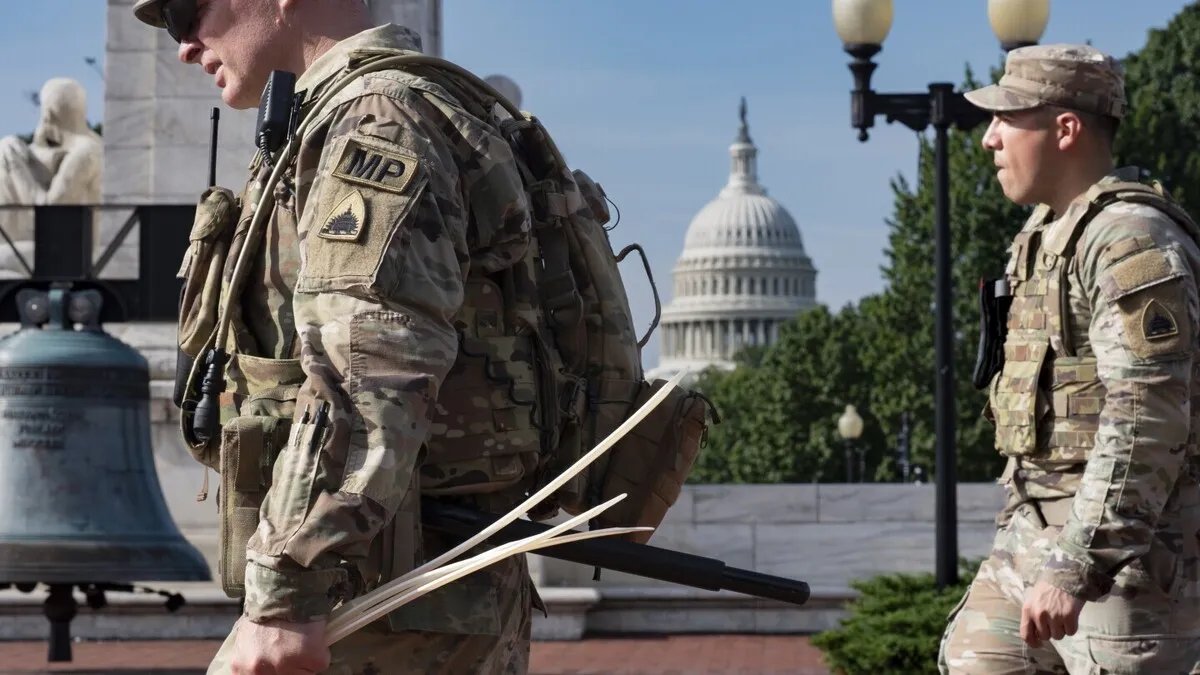
On August 11, 2025, Trump announced the deployment of U.S. National Guard troops in Washington, D.C., the nation’s capital. He stated that the move comes amid rising violence in the capital, which he claims now poses an immediate threat to government employees, citizens, and tourists, disrupts safe transportation and proper functioning of the federal government, and diverts critical public resources toward emergency response and security measures.
Trump’s statement confirmed the deployment of 800 National Guard troops in Washington, D.C., and indicated that he would temporarily assume control of the city’s police department.
The U.S. president also warned that other Democratic-led cities, including Chicago, could face similar actions. He described the situation there as disastrous and said: “If necessary, we will do the same in Chicago. I hope Los Angeles pays attention.”
Trump’s war on the homeless begins
Some observers argue that the reality is that Trump’s administration has effectively launched a war on the homeless.
Under his promise to combat crime in Washington, D.C., Trump stated that homeless individuals must leave the city, but the mayor of D.C. opposed the White House.
The Republican president has also praised his plan to transform Washington, D.C., into what he calls a safer and more beautiful city than ever.
Last month, Trump signed an order that makes it easier to detain homeless people, and he recently instructed federal law enforcement officers to be stationed on the streets of Washington, D.C. Trump wrote: “The homeless must go immediately. We want to take back the capital.”

Meanwhile, the White House recently stated that homeless individuals in Washington, D.C., could face jail time if they fail to comply with Trump’s efforts to suppress what he calls crime and “cleanup.”
Caroline Leavitt, a White House spokesperson, said homeless individuals will be given the option to leave their encampments, be transferred to shelters, receive addiction or mental health services, and if they refuse, they will face fines or imprisonment.
Leavitt added that the U.S. government is exploring strategies to relocate the homeless away from the capital. She noted that since March, U.S. Park Police have cleared 70 homeless encampments in federal parks, and the remaining two city encampments are expected to be evacuated soon.
Andy Wasnich, policy director at Miriam Kitchen, an organization serving the homeless, said his group is trying to warn people. He added that there is still considerable uncertainty regarding the consequences of this crackdown.
He said the best advice from activists is: If you can, go to a shelter; if you have someone to stay with, get off the streets and seek safety.
Homelessness record in the U.S. in 2024
American communities have long struggled with persistent homelessness. According to the latest U.S. Department of Housing and Urban Development (HUD) report to Congress on homelessness, the national homeless population reached its highest level in 2024, with more than 771,000 men, women, and children experiencing homelessness on a single night.

The HUD report estimated Washington’s homeless population at over 5,600 people, a 14.1% increase compared to the previous year. According to data from USA Facts, this figure places Washington, a city of just over 700,000 residents, as the sixteenth city among 20 U.S. cities with the largest homeless populations. The five cities with the highest homelessness are New York, Los Angeles, Chicago, Seattle, and Denver.
However, HUD data shows that the District of Columbia has the highest rate of homelessness in the U.S., with 83 homeless individuals per 10,000 residents.
Reuters reported that Trump, citing a provision that allows the president to assume control of the police for 30 days in an emergency, bypassed the elected leaders of Washington, D.C., by declaring a public safety emergency.