Revealing new Israeli army methods of destruction in Gaza
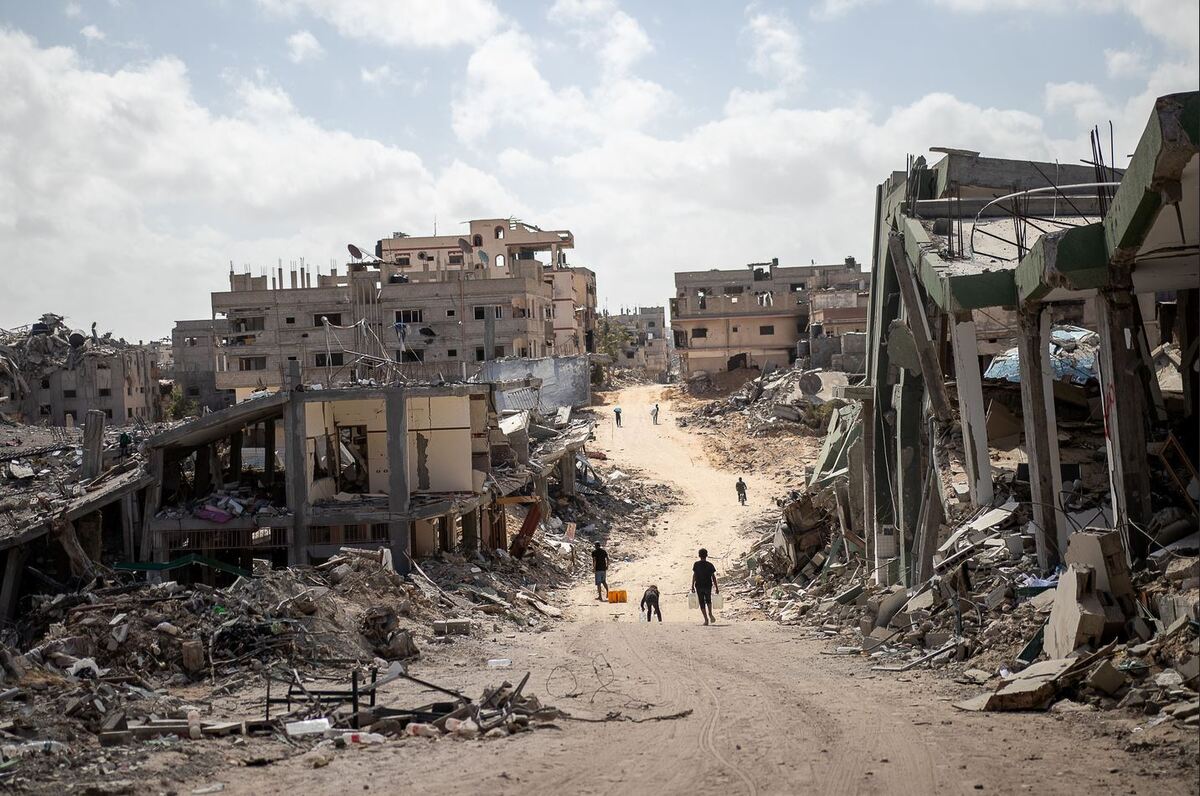
The newspaper Yedioth Ahronoth reported that a commander of the Israeli army’s paratrooper brigade developed a new method to accelerate the demolition of buildings in Gaza. In this method, a small drone first drops a light munition on the roof of a building to create a hole; then, a larger drone carrying dozens of kilograms of explosives enters the structure through that hole and detonates remotely.
According to the Israeli army, this method can reduce the time needed to demolish a 2–4 story building from about an hour to just a few minutes — sometimes as little as three minutes.
The Hebrew daily added that officers participating in the operation known as “Gideon’s Chariots” admitted that many of their missions in Gaza were essentially “demolition contracts” — involving the complete and systematic destruction of neighborhoods and residential areas in Khan Younis and Rafah.
The report went on to say that Israeli forces often face guerrilla warfare and rarely see their enemy directly, with most killings carried out remotely. The troops acknowledged that Hamas maintains an extensive network of drones and spotters that identify weaknesses in the occupying army and then act with small guerrilla units in ambushes.
Yedioth further noted that a severe manpower shortage in the Israeli army has created unusual circumstances, such as a Golani Brigade battalion being placed under the command of the paratroopers. For example, a few weeks ago, a Palestinian fighter emerged from a tactical tunnel for only a few seconds — with half of his body still underground — just as a “Tiger” armored vehicle from the 12th Battalion of the Golani Brigade passed by. The fighter planted a powerful explosive, destroying the vehicle, killing one soldier and injuring nine others.
According to the newspaper, this incident signaled Hamas’s return to guerrilla warfare through small cells rather than conventional military confrontation.
Yedioth Ahronoth concluded its report by stressing that Israeli military commanders are worried that the continuation of this situation could once again delay the planned “year of stability” for 2025. This date had already been postponed to 2026. Eyal Zamir, Chief of Staff of the occupying army, had intended to return the army to its normal training routine after two years of attritional war — or at least achieve a limited pause through a prisoner exchange deal.