Explanation of the requirements and components for strengthening national unity and social capital by the Head of the Judiciary
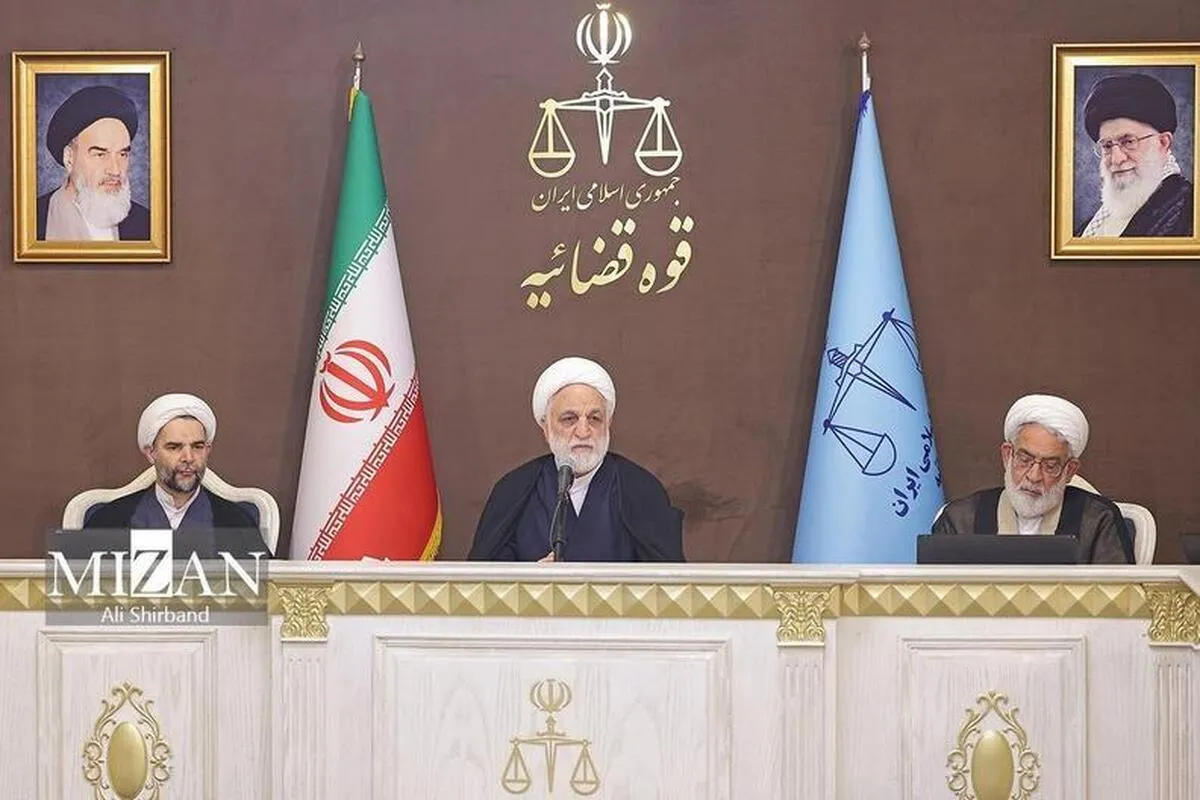
According to the Judiciary's Media Center, Mohseni Ejei today, Monday (July 21st), during a speech at the Supreme Council of the Judiciary meeting, referred to last week's meeting of senior judicial officials with the Leader of the Revolution.
He said: "We are immensely grateful to God that we, the officials and servants of the Islamic system within the Judiciary, were once again granted the honor of meeting the Leader of the Muslims and receiving and listening to his guidance and orders in person. The wise and insightful Leader of the Revolution conveyed important points and demands to the judiciary officials. We strongly emphasize that to fulfill his aspirations, we must strive even harder."
The Head of the Judiciary considered the preservation and strengthening of national and social unity and cohesion as essential and said: "The consolidation and strengthening of national unity is among the emphases and demands of the wise Leader of the Revolution and a duty upon all of us. All of us, as officials of the system, must act to enhance national unity and refrain from anything that leads to division and disunity. We must realize that this very national unity is what ensures the country’s progress and repels the harm of the enemies."
He continued by explaining the requirements for maintaining unity and national cohesion, stating: "In the path toward consolidating and strengthening national unity and cohesion, we need clarification, dialogue, and debate to reach a common understanding. This is important because a particular matter or action might, in the view of some, promote unity, while others may see it as divisive. For example, some believe that refraining from prosecuting a certain group of individuals and granting them legal leniency contributes to unity; conversely, others believe that prosecuting and punishing that same group strengthens unity, and failing to do so would undermine it. (Of course, adherence to the law remains paramount.) As you can see, there are two opposing viewpoints on the same issue. Therefore, the importance of dialogue and clarification regarding the components and requirements of strengthening national unity becomes evident."
The Head of the Judiciary added: "On the other hand, a person with a public platform might, in their view, make statements aimed at promoting unity, while in reality, those very statements and positions contradict national unity. This further highlights the necessity of explanation, clarification, dialogue, and direct engagement on the requirements and components of fostering national and social unity and cohesion."
He further elaborated on the elements that constitute social capital and the strengthening of public trust in the system, stating: "Just as consolidating and strengthening national unity is of paramount importance, so too is strengthening the elements that constitute social capital and public trust in the system. All of us, at every level and position, are duty-bound to enhance public trust in the system and increase the country's social capital. In fact, the same requirements and components that relate to unity and national cohesion also apply to public trust and social capital. There may be individuals in society whose demands and expectations conflict with those of others, with no overlap between them. Here, too, clarification and reaching a shared understanding are necessary so that, through collective wisdom, we focus on actions that build trust and avoid those that erode it. In all this, paying attention to general principles and Islamic values is essential."
Referring to the Leader’s emphases on combating corruption and the role of the Judiciary in this area, Mohseni Ejei said: "In recent years, earnest and sometimes arduous efforts have been undertaken to combat corruption both within the Judiciary and outside it. Despite all these efforts, we all acknowledge today that further actions are needed in this field, and much remains to be done in the fight against corruption."
The Head of the Judiciary clarified: "We have repeatedly declared that in combating corruption, we avoid noise and publicity stunts; instead, we seek fundamental, knowledgeable, decisive, and comprehensive action against corruption and the corrupt. Furthermore, we believe there must be a distinction between a corrupt individual and someone who has simply erred. We also believe that when corruption or a mistake occurs (while ensuring the perpetrator is not rendered useless and is given the opportunity for correction and reform), attention must be paid to the circumstances under which this wrongdoing occurred. If it happened under exceptional or ‘emergency’ conditions, one kind of approach is necessary; if those very conditions caused or bred corruption, then immediate measures must be taken to eradicate them."
In the remainder of today's meeting, Mohseni Ejei reiterated the need to expedite the handling of people’s judicial matters, saying: "During the recent 12-day imposed war and its aftermath, some judicial matters may have been delayed; for example, court sessions may have been rescheduled. We stress the utmost urgency in advancing these matters, which are directly connected to people’s cases. It should be noted that part of increasing social capital and enhancing public satisfaction depends on such prompt and vigorous actions."
Finally, the Head of the Judiciary stressed the significance of the two areas of ‘security’ and ‘livelihood’ for the people, stating: "In all circumstances, especially in the current period, the two matters of security and people's livelihood hold great importance. In these two areas, the Judiciary must support the government and relevant agencies more than ever."