Exposing the Israeli regime’s lie about the massacre of aid workers
The Israeli military recently martyred 8 Palestine Red Crescent aid workers, 5 civil defense workers, and an UNRWA worker in Rafah.
After the complete destruction of the workers’ vehicles, most of their bodies were buried in a deep pit, a horrific scene that serves as further evidence of the ongoing genocide in the Gaza Strip and is a major crime that constitutes a serious violation of international humanitarian law.
The aid workers were directly targeted despite being protected by international humanitarian law; moreover, evidence shows that the Israeli occupation forces not only martyred the victims, but also concealed their crime by using bulldozers and other large equipment to bury the bodies in a mass grave.
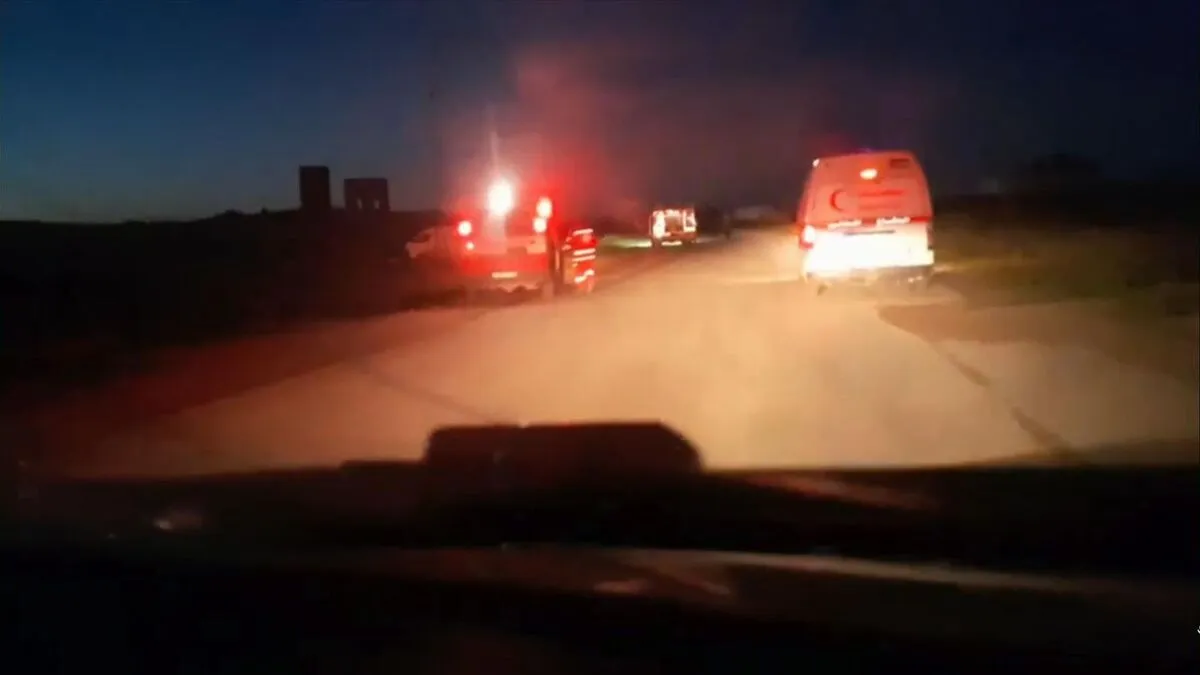
Now, a video from one of the rescue workers’ cellphones shows that the ambulances and fire truck targeted in the massacre were clearly marked and had rescue signs.
According to a report by the New York Times, newly discovered cellphone video from a rescue worker whose body was found in a mass grave in the Gaza Strip in late March reveals that the Israeli narrative that ambulances and fire trucks belonging to the Red Crescent and Gaza Civil Defense were targeted because they “came forward suspiciously” without their headlights and warning lights on is not true.
The New York Times received the video from a senior diplomat at the United Nations who asked not to be named.
The American newspaper wrote about the time and location of the video, which was recorded about two weeks ago, on March 23, in the city of Rafah. The video, which appears to be shot from the front seat of a moving car, shows a convoy of ambulances and a fire truck, all clearly marked and with their headlights and flashing lights on, driving along a road from the south to the north of Rafah in the early morning. The first rays of morning sunlight are visible in the video, and the sound of birdsong can be heard in the early morning.
The video continues with the convoy of emergency vehicles stopping and swerving to the side of the road after hitting an ambulance that had previously been dispatched to help injured civilians and had come under attack.
Then, rescuers, at least two of whom are clearly in uniform, exit a fire truck and an ambulance bearing the Red Cross emblem and approach the ambulance parked on the side of the road. Then, heavy gunfire is heard, and several bullets can be seen and heard hitting the convoy. Then, the screen goes dark, but the sound of the volley can be heard for five minutes without stopping.
A man also says in Arabic that the Israelis are there. The cameraman of this film finally speaks his “witness” at the end.
In the background, the voices of rescuers and anxious soldiers are heard shouting orders in Hebrew, but it is unclear what they are saying.
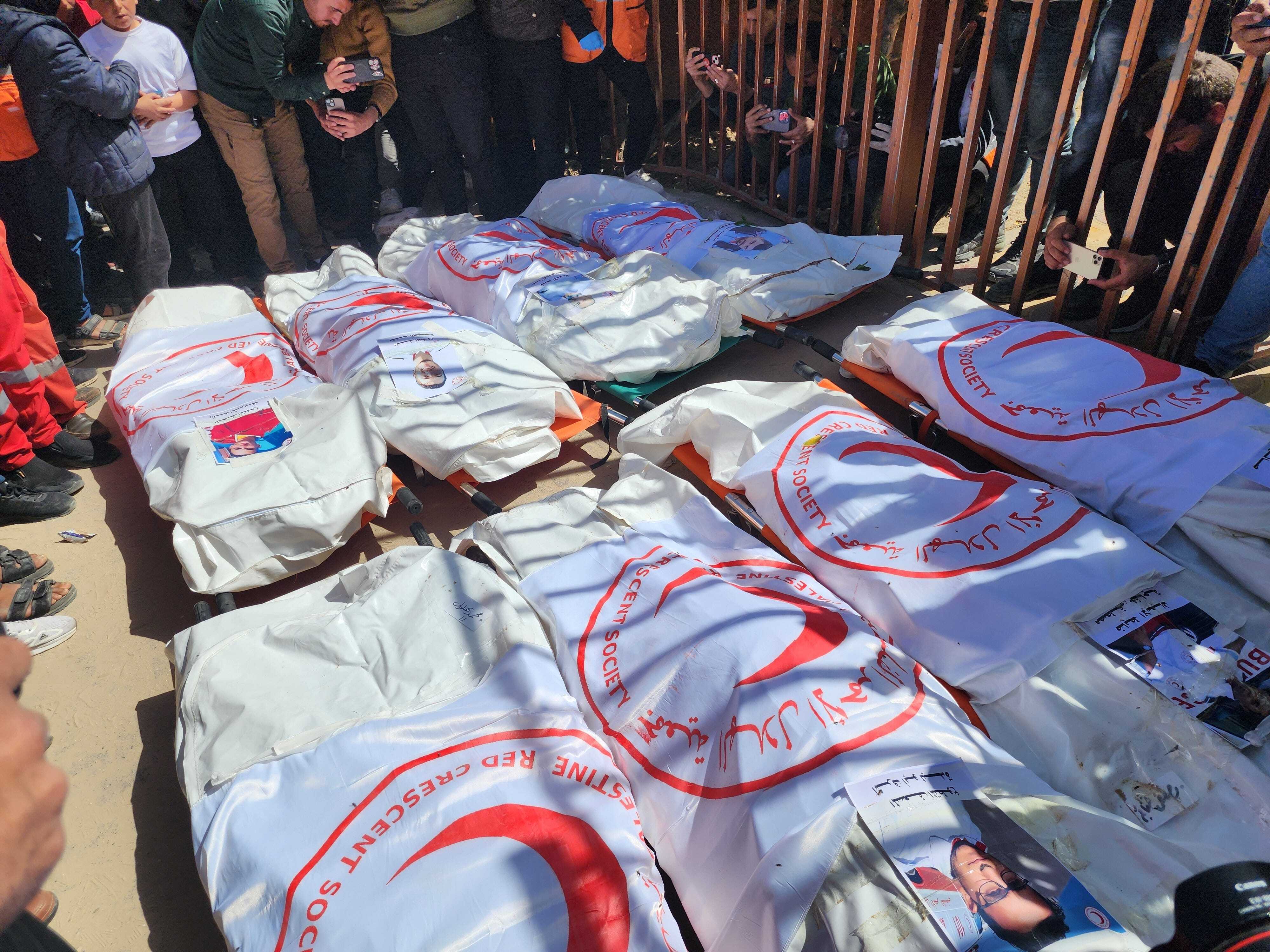
The body of the aid worker who filmed the video was later found in a mass grave in Gaza, shot in the head, the Palestinian Red Crescent Society spokesman Nabal Farsakh said in an interview from the West Bank city of Ramallah. The UN diplomat said his name had not been released because he had relatives in Gaza who were concerned about Israeli retaliation.
A few days ago, Israeli army spokesman Colonel Nadav Shoshani claimed that the army forces “did not attack an ambulance by accident,” but rather that several vehicles “were spotted approaching Israeli soldiers in a suspicious manner without their headlights on or emergency signals, prompting the soldiers to open fire.”
Shoshani had claimed that nine of the aid workers killed in the attack in Rafah were Palestinian fighters.
On Friday, officials from the Palestine Red Crescent Society stressed at a news conference held by the International Federation of Red Cross and Red Crescent Societies at the United Nations headquarters that the roughly seven-minute video recorded by the aid worker, obtained by The New York Times, had been presented to the UN Security Council as evidence that the Israeli regime was lying about its attacks on aid workers.
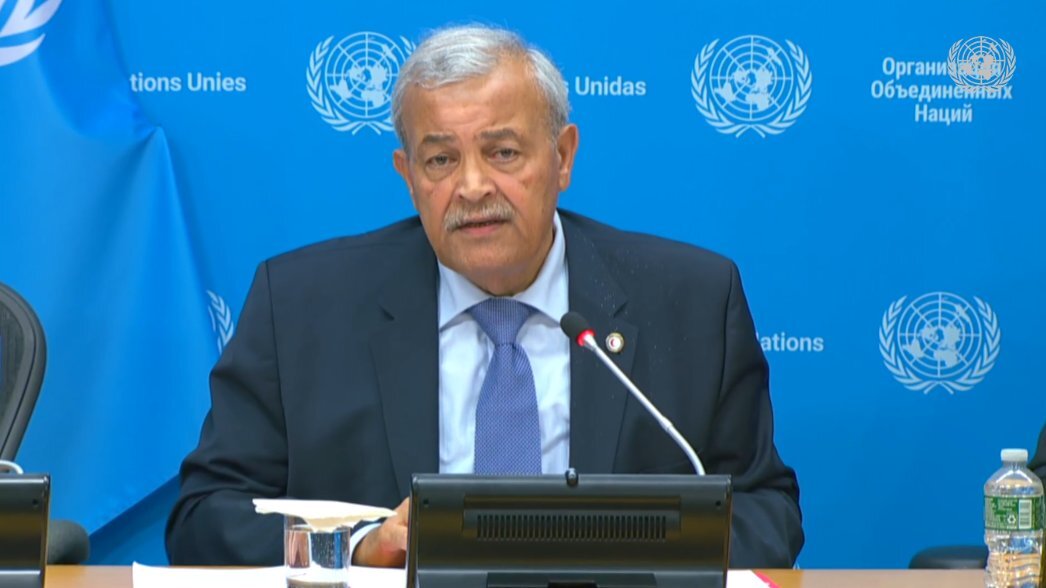
At a news conference at the UN headquarters, Dr. Younis al-Khatib, head of the Palestine Red Crescent Society, and Marwan al-Jilani, his deputy, told reporters that the evidence gathered by the organization - including the aforementioned video and audio and the examination of the bodies by a forensic pathologist - proved the Israeli version of events to be false.
Dr. Khatib said their bodies showed that they had been targeted at very close range, while the Zionist regime had not provided information about the whereabouts of the missing aid workers for several days.
“They (the Israelis) knew exactly where they were. Their colleagues were in agony, their families were in agony. Because they kept us in the dark for eight days,” he stressed.
It was only five days after the aid vehicles were attacked and silenced that the UN and the Red Crescent were able to negotiate with the Israeli army for safe passage to search for the missing. On Sunday, rescue teams found 15 bodies, most of them in a shallow mass grave, along with crushed ambulances and a vehicle bearing the UN logo.