South Korea's Supreme Court upholds president's impeachment
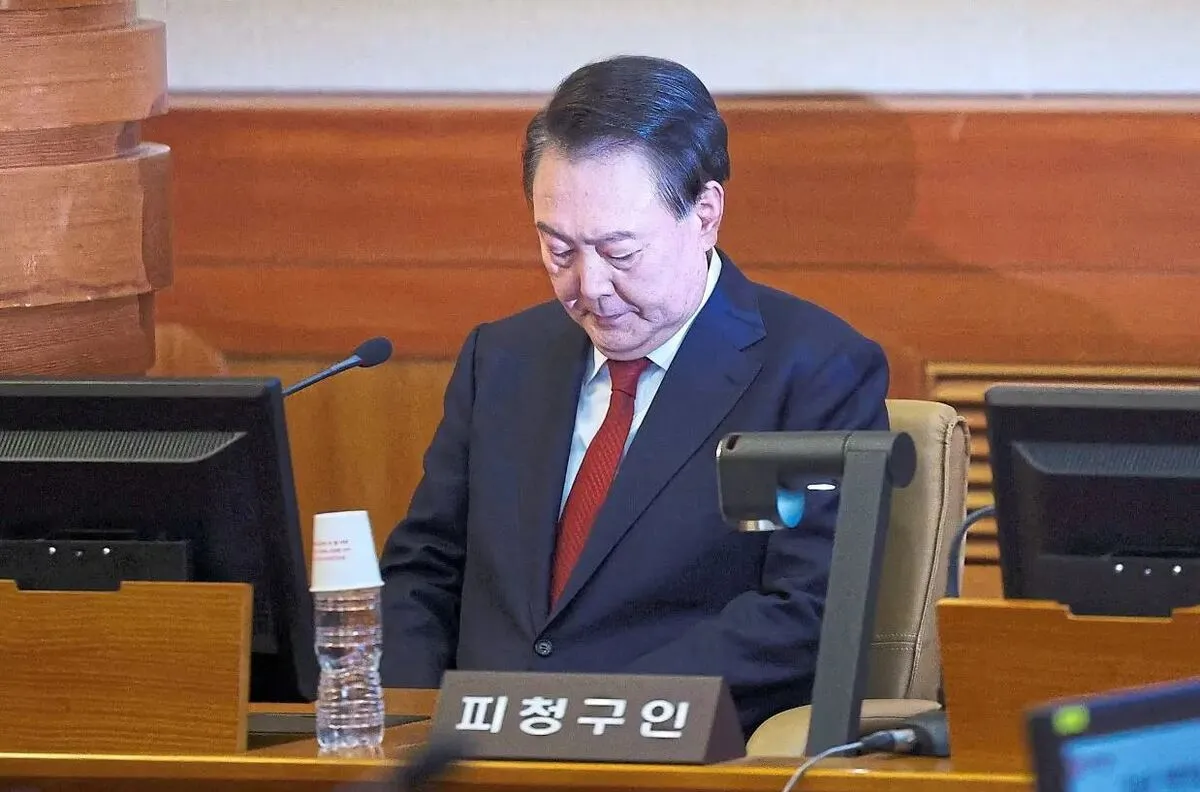
South Korea's Constitutional Court on Friday upheld the impeachment of ousted President Yoon Suk Yeol, ending his tumultuous presidency.
The decision came after Yoon declared martial law four months ago in a controversial and unsuccessful move that has thrown South Korean politics into turmoil. The ruling sets up a new election to choose his successor within two months.
Announcing the verdict, which was broadcast live on television, acting President Moon Hyung-bae said Yoon had seriously violated the constitution and other laws by declaring martial law and using military and police forces to suppress parliamentary activities.
“The declaration of martial law in this case violated the basic requirements for a state of emergency, and given the severe negative effects on constitutional order, the removal of the president is in the interest of preserving the constitution,” he added.
Experts believe that the deep divisions in South Korean society over Yun’s removal could complicate the country’s efforts to counter Donald Trump’s “America First” policies and North Korea’s growing ties with Russia.
Yun’s ruling party said it would accept the decision, but one of his lawyers, Yun Kap-geon, called the court’s ruling “completely incomprehensible” and a “political decision.” Prime Minister and interim leader Han Deok-Soo promised to maintain national security and public order and to manage the next election well.
Opinion polls show Lee Jae-myung, leader of the Liberal Democratic Party, has a strong chance of winning the snap election. Lee welcomed the vote, calling it a sign of the courage of the people and soldiers who refused to carry out unjust orders.
The martial law, which lasted just six hours, sent hundreds of soldiers into parliament and clashed with protesters, shaking financial markets and alarming South Korea’s diplomatic partners. Yun, who now faces criminal charges including “insurrection,” claims the move was to drum up public support for the Democratic Party and confront its “evil.” However, some experts believe he was trying to block an independent investigation into the scandals involving his wife, Kim Geun-hye.
Yun, a former attorney general who took office in 2022, is now the first sitting South Korean president to be arrested and tried while in office. He still faces charges including abuse of power and has lost his presidential immunity.