The Ukraine War and the Exposure of US-European Differences
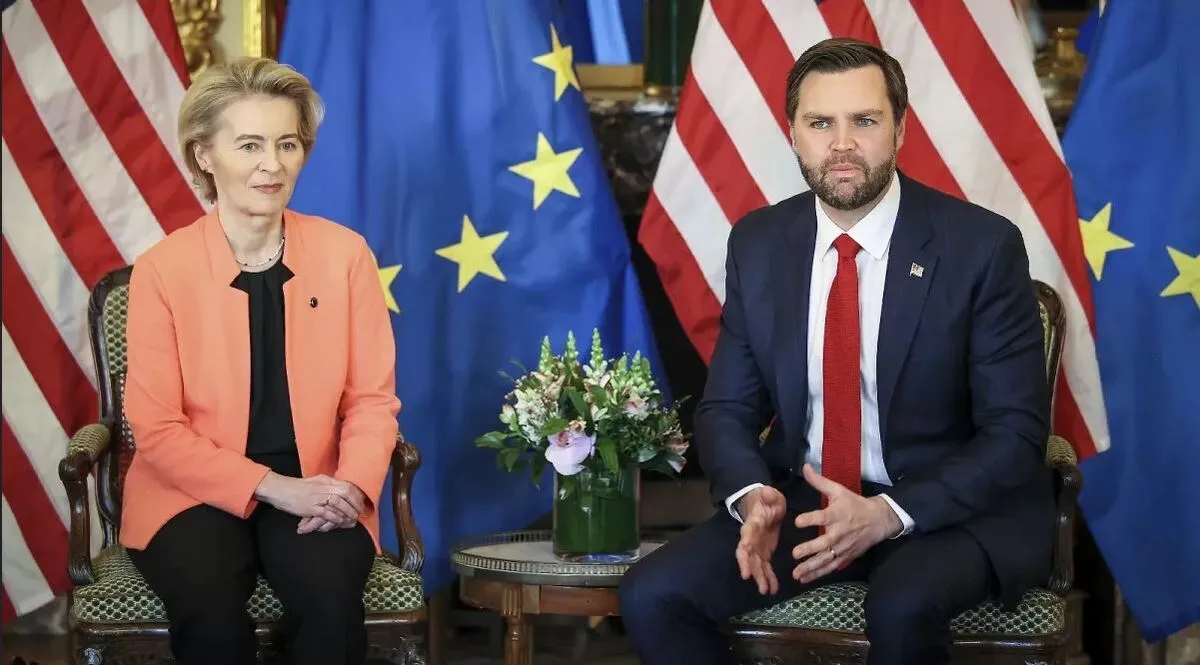
European leaders, who recently met in London, announced that they would work on a plan to end the Ukraine war, but with security guarantees for Kiev.
The meeting in England took place after the controversial visit of Ukrainian President Volodymyr Zelensky to the White House.
According to the Conversation, the consequences of one of the most undiplomatic and infamous White House meetings in recent history show a changed world.
Trump has now stopped all military aid to Ukraine, blaming Zelensky for his lack of desire for peace and lack of appreciation for the United States.
Tensions between Washington and Brussels have been high in the weeks between Trump’s vice president, J.D. Vance, speaking at the Munich Security Conference and Donald Trump’s decision to cut off all US military aid to Ukraine.
The pressure is particularly intense for Keir Starmer, who has been praised for his calmness in trying to keep his focus on the fundamental goal of keeping America united with Europe on Ukraine’s sovereignty and independence.
This is a difficult task, as the British military, political, intelligence and foreign policy establishment have made practical support for Ukraine the mainstay of their policy towards Russia for more than a decade.
Now Britain’s greatest ally seems set to undo the work of that decade; for the Foreign Office, it is not only disorienting, but also like suddenly living in a world without a map.
If the current British and European proposals for a ceasefire fail, Europe is likely to enter the conflict directly; since Trump’s opposition, European leaders have welcomed Zelensky.
Trump has made it clear that the US will not provide security guarantees for Ukraine and has called on European military forces to take over instead.
But can Europe meaningfully provide security cover for Ukraine without US support? What are Europe’s real security capabilities?
NATO’s European members collectively have 2 million active troops, a small fraction of whom serve directly under the alliance’s command.
According to the latest NATO estimates, Turkey and Poland have the largest numbers of troops, with 481,000 and 216,000 respectively.
NATO’s European allies collectively have about 7,000 fighter jets, 6,800 tanks, 2,170 warships and six aircraft carriers, according to the Global Defense Firepower Index.