U.S. suspends U.K. tech deal: £31 billion investments on hold
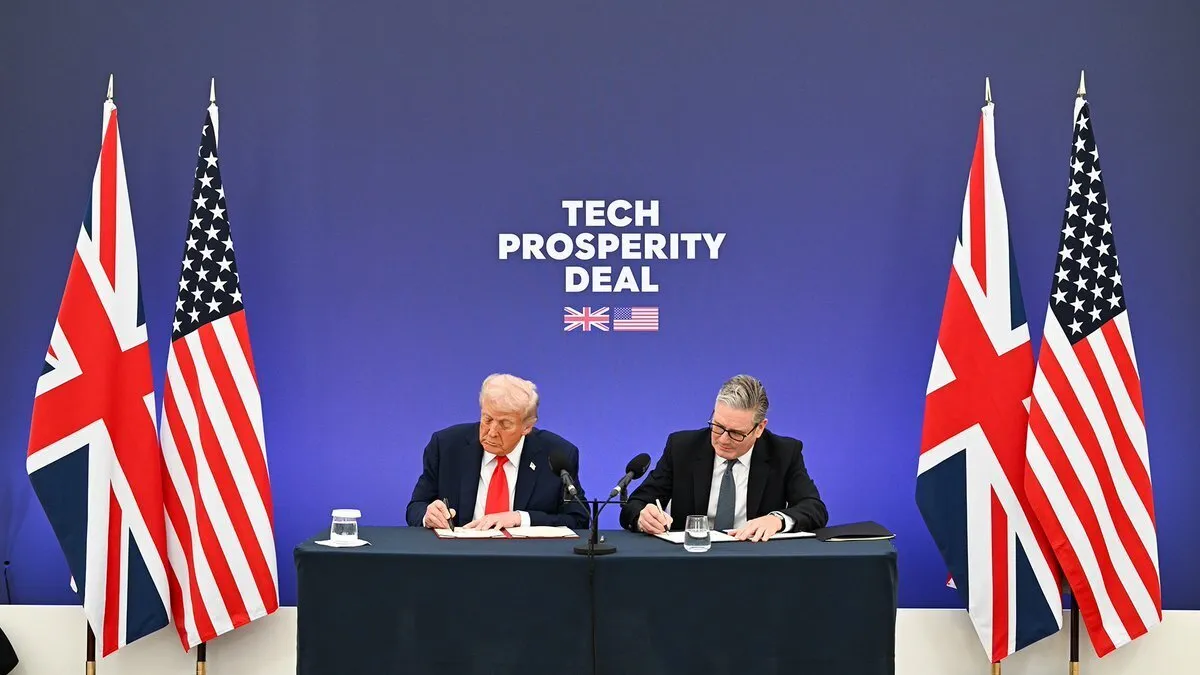
The agreement, concluded earlier this year, aimed to strengthen cooperation in artificial intelligence, quantum computing, and civilian nuclear energy. The U.S. has now put the deal on hold.
According to the Financial Times, U.K. officials confirmed that the U.S. suspended the agreement last week.
Sources say that U.S. President Donald Trump’s administration is seeking concessions from the U.K. in trade areas beyond the technology partnership.
The Financial Times reported that U.S. officials have grown increasingly frustrated with the U.K.’s reluctance to address so-called non-tariff barriers, including regulations related to food and industrial goods.
A U.K. government spokesperson said: “Our special relationship with the U.S. remains strong, and the U.K. is fully committed to ensuring the Tech Boom agreement delivers opportunities for hardworking people in both countries.”
The two countries reached the agreement during Trump’s visit to the U.K. in September, covering artificial intelligence, quantum computing, and civilian nuclear energy.
The U.S. is the U.K.’s largest trading partner, and major American tech companies have invested billions of dollars in operations in the country.
The Guardian reported that due to trade disputes, the U.S. has halted the multi-billion-pound technology investments promised in the U.K., marking a significant setback in bilateral relations.
The £31 billion “Tech Boom” agreement, praised by U.K. Prime Minister Keir Starmer as “a generational step in our relations with the U.S.” during Trump’s official visit, has been suspended by Washington.
Under the deal, U.S. tech companies had pledged billions in investments in the U.K., including £22 billion from Microsoft and £5 billion from Google. However, the U.S. cited a lack of progress by the U.K. in reducing trade barriers in other areas as the reason for pausing the agreement.
U.K. officials attempted to downplay the development, first reported by The New York Times. The newspaper noted that the Trump administration was dissatisfied with the continued digital services tax on U.S. tech companies and U.K. food safety laws that block some agricultural exports.
A U.K. government source said the negotiations were always tough, noting that the agreement to allow tariff-free pharmaceutical exports to the U.S. had its own challenges before finalization.
The Tech Boom agreement included the creation of an AI growth zone in northeast England, which U.K. officials say could generate £30 billion in revenue and create 5,000 jobs.
The text of the agreement stated that it would only take effect once substantial progress is made in formalizing and implementing it.
The suspension is a blow to the U.K. government, which promoted the agreement as a reward for its year-long intense engagement with the U.S. to avoid punitive tariffs on exports.
Starmer has resisted U.S. pressure to repeal or amend the digital services tax, a 2% levy on revenues of tech giants such as Amazon, Google, and Apple, generating roughly £800 million annually.
Trump repeatedly threatened retaliation against countries imposing digital taxes, including the U.K.
The Guardian revealed that during trade negotiations last spring, the U.K. proposed reducing payments from U.S. tech companies and expanding the tax base without lowering total revenue—but the tax has remained unchanged.