Narrative engineering the “Fall of Damascus”: Jolani’s fictional account
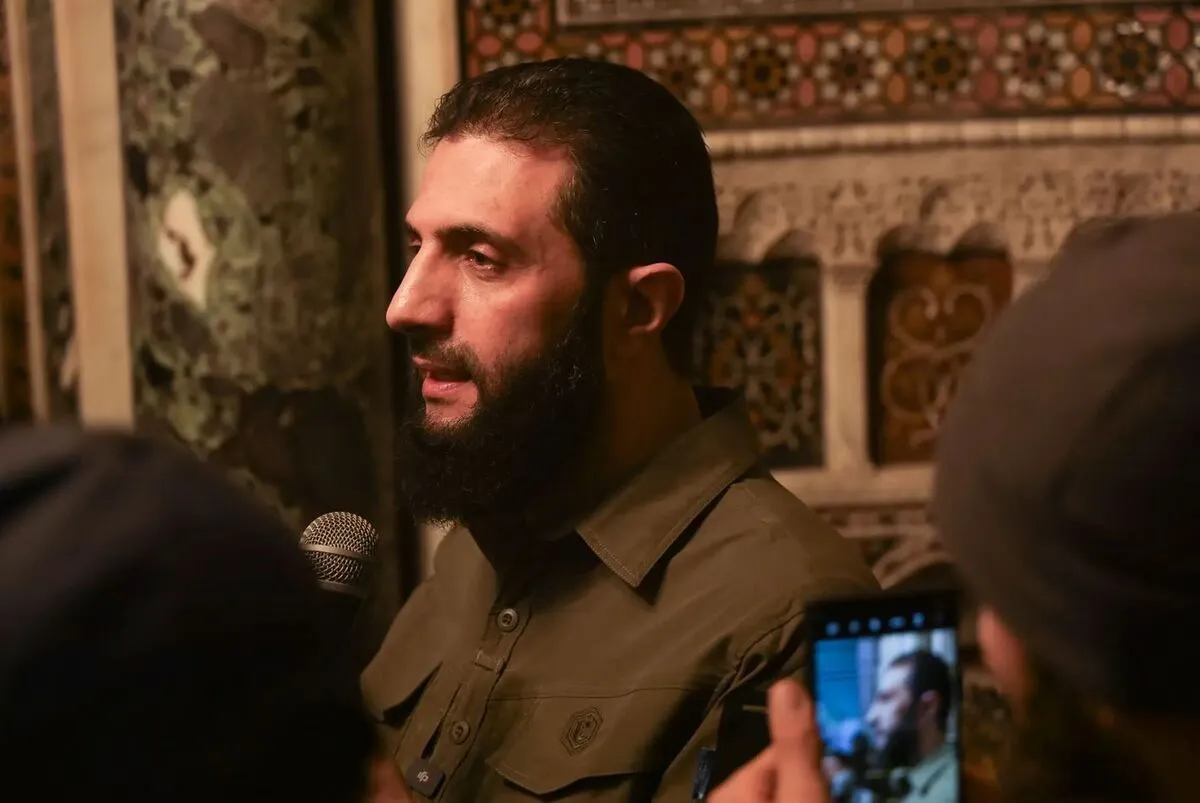
Recently, the leader of Hay’at Tahrir al-Sham (HTS), Abu Mohammad al-Jolani, has spoken about what he claims were the behind-the-scenes events of the final 11 days of Bashar al-Assad’s rule in Syria. His remarks include anecdotes that some audiences might mistakenly perceive as serious or factual. In reality, however, they are nothing more than deflection—an attempt to distort and distract from the actual course of events.
Jolani stated: “During the ‘Deterring Aggression’ operation last year, we exchanged messages with the Russians, and from those communications I sensed that the fall of Assad’s regime was near. After we took control of western Aleppo’s countryside, the Russians sent me a message saying, ‘Stop here and hold what you’ve taken—otherwise the situation will escalate.’”
But in this interview, Jolani omits several critical points concerning those so-called “final days” of Assad’s rule—details that, if acknowledged, would significantly alter his narrative about his movement’s supposed path toward Damascus.
First, the operation known as “Deterring Aggression” was carried out under the direct instruction and supervision of Turkey and the United States. Jolani was never in a position to decide whether the operation should continue or stop. In other words, he denies the simple fact that he was merely a pawn, portraying himself instead as an independent actor and decisive strategist. This propaganda tactic is part of the ongoing campaign to polish Jolani’s image, a project orchestrated not by HTS but by Washington and Ankara.
Second, Jolani makes no mention of the operation’s broader context—namely, its connection to the war in Gaza. It is beyond dispute that Mossad was fully aware of HTS activities in Idlib and, on tactical and operational levels, acted in direct alignment with the White House–Pentagon–CENTCOM triangle. The Turkish intelligence service, MIT, functioned as a conduit, not an independent player. Decisions about the timing, location, and nature of HTS’s escalation were not Jolani’s to make, nor was he capable of implementing them. Western think tanks have repeatedly highlighted this reality in their analyses over the past year.
Third, the political order currently governing Damascus is defined by narrative construction. Once the hidden layers of this narrative are exposed, Jolani will no longer be able to maintain—even for the small audience that still believes he is autonomous—the façade of an empowered or sovereign leader. This pressure has pushed him from “factual storytelling” to “manipulative narrative-building.”
But the key question is this: How long can this narrative last? Its shelf life is limited. Once it expires, Jolani will be forced to stretch his distortions even further. At that point, even the few remaining naïve supporters who view Jolani as the symbol of an independent uprising against an entrenched regime will no longer be able to digest his claims.