American slap to the European pawn
President Donald Trump’s recent remarks that “Europe is in decline and its leadership is in weak hands” are not merely a political critique—they constitute a devastating blow to the illusion of “Western unity.” These statements emerged at a sensitive moment in global negotiations and directly target the retaliatory credibility and strategic standing of the European Union in the international system. The contradiction becomes even sharper considering that European officials, including Kaja Kallas, Europe’s top foreign policy officer, had previously praised the Trump administration and loudly proclaimed Europe’s absolute dependence on the U.S.—an effort now rendered diplomatically scandalous by Trump’s comments.
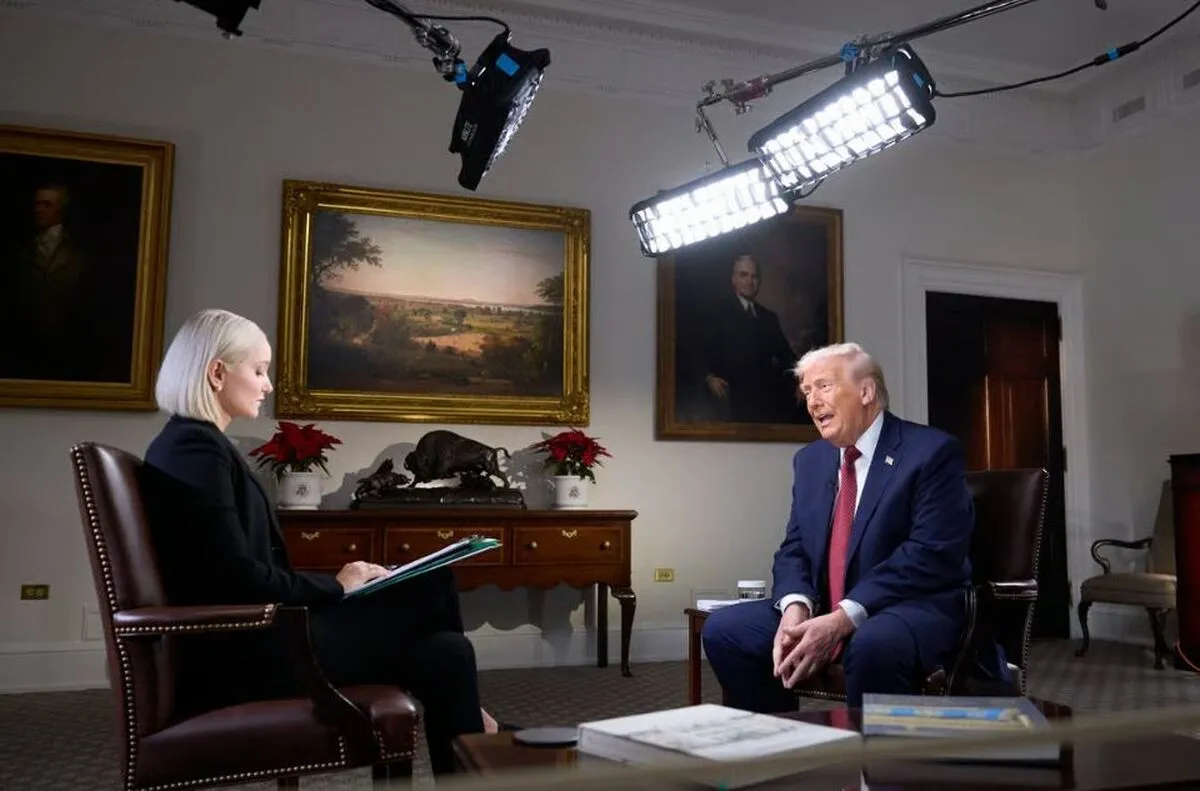
In an interview with Politico, Trump harshly criticized America’s traditional allies for failing to control migration and for their inability to end the war in Ukraine. This critique, regarded as the harshest tone ever adopted by the U.S. president toward Western countries, poses a clear threat to fully sever relations with pillars like France and Germany, whose ties with the Trump administration had already soured. Trump’s position is clear: Europe’s current leadership is “weak” and “does not know what to do.”
The U.S. president’s stance has significantly weakened Europe’s position on the global stage. When a major supporting power (the United States) openly labels its partner as “in decline,” the foundations of international trust upon which Europe depends to maintain its influence crumble. These statements also cast doubt on America’s future commitments, particularly regarding Ukraine—a concern acknowledged by European leaders. By explicitly stating that Russia is in a stronger position than Ukraine and offering no reassurance to Europeans, Trump has effectively reduced Europe’s role to that of a secondary actor dependent on external intervention.
This critical moment exposes the raw contradictions in European foreign policy. On one side, senior officials like Kallas attempt to assert absolute loyalty to Washington, insisting on a dangerous and flawed course in the international system—a course that European citizens themselves are frustrated with. On the other side, Trump exploits this dependence as a major and intolerable weakness, displaying absolute power and complete disregard. The result is that Europe not only finds itself in a weaker position against Russia but has also lost credibility and leverage even with its sole strategic ally.
This trend, more than a temporary crisis, reflects the structural erosion of the European Union. Excessive reliance on external leadership, failure to achieve genuine strategic autonomy, and inability to define a cohesive identity in the face of global challenges will sharply diminish the Green Continent’s credibility over the next decade. If Europe cannot abandon this humiliating dependence and pursue independent national and strategic interests, Trump’s prediction of decline will become a realized prophecy—ultimately leading to the collapse of the EU’s political and economic influence in the near future.