How Western double standards fuel the global crisis in women’s rights
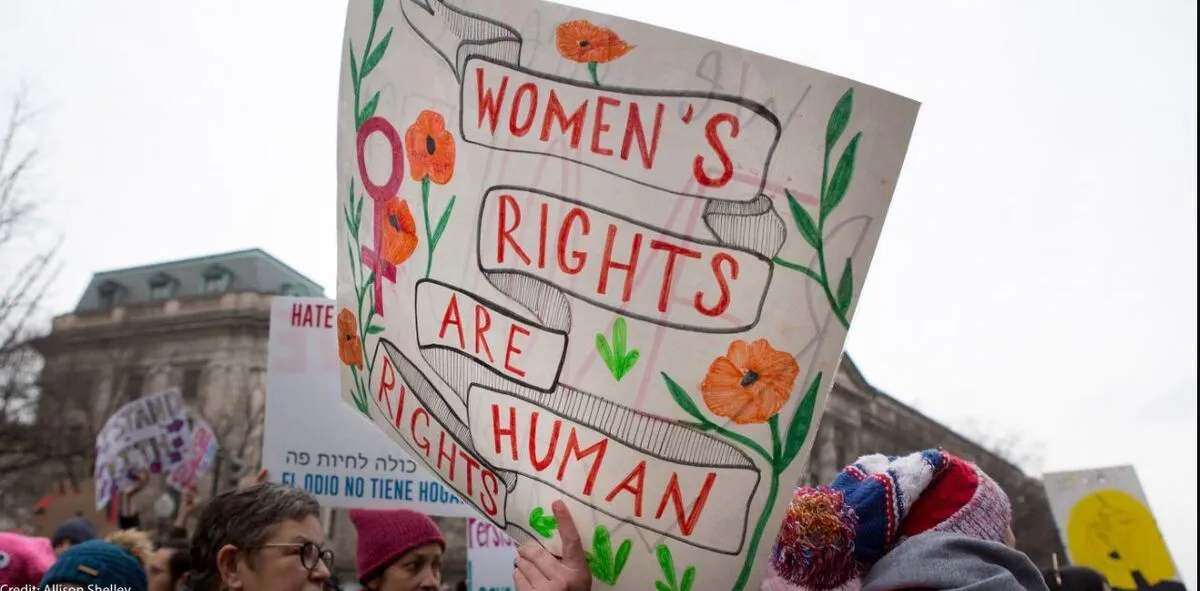
As the final days of 2025 pass, a look at the human rights challenges and crises targeting women throughout the year reveals alarming findings—findings rooted in double standards and the West’s disregard for women’s rights despite its claims and slogans.
UN Women, the World Health Organization (WHO), Amnesty International and Human Rights Watch continue to identify violations of women’s rights as one of the world’s most widespread and persistent human rights issues.
The 2025 UN Women report shows that the situation for women's rights has not fundamentally improved: violence, economic inequality and the devastating impacts of armed conflicts continue to affect millions of women.
Despite claiming global leadership in defending women’s rights, Western countries rank among the top violators—directly and indirectly contributing to abuses both at home and abroad.
Violence against women
Violence against women remained one of the most persistent global human rights violations in 2025. According to WHO, approximately 840 million women have experienced violence in their lifetimes—a figure that has barely changed since 2000.
In the past 12 months alone, 316 million women (11% of all women over age 15) experienced physical or sexual violence. This reflects an annual decline of only 0.2% over two decades, underscoring the lack of real progress.
In Europe and North America—self-proclaimed champions of women’s rights—millions of women continue to experience various forms of violence.
In the European Union, the annual cost of gender-based violence is estimated at €366 billion, 79% of which relates to violence against women.
A 2025 European Parliament report shows that violence against women persists in multiple forms, including domestic abuse, sexual assault and cyber-harassment.
Amnesty International’s 2025 report also notes an increase in violence against women in public and digital spaces.
Economic inequality and the wage gap
Persistent economic inequality remains another key dimension of violations of women’s rights in 2025. According to the Gender Snapshot report, extreme poverty among women has remained around 10% since 2020. If current trends continue, more than 351 million women and girls will be living in extreme poverty by 2030.
Women remain excluded from major economic participation: globally, they hold only 30% of managerial positions—and closing this gap will take nearly a century.
The digital divide is also striking; closing it by 2050 could add $1.5 trillion to the global economy and benefit nearly 350 million women and girls.
In the U.S. and Europe, women remain concentrated in low-income jobs and the gender pay gap persists.
Human Rights Watch reports that attacks on diversity, equity and inclusion (DEI) programs in the U.S. disproportionately harm Black, Latina and Indigenous women.
These policies, targeted by the Donald Trump administration, undermine women’s rights in the workplace.
Additionally, food insecurity affects 64 million more women than men, worsening women’s health.
Access to clean cooking fuels is another major challenge: by 2030, an estimated 896 million women may lack access—requiring an annual investment of $8 billion.
Artificial intelligence also poses a threat: 27.6% of women’s jobs are at risk from AI, compared to 21.1% of men’s jobs.
Violations of health rights
There has been major backsliding in women’s health rights. UN Women reports that women spend 10.9 years of their lives in poor health, compared to 8 years for men.
Meanwhile, anemia among women aged 15–49 is projected to rise from 31.1% in 2025 to 33% by 2030.
Impact of conflicts and insecurity
In 2025, global conflicts reached record levels: 676 million women live within 50 kilometers of deadly conflict zones.
Human Rights Watch highlights a range of abuses, including sexual violence in Sudan, the destruction of maternal healthcare in Gaza and the trafficking of women in Colombia.
In Haiti, criminal gangs have escalated sexual violence against women. In Western countries, migration and security policies increasingly violate the rights of migrant women.
A UN Security Council report shows that the adoption of resolutions related to women’s rights dropped by 21% in 2025.
Violations of women’s rights in Western countries
The hypocrisy of Western countries on women’s rights exposes the vast extent of their neglect and violations.
Despite projecting themselves as defenders of women’s rights, Western states’ domestic abuses and foreign policies undermine these claims.
Human Rights Watch notes that several Western nations have recently seen the rise of governments whose policies harm women's rights.
In the U.S., women—especially women of color—face widespread violations. In Europe, the erosion of migrant and refugee rights has significant negative impacts on women.
Western hypocrisy reaches its peak in foreign policy. For example, the United States supplies weapons to Israel—a regime that has deliberately massacred women and children in its two-year war on Gaza—yet Washington has refused to condemn these crimes.
The year 2025 has once again underscored the urgent need for action on women’s rights. Violence, inequality and conflict continue to affect millions of women. Meanwhile, Western countries, despite their self-proclaimed leadership, remain deeply complicit in widespread violations.