Head of the Judiciary attends gathering of Zanjan University students / Mohseni Eje’i: Not only has the fight against corruption not decreased, it has increased as well
According to the Judiciary Media Center, Mohseni Eje’i entered Zanjan Province this morning on an unofficial trip along with the senior judicial delegation as part of his 48th provincial visit since taking office.
During the trip to Zanjan, the Head of the Judiciary and other senior judicial officials will carry out various programs aimed at addressing the legal and judicial issues and problems of the people of the province.
Among the programs planned for this visit are meetings with students, sessions with judges and judicial staff, a meeting with provincial officials, follow-up on the implementation of resolutions from the previous visit of the High Judicial Council to Zanjan, and attendance at the university on the occasion of Student Day.
It is worth noting that since assuming the presidency of the Judiciary on July 1, 2021, Mohseni Eje’i has, in an official capacity and at the head of the High Judicial Council, traveled to the provinces of Ilam, Qazvin, Khuzestan, Golestan, Khorasan Razavi, Sistan and Baluchestan, Qom, Yazd, South Khorasan, Zanjan, Markazi, Isfahan, Alborz, Kurdistan, East Azerbaijan, Kerman, Ardabil, Bushehr, Hormozgan, Kohgiluyeh and Boyer-Ahmad, Chaharmahal and Bakhtiari, Semnan, Tehran, Kermanshah, Gilan, Lorestan, West Azerbaijan, Hamedan, and Mazandaran.
In addition to official provincial trips conducted with the High Judicial Council, the Head of the Judiciary has also included unofficial, non-ceremonial visits in his work agenda. In recent months, he has visited the provinces of Alborz, Isfahan, Hormozgan, Bushehr, Kerman, Khorasan Razavi (twice), North Khorasan (twice), Mazandaran, Fars, Golestan (twice), Khuzestan, Ilam, Qom, and Yazd without formal protocols and in an unofficial capacity to review judicial issues in those areas.
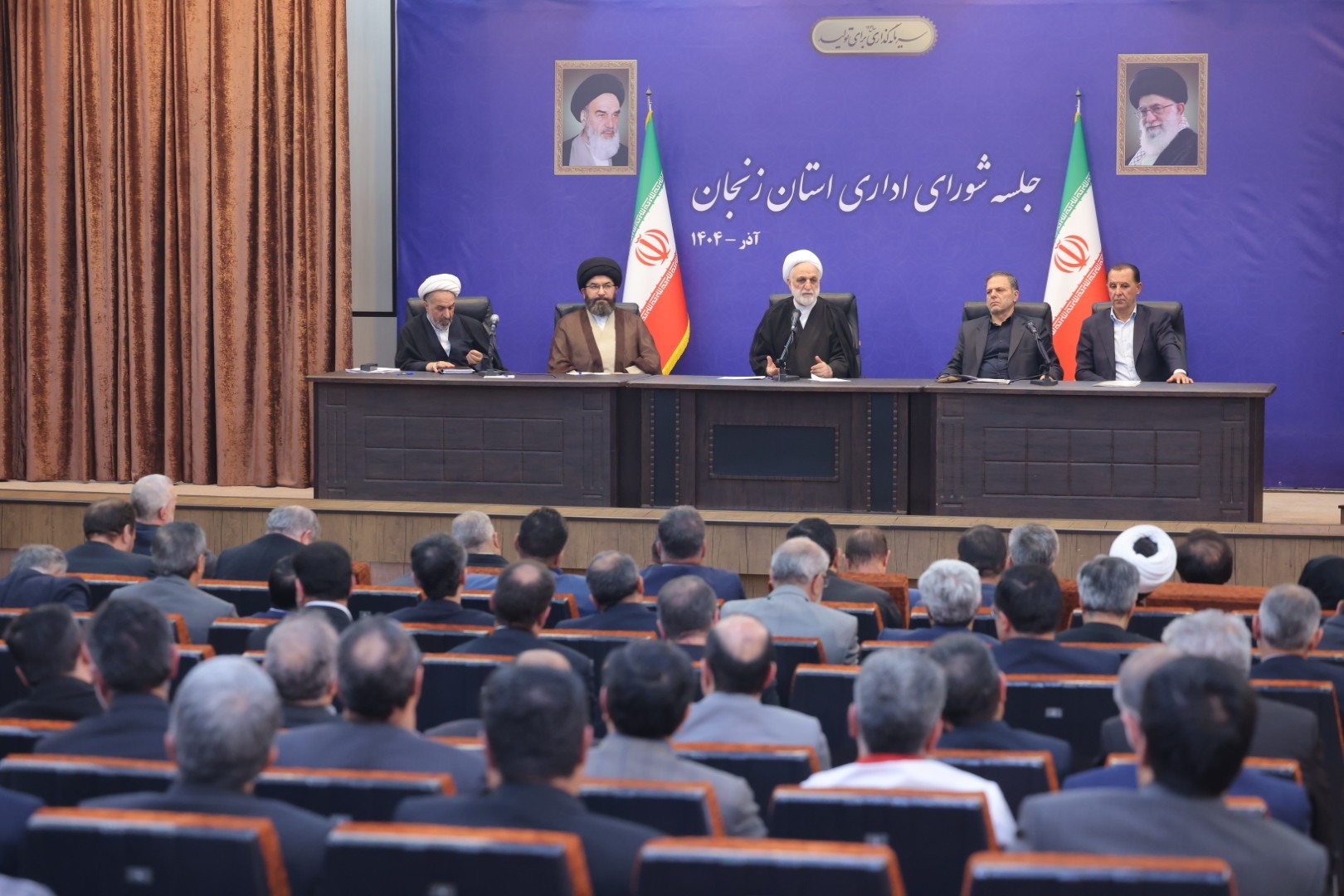
According to the Judiciary’s Media Center, Mohseni Eje’i said during a meeting of the Administrative Council of Zanjan Province that the enemy is attempting, through a combination of measures, to create the impression that we are incapable of running the country and to spread despair. In response, the first and foremost thing we must do is preserve our unity and cohesion. Differences of opinion and taste certainly exist, but despite these differences, we can remain united and overcome our problems.
The head of the judiciary added that the issue of culture must permeate all aspects and dimensions of our lives. When we carry out security-related work, cultural considerations must also be taken into account; when we engage in economic activities, it is essential to consider their cultural implications as well.
The Chief Justice stated that today the enemy is exploiting some of the existing social abnormalities in our country. He stressed that the more these abnormalities increase, the higher the costs we will have to bear. Some of these issues must certainly be addressed through cultural and media efforts, while others will require judicial action. However, even in judicial measures, cultural and media dimensions must also be taken into consideration.
Mohseni Eje’i further said that officials must pay special attention to agriculture and food security, adding that if we encounter problems in this field, our independence will also be put at risk. He noted that although the country is facing drought, a true manager is one who can move affairs forward even under hardship and pressure. Therefore, despite the drought, relevant officials must adopt proper measures to ensure that the country does not face difficulties in agriculture and food security.
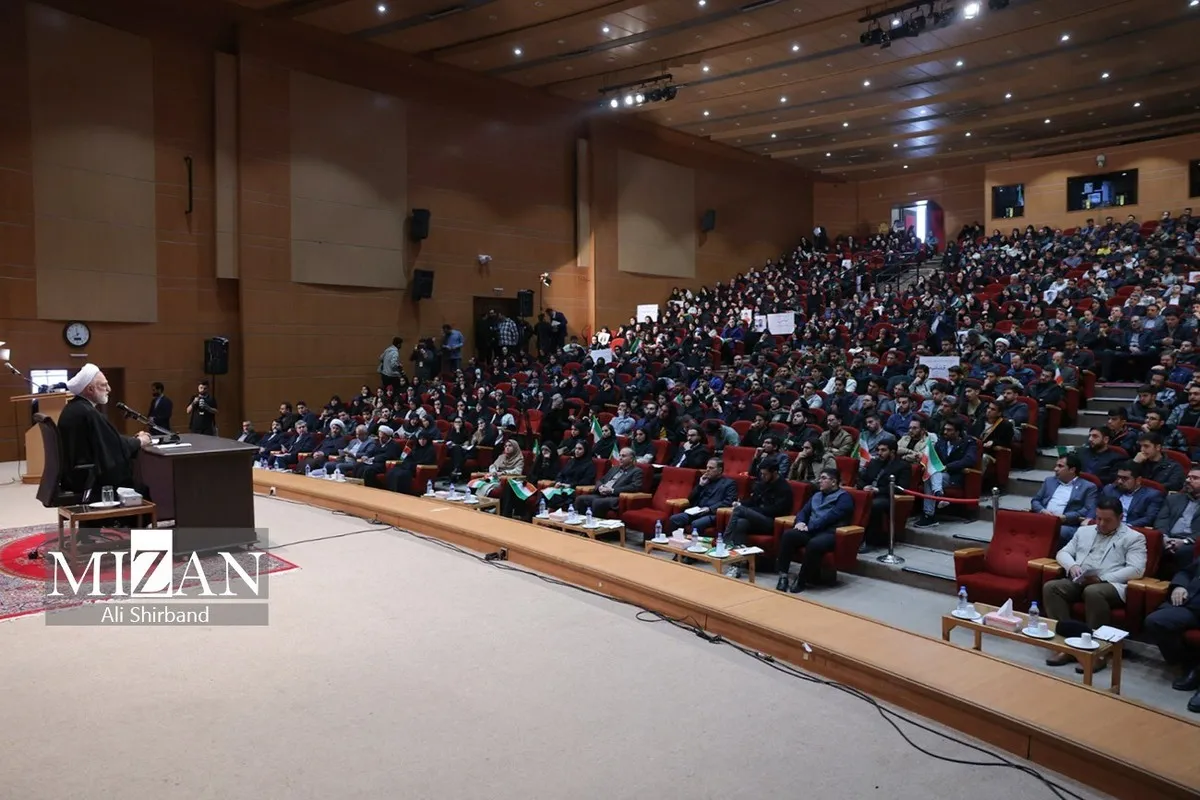
On Student Day, Mohseni Eje’i attended a gathering of students at Zanjan University to meet and engage in dialogue with them. Today’s presence of Mohseni Eje’i among the students of Zanjan University marks his 15th appearance at universities and student meetings nationwide during his tenure as Head of the Judiciary.
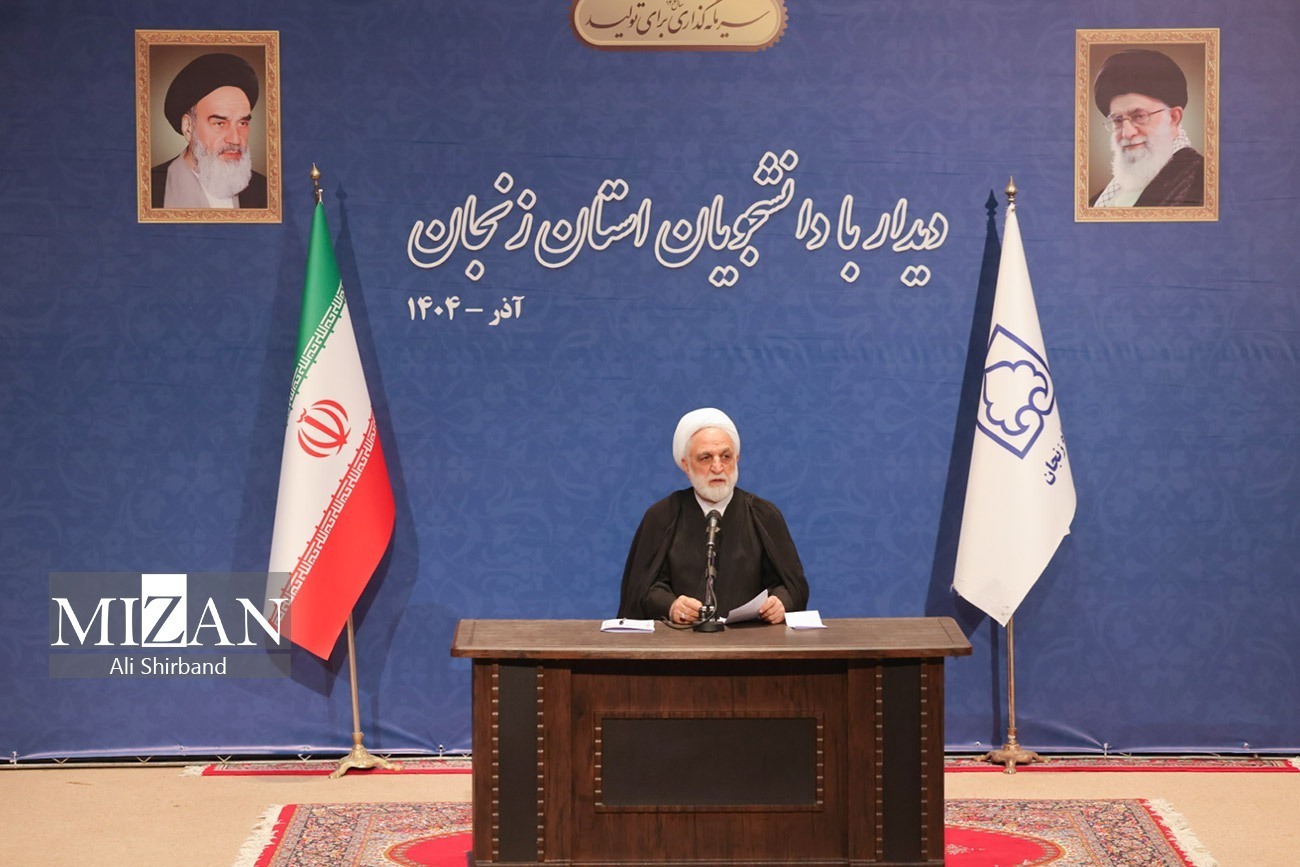
The Head of the Judiciary, in his remarks at this friendly gathering, while commemorating Student Day and sending salutations to the souls of martyred students, stated:
“After the coup of August 19, 1953 (28 Mordad 1332), the ruling government established relations with arrogant and colonial regimes such as the United States and the United Kingdom. In that context, the Vice President of the United States came to Iran, but the students did not tolerate this. As the beating heart of society, they stood against the coup plotters and the arrogant powers and, along this path, offered martyrs such as Ghandchi, Bozorgnia, and Shariat-Razavi to the country and the movement.”
The Head of the Judiciary said: “Truly and without any flattery, I say that attending student gatherings is very precious to me. I consider myself deprived that I cannot participate more frequently in student assemblies.”
Referring to the importance of expanding justice and creating conditions for the rehabilitation of offenders, he stated: “If we believe that creating opportunities for the reform and rehabilitation of offenders is a desirable and commendable matter, then we must take measures to reduce the consequences and harms associated with this process.”
The Chief Justice emphasized: “We believe that when someone slips, we must take their hand at the very first step so that they do not fall into the abyss—not that we push them and then grab their collar and rejoice that we have uncovered corruption and introduced them as a criminal and a corrupter. If our supervisory bodies are not moving along this correct and sound path, what should we do to guide them toward it?”
He added: “One of the great blessings God has bestowed upon humanity is the opportunity for repentance, reform, and compensation. How can we implement this great divine blessing in our society under current conditions? If the grounds for repentance and reform of offenders exist, should we refrain from pursuing this path?!”
Mohseni Eje’i stated: “The truth must be spoken; but how we speak this truth, and with what kind of language we express it, must be such that it is effective and that enemies and ill-wishers cannot exploit it.”
Regarding efforts to confront social abnormalities and the issue of chastity and hijab, the Head of the Judiciary said: “As the Head of the Judiciary, I have undertaken a series of measures in this regard, but if other institutions do not cooperate and only the judiciary seeks to intervene through coercive power, that will not suffice.”
He added: “In Dey 1401 (December 2022–January 2023), meaning after the events of that autumn, I warned several relevant officials in a meeting that urgent measures must be adopted regarding the issue of chastity and hijab, because with the passage of time, movements and activities could emerge in this arena.”
The Chief Justice further stated: “In the first days of Farvardin 1402 (March 2023), I also held two meetings with relevant officials and stakeholders from various political, social, cultural, security, and law enforcement sectors. I explicitly told them that I had compiled the existing laws and regulations related to chastity and hijab and that, in my view, with these very existing laws it is possible to achieve more than 75 percent success and curb social abnormalities. For example, I explained the legal duties of business guilds, the Law Enforcement Command (FARAJA), and others in those meetings.”
He continued: “During those meetings, a four-article directive was also issued, and it was stipulated that intelligence agencies identify organized networks promoting immodesty and unveiling and introduce them to the judiciary, and that FARAJA, in accordance with its legal duty, confront overt crimes related to immodesty and unveiling in public spaces.”
Mohseni Eje’i added: “After some time, the issue of chastity and hijab was raised in the Supreme Council of the Cultural Revolution, where I once again emphasized that with the existing laws and regulations, we can, to a considerable extent, prevent laxity and unveiling in public spaces. Eventually, it was decided in the Council that the Judiciary should submit a bill on this matter.”
The Head of the Judiciary said: “In the Judiciary, using expert opinions, we drafted a concise yet efficient and implementable bill in nine articles on chastity and hijab, ensuring that all dimensions—including the dignity of women—are preserved. This bill was sent to the government, and six additional articles were added. However, the parliament expanded the 15-article bill into 74 articles, and there were back-and-forth exchanges with the Guardian Council. Ultimately, the matter was turned into law, but it has not yet been promulgated.”
Regarding the fight against corruption, the Head of the Judiciary stated: “One of the esteemed students mentioned that the cases of two ministers in the Thirteenth Government were handled very quickly. I must tell this dear student that the review of that case took two years—can two years be considered fast? Many of our larger and thicker files have taken approximately the same amount of time.”
The Chief Justice emphasized: “I accept that we suffer from the problem of lengthy judicial proceedings, but it is absolutely not the case that there is a fixed timetable in the Judiciary for concluding cases. It must be noted that many cases require expert assessments, and expert procedures sometimes take a long time. We have long been seeking to resolve the problem of prolonged expert processes in judicial cases, and measures have been adopted in this regard.”
He continued: “I am a supporter of holding public trials and the public dissemination of court proceedings, but it must be noted that the law has imposed certain limitations on us in this regard. Over past decades, I have held public trials many times and know how beneficial they are both for the judiciary and for the public. I also believe that their deterrent effect is greater than many types of punishment, even the death penalty. As for the public dissemination of court details, I must tell you dear students that in some cases the law does not permit us to publish details before a verdict becomes final.”
Mohseni Eje’i stated: “You students who are demanding and concerned should be assured that the resolve of the Judiciary in the fight against corruption is firm. If I were to present statistics—both regarding the number of individuals prosecuted and punished, and the amount of assets returned to the public treasury—you would realize that not only has the level of anti-corruption efforts not decreased, but it has in fact increased.”
The Head of the Judiciary added: “We confront corruption and corrupt individuals decisively and without leniency, but we strive to ensure that this fight is as low-cost as possible, without unnecessary media hype, and in a way that does not frighten healthy economic actors and does not undermine investment security.”
He further stated: “I regret that there was not sufficient and ample time for students to deliver their speeches. Therefore, I order that arrangements be made for me to return again to Zanjan University so that I may speak with you students at length and in detail.”
The Chief Justice noted: “All the points you students raised regarding the situation of banks—especially Ayandeh Bank—are correct. At present, there is no opportunity for me to provide you with detailed explanations on this matter. However, I ask you to select one representative from among yourselves to serve as a liaison between us and you students, and if necessary, I will even issue a formal advisory appointment for that person.”
He concluded: “In the recent period, as a result of a series of actions taken within judicial authorities, the relationship between the Judiciary and the university community and students has become much stronger and closer.”
According to the Judiciary Media Center, during his visit to Zanjan, Mohseni Eje’i addressed judges and judicial staff of the province, expressing his appreciation for their services and efforts, and stated:
“We bear a heavy responsibility in serving the people and the system, and we must make maximum use of our legal position in the path of public service.”
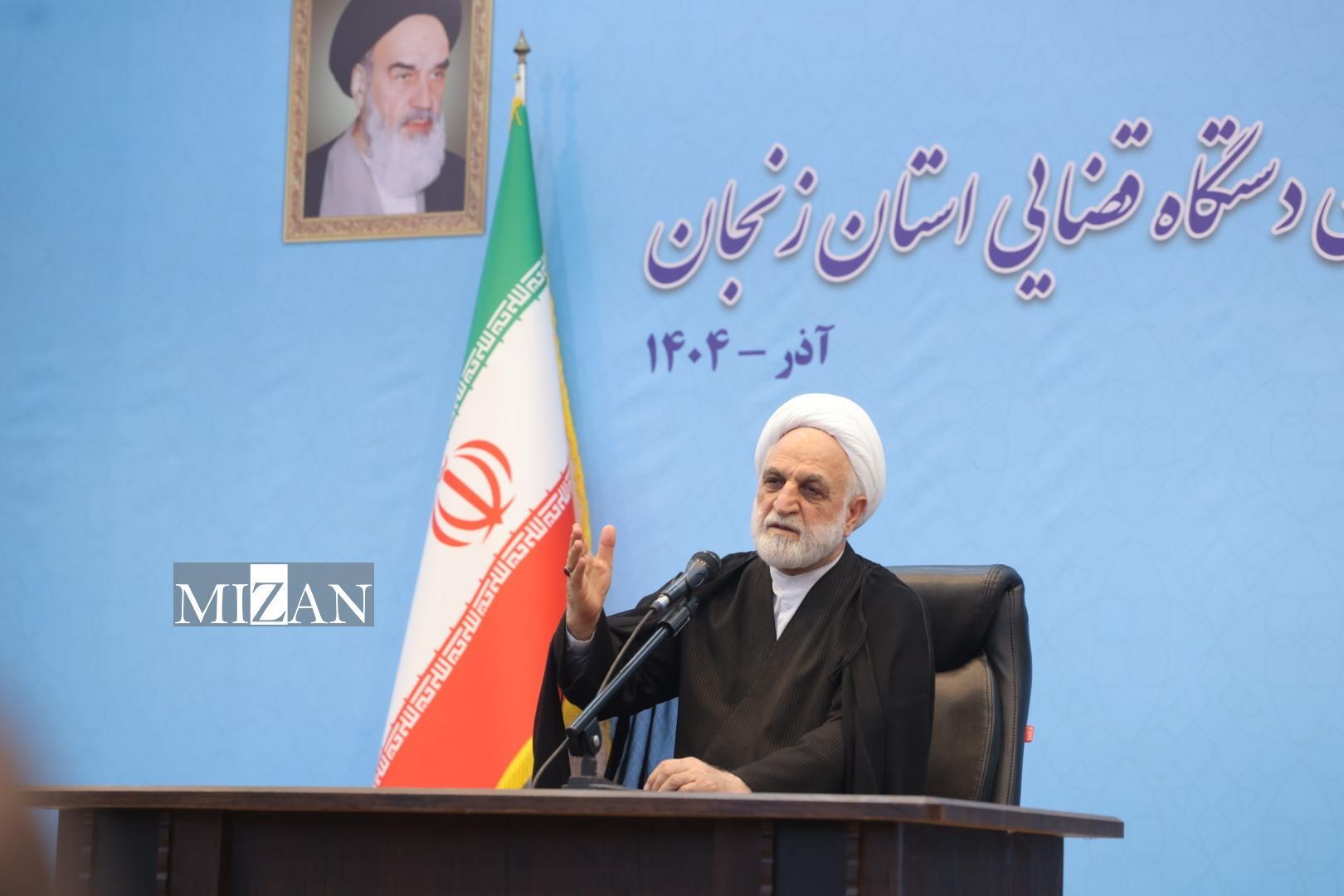
He added: “One of those present said that a calm heart can establish justice, meaning that all conditions for the expansion of justice must be in place. I agree with this statement, but I emphasize that the existence of problems and challenges must not deter us from striving toward the development of justice and the restoration of people’s rights.”
The Head of the Judiciary also stressed the importance of addressing livelihood issues and housing for judicial staff.
He further stated: “We must pay attention to judicial case statistics. For example, at one point it was said that 16 million cases enter the judicial system. It should be noted that this figure reflects the circulation of cases, not the actual number of distinct cases. A single case may be reviewed by multiple judicial authorities. Moreover, in mass-plaintiff cases—for instance, when a case has 15,000 complainants—separate files are formed for each complainant, whereas in reality, there is fundamentally one case with a single defendant.”
The Chief Justice emphasized: “The use of maximum public capacity in mediation and dispute resolution is not limited merely to the formal Dispute Resolution Councils; rather, this concept is much broader and includes utilizing all people and influential figures in resolving legal disputes.”
Mohseni Eje’i concluded: “The approach of supervisory and security bodies should not be based on fault-finding; rather, their approach must be oriented toward reform.”