From sanctions to imitation: U.S. copies Iran’s Shahed drone
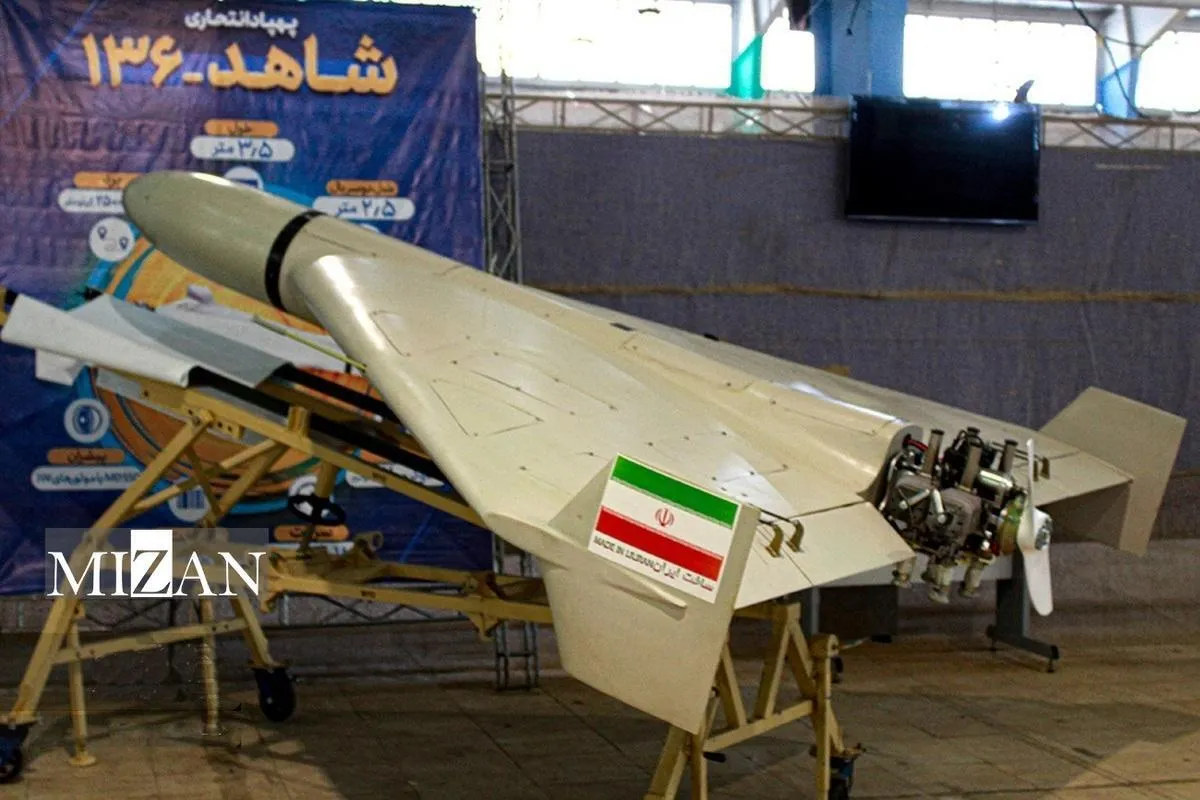
International media have reported that the U.S. military has deployed its first operational unit equipped with low-cost drones in the Middle East.
These drones have been reverse-engineered from the Iranian Shahed-136. According to a U.S. official, the establishment of the Scorpion Strike Task Force (TFSS) represents a major development.
Earlier this year, The War Zone presented a detailed explanation of why the U.S. armed forces must heavily invest in rapidly producible Shahed-136-type drones as an adaptable capability that could be vital in future global operations.
U.S. Central Command recently announced the creation of this unit, which is said to be a direct response to the “U.S. Military Drone Dominance” plan launched earlier this year by U.S. Secretary of Defense Pete Hegseth.
This squadron of Lukas drones is controlled by a special task force formed by U.S. Central Command several months ago. The Scorpion Strike Task Force will use drones known as the Low-Cost Uncrewed Aerial Attack System, or Lukas drones.
The War Zone, citing a U.S. military official, reported that the Lukas drones were developed after reverse-engineering an Iranian Shahed drone.
Previously, the U.S. magazine The National Interest, referring to Iran’s Shahed drones, wrote that battlefield developments—especially after the wars in Ukraine and the Gaza Strip—have demonstrated America’s urgent need for long-range attack drones.
The American outlet quoted James Bartholomew, commander of the U.S. Army’s 25th Infantry Division, as saying that the emergence of drone warfare worldwide is accelerating this demand.
The National Interest added that since the U.S. has lagged behind in producing low-cost attack aircraft for modern conflicts, this very branch (the 25th Airborne Division) has established a specialized aerial attack systems company to address this shortfall.
U.S. Central Command is now flying a copy of an Iranian drone—an American replica of the Shahed-136.
The American-produced version is known as the FLM-136. This drone was copied from a Shahed replica that reportedly came either from the Middle East or from Ukraine. It can fly for up to six hours and is powered by a 215cc internal combustion engine.
Meanwhile, an Egyptian defense company has unveiled a new attack drone that appears to draw significant design inspiration from the Shahed-136.
According to an Arab media outlet, Iranian drones have become among the most prominent attack drones in modern warfare due to their technical balance and battlefield effectiveness.
The compact fuselage and low radar cross-section of the Shahed make early detection and interception difficult, especially when deployed in large swarm attacks.
Despite having more basic sensors compared to more advanced and expensive systems, the Shahed’s low production cost and ease of launch have made it an effective tool for disabling and disrupting enemy air defense networks.
The drone is often used alongside other offensive systems and serves as a first-wave platform to weaken air defenses before ballistic missile strikes or precision-guided munitions are launched.
It primarily relies on satellite navigation systems (GPS/GNSS) and simple terminal guidance algorithms, allowing it to strike fixed targets with reasonable accuracy.
Its main strength lies in its production philosophy: the extensive use of commercially available components and simple technologies enables cost-effective mass production.
In recent years, Iranian drones have attracted international attention. During a visit to Qatar, U.S. President Donald Trump publicly commented on Iran’s drone capabilities, after which the Pentagon showcased its own prototype of a Shahed-type drone.
Media reports also indicate that China has developed a drone inspired by Iran’s Shahed drone series.