Netanyahu’s clemency request: A symptom of Israel’s politicized judiciary
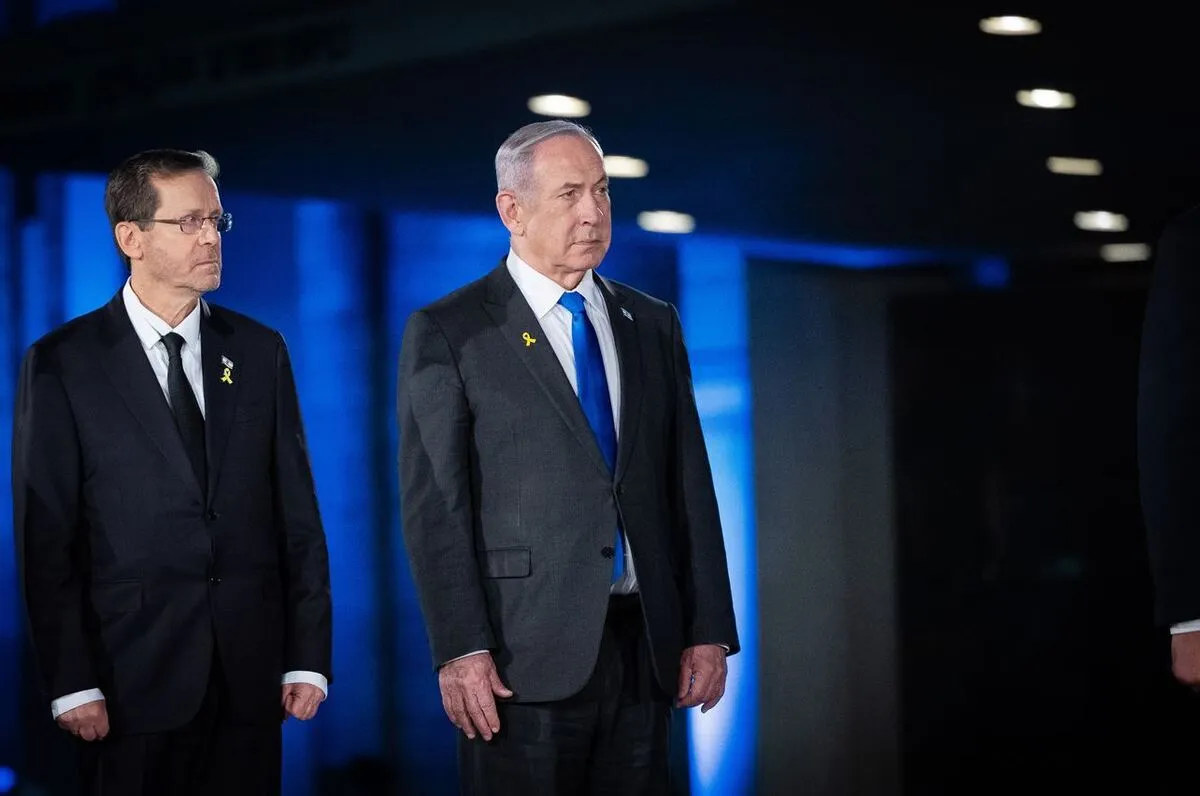
Benjamin Netanyahu, the Prime Minister of Israel, recently asked Isaac Herzog, the head of the regime, to pardon him in order to end a five-year trial in a financial corruption case.
Netanyahu faces charges of bribery, fraud, and breach of public trust in three separate cases and has consistently denied any wrongdoing.
He has been on trial in three separate cases, known as Cases 1000, 2000, and 4000, since 2019.
What is Netanyahu’s argument?
Netanyahu denies any wrongdoing and claims that the corruption trial is a conspiracy orchestrated by a hidden cabinet and a political prosecution carried out by rivals and the media.
He has also claimed that, if pardoned, he could strengthen Israel in this turbulent Middle East period. The Prime Minister’s claims come weeks after Donald Trump, U.S. President, asked Herzog to pardon Netanyahu.
Netanyahu’s 111-page pardon request, submitted to Herzog’s office, references Trump’s prior request. Analysts and observers believe Netanyahu has expanded the blockade and violence in Gaza to avoid trials and potential convictions.
In his pardon request, Netanyahu does not acknowledge any guilt or wrongdoing. Yair Lapid, head of the opposition, stated that Netanyahu “cannot be pardoned without admitting guilt, expressing remorse, and immediately retiring from political life.”
The pardon request will first be reviewed by the Pardon Department of the Israeli Ministry of Justice, which will send its recommendation to Herzog’s office.
While the President of Israel usually follows the ministry’s recommendation, he is not obliged to do so.
Herzog has previously stated that he sees a negotiated agreement between prosecutors and Netanyahu’s legal team as the most effective way to resolve the legal matter.
Reactions from leaders and residents in the occupied territories
Residents of the occupied territories have protested several times in front of Herzog’s residence in Tel Aviv and Jerusalem against Netanyahu’s pardon request, joined by opposition politicians.
In a statement from Herzog’s office in response to the pardon request, it was stated: “After receiving all relevant opinions, Herzog will responsibly and sincerely review this request.”
Since the start of the trial in 2020, many witnesses have testified, including some of Netanyahu’s former aides who have entered plea bargaining and become witnesses. Therefore, highly incriminating evidence has been presented against Netanyahu.
Following the Gaza war, media reports indicate that Netanyahu repeatedly requested his court sessions be canceled due to his handling of the conflict.
In early 2023, Netanyahu’s cabinet proposed plans to reform the Israeli judicial system, which critics said would weaken the Supreme Court and the system of checks and balances.
In response, widespread protests occurred regularly across the occupied territories. Critics considered this move a direct attack on the foundational principles of the Israeli legal system.
The pardon request is now part of this broader story, although the two issues are not formally linked. Opponents say it is another indication that Netanyahu and his coalition have a fundamentally different understanding of the rule of law.
Netanyahu’s political survival
Everything revolves around Netanyahu’s personal and political survival. He has once again been elected as head of the Likud party and has announced his intention to run for prime minister in next year’s election.
Netanyahu expects to win. Israeli law states that if he is convicted of a serious crime, he cannot run, although it is unclear whether this currently prevents his candidacy.
Media reports indicate that Netanyahu wants to move the elections from November to June in hopes of reaching agreements to normalize relations with countries by that time.
This aligns with his pattern of using foreign policy achievements to offset domestic challenges.
As elections approach, he is now attempting every possible maneuver to improve his position, and the pardon is only one of them.
Most likely, his only current option is to close the case, as the trial has lasted a long time, and at some point, the court will have to make a decision.