Washington shooting reflects America’s deep political and social tensions
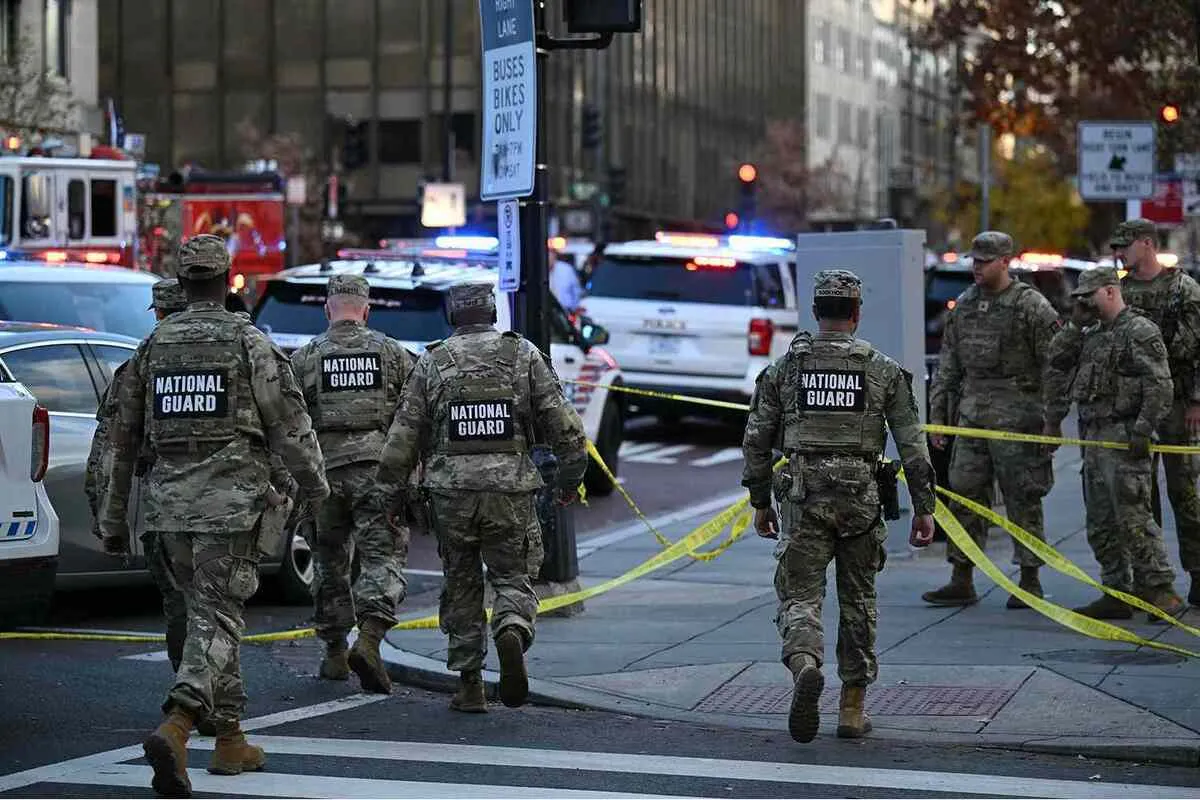
Two National Guard members were recently attacked in Washington, D.C.; one died from severe injuries, and the other remains in critical condition.
The shooting comes amid the controversy surrounding Trump’s decision to deploy the National Guard to U.S. cities under the stated goal of combating crime—an order widely criticized by the American public and numerous officials.
According to The American Conservative, local attitudes toward the Guard’s deployment have far more to do with how Washington residents feel about Donald Trump than with their views on crime in the capital. Over 90% of D.C. voters cast ballots against Trump, while he secured only 6.5% of the vote there last year.
This federal district was one of the few places where Trump failed even in the Republican primary.
Many D.C. residents—similar to people in other large Democratic-leaning cities across the country—see the National Guard not as crucial support for local law enforcement but as an occupying force.
It is understandable why Americans oppose the military playing a domestic policing role. And although D.C.’s constitutional status raises fewer legal concerns than other cities, this does not seem to be the main source of controversy.
The killing of a young Guardsman and the serious injury of another near the White House was not the result of a local uprising against this perceived “occupation” of D.C. The suspect was an Afghan national who had cooperated with the United States—including the CIA—during the 20-year war in Afghanistan. He reportedly drove all the way from Washington State to carry out the shooting; the war began when he was still a child.
This incident sharply contrasted with the predictions of Democratic Senator Elissa Slotkin of Michigan—who narrowly won her seat the same year Trump captured the presidency. Slotkin told ABC that she feared uniformed police and military personnel might become stressed, anxious, and end up shooting American civilians.
There are deep disagreements among Americans who have lived their entire lives in the country, disagreements that can escalate when political and cultural polarization intensifies.
Although many of America’s wartime partners worked closely with U.S. forces and were essential allies, some of these experiences can shape extreme behaviors that go far beyond what most Americans might ever encounter domestically.
Any policy aimed at addressing the situation—from immigration control to limiting foreign policy engagements or cracking down on local crime—will inevitably provoke a severe political backlash, dramatically worsening the underlying tensions.