Australia’s hypocrisy: Champion of human rights or enabler of war crimes?
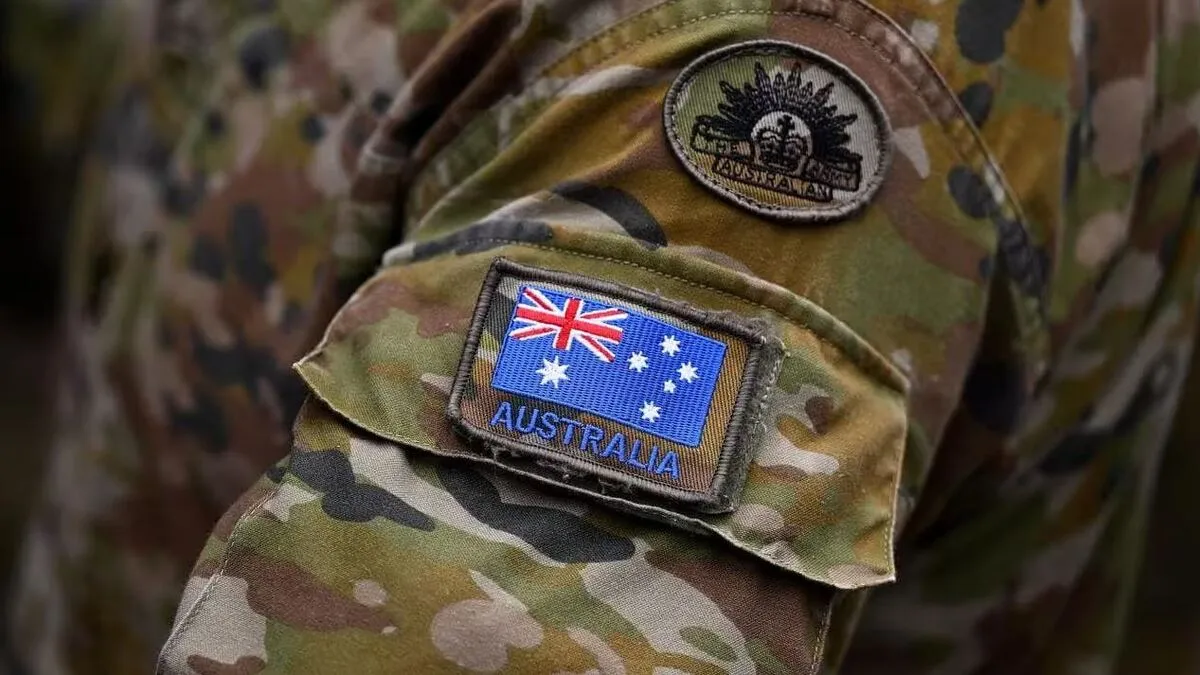
Australia is one of the countries that has consistently portrayed itself as a champion of human rights and a fighter against terrorism and violence. Canberra also has a long-standing habit of accusing other nations of human rights violations and supporting terrorism.
However, Australia’s claim to combat terrorism is called into question when it becomes clear that the country is a major supporter of the primary symbol of organized terrorism: the Israeli regime.
Despite its proclaimed defense of human rights, Australia is also a nation whose military has committed war crimes.
Supporting Israel: A symbol of terrorism
Australia’s support for Israel has historical roots dating back to 1947, when it became the first country to vote in favor of the UN Partition Plan for Palestine.
Diplomatic, economic, and military ties between Australia and Israel are strong, with a focus on innovation and trade.
Australia’s military support primarily includes the export of dual-use and military components, which are used in the supply chain for F-35 fighter jets and other military systems.
The Australian government has repeatedly claimed that since 2018 it has not exported complete weapons or ammunition to Israel. However, export licenses for repairs, spare parts, and dual-use goods have been issued—items that could be used in Israeli military operations, such as the bombing of Gaza.
These supports fall within the framework of bilateral military relations, including $20 million contracts with Elbit Systems.
Australia’s support for the occupying regime has faced widespread domestic and international criticism, leading Canberra to impose new, symbolic restrictions on exports to Israel in November 2025.
War crimes by the military of a ‘Human Rights Defender’
Australian military war crimes in recent decades have mainly occurred in the context of operations in Afghanistan and Iraq.
Official reports and independent investigations have focused primarily on the Australian Special Air Service (SAS) in Afghanistan. The Brereton Report confirmed credible evidence of 39 unlawful killings of civilians and prisoners.
The Brereton Report is essentially the investigation by the Inspector-General of the Australian Defence Force into operations in Afghanistan.
Similar allegations exist regarding Iraq, mostly involving human rights violations such as prisoner abuse.
Since 2020, Australia has taken symbolic measures such as revoking honors, criminal investigations, and military reforms. However, critics, including Human Rights Watch, argue that these measures are slow and insufficient.
Most SAS war crimes occurred between 2005 and 2016, culminating in the Brereton Report. After four years of investigation, the report reviewed 55 incidents and confirmed credible evidence of 23 unlawful killings (39 victims).
No evidence was found of senior commanders’ awareness, but a “toxic warrior culture” was identified as the root cause.
The term Toxic Warrior Culture, as defined in the 2020 Brereton Report, describes unhealthy and destructive behavioral patterns among Australian special forces, particularly the SAS.
It refers to a set of beliefs, values, norms, and behaviors that developed within certain special military units, leading to war crimes and violations of professional military principles.