Canada’s Islamophobic move: Activists protest Quebec’s new law
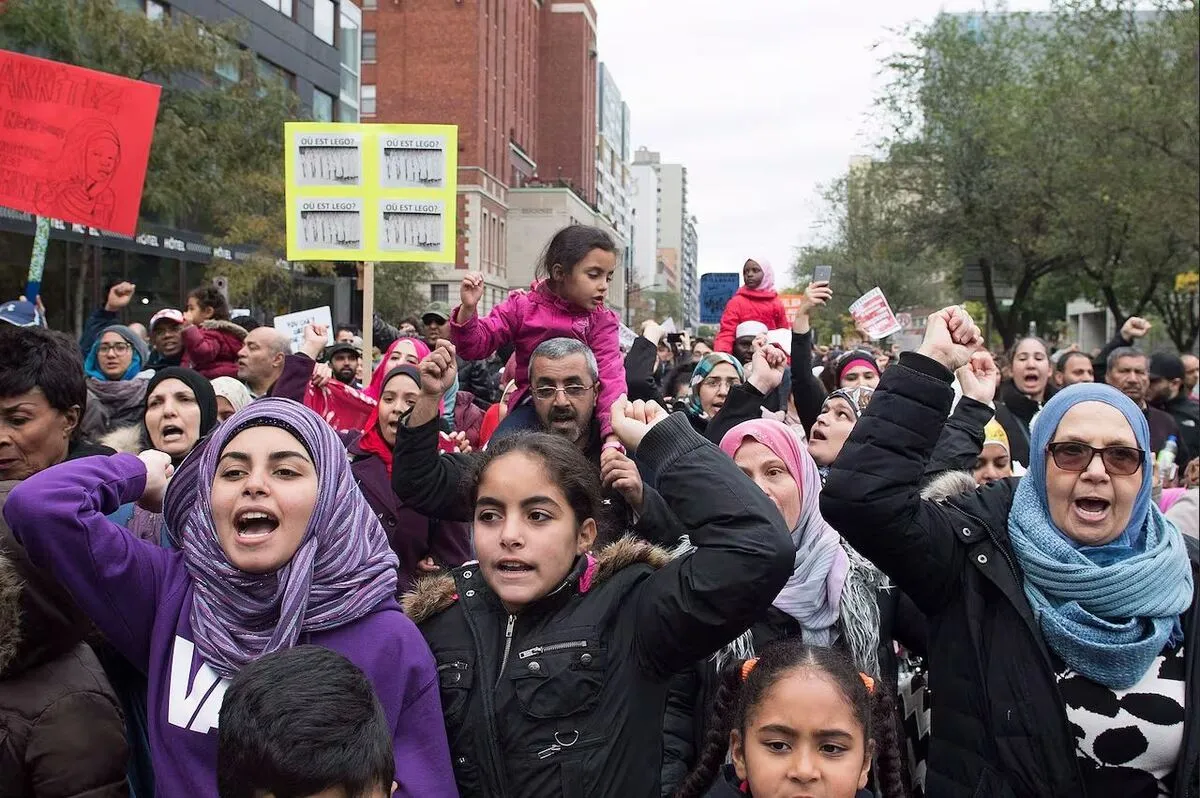
In a controversial move described by critics as a personal attack on Muslim communities, the provincial government of Quebec has introduced a new bill, known as Bill 9, which broadly restricts public congregational prayers and religious symbols.
The bill, recently submitted to the National Assembly by the ruling Coalition Avenir Québec (CAQ), is seen as part of an ongoing trend of Islamophobia in Canada.
Legal experts, religious leaders, and advocates for minority rights argue that this law violates the rights of religious minorities—especially Muslims.
Under Bill 9, congregational prayers on roads, parks, and public squares will be banned unless a municipal permit is obtained. Violating this law carries fines of up to 1,125 Canadian dollars for groups and 375 dollars for individuals.
In addition, the bill enforces a ban on the hijab for all individuals in daycare centers, colleges, universities, and private schools.
According to The Guardian, this bill expands on the 2019 Bill 21, which prohibited religious symbols for public employees such as teachers, police officers, and state lawyers.
Bill 9 also restricts halal meal offerings in public institutions, and prayer rooms in universities and colleges will be shut down.
Jean-François Roberge, a Quebec official, claimed that these measures are steps toward a fully “neutral” state, saying: “It is shocking for people to block traffic without a permit and turn streets, parks, and public squares into places of worship.”
He added: “When the government is neutral, Quebecers are free, and the same laws apply to everyone.”
Roberge also argued that schools are not places of worship and referred to recent protests such as street prayers held in solidarity with Palestine.
Critics describe the bill as anti-Islamic and divisive. Inès Rarbau, an expert on rights issues, said: “It feels like a personal attack on the Muslim community.”
Stephen Brown, President of the National Council of Canadian Muslims, called the bill political opportunism, warning that it confines religious practices to private spaces and singles out Muslims.
Even senior Catholic leaders in Quebec have condemned the bill, calling it a violation of rights and freedoms and stating that Canada does not need such a law.
Meanwhile, human rights activists warn that these measures will push Muslim women out of educational and public-sector jobs and further isolate minority communities.
The move comes as Canada faces growing identity tensions, and human rights organizations such as Amnesty International have urged the government to halt the bill. Though Bill 9 has not yet been passed, it has strong support in the legislature and stands a high chance of becoming law.
Muslims in Quebec—who make up more than 5% of the province’s population—say the bill not only threatens religious freedom but also undermines Canada’s identity as a multicultural nation.