Emphasis by the Head of the Judiciary on expanding the use of artificial intelligence for better governance, social life, and identifying and resolving challenges
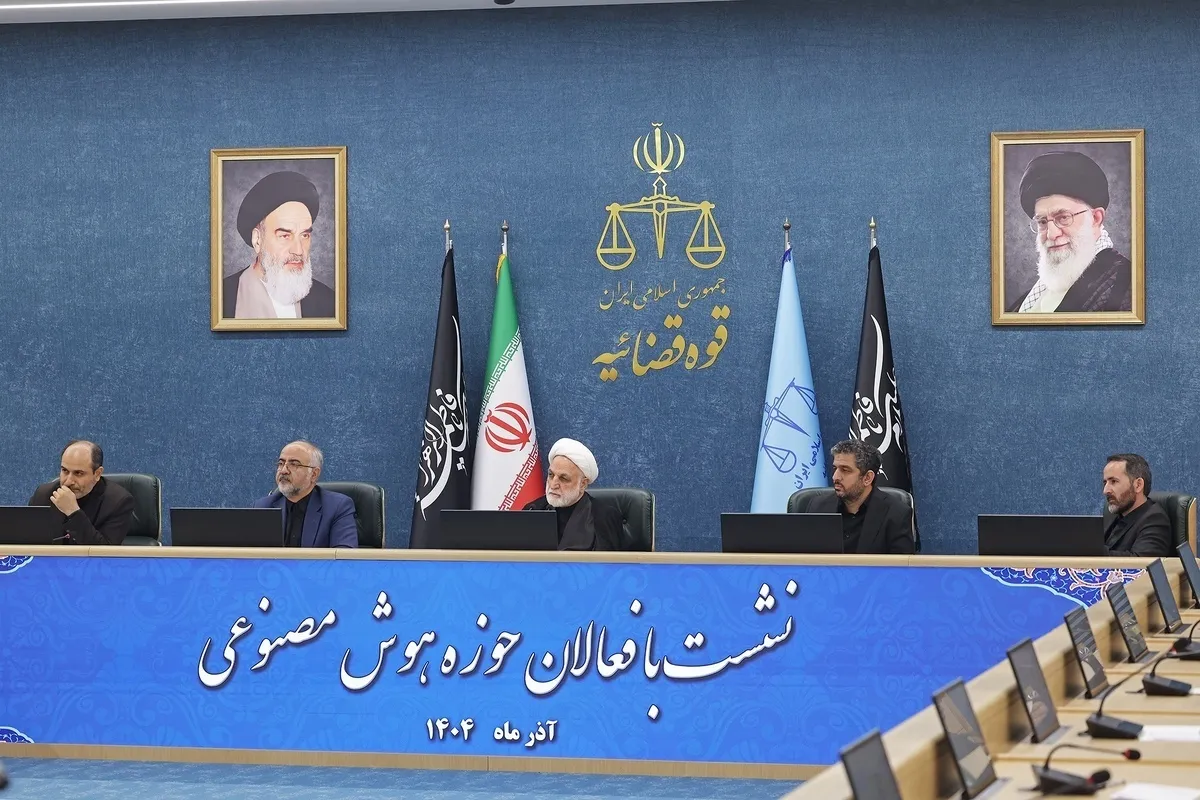
According to the Judiciary Media Center, Mohseni Eje’i, in continuation of his series of ongoing meetings with elite groups in the country, held a consultative session with a number of professionals and activists in the field of artificial intelligence.
In this meeting, the Head of the Judiciary stressed the role of emerging and advanced technologies in improving human life across various dimensions and stated:
“Officials of the system, the country’s intellectual community, and the public at large must gain a precise and clear understanding of the optimal use of artificial intelligence. Everyone must recognize that the correct application of AI and modern technologies is no longer optional but a necessity. If we fail to utilize these advanced technologies, our governance, progress, independence, and freedom from dependency will face obstacles.”
He continued, stating that rapid development of proper AI utilization is essential: “In the field of AI applications, we are far behind the leading countries. We must overcome this gap. Time is working against us; therefore, we must hurry and avoid delay. Every minute is valuable, and we should not postpone AI expansion for unnecessary reasons.”
Eje’i stressed that to reach the level of advanced nations in AI, Iran must move at an above-normal pace and increase investment in the field.
He further noted that AI experts have a duty to spread awareness among government officials, private sector actors, and the public: “You, the elite of this field, must help society understand that the development of AI applications is an unavoidable necessity and that time and investment must be dedicated accordingly.”
Eje’i added that only a small percentage of Judiciary funding is currently allocated to AI development, which may be due to the fact that Judiciary officials have not yet fully recognized the importance and impact of AI in judicial governance: “You specialists must help guide us toward a proper understanding of this matter.”
He emphasized the role of media—especially the national broadcaster—in raising awareness about AI in the modern world and suggested that education systems in this area must be strengthened. He added that managers and officials should also receive necessary AI training before assuming their positions.
The Head of the Judiciary pointed out potential risks of AI deployment: “One of the risks in AI is data leakage, which may be a major concern for managers. We must develop a coherent solution to ensure data security while benefiting from AI. We must also recognize that some level of risk is acceptable; if we face 5% manageable risk versus 95% benefit, we should not hesitate in adopting the technology.”
He instructed that AI experts prepare a complete list of needs, challenges, and potential risks related to AI development in the country and make that information available to officials and the public.
Eje’i also highlighted the need to strengthen collaboration between the Judiciary and AI experts: “We fully support AI professionals. In return, we ask for your assistance. Help us so that judicial cases can be processed faster and more accurately. One of our challenges is lengthy judicial processes; with AI tools, we hope to reduce processing times and increase accuracy.”
Eje’i also discussed the annual process of pardoning eligible prisoners: “Selecting the final list takes significant manpower and time nationwide, and I personally review these lists carefully. With AI tools, we hope to define clearer criteria and accelerate the process.”
He noted actions being taken by the Judiciary to support AI development, including assigning the General Inspection Organization to monitor the implementation of laws related to new technologies and AI. He also noted efforts to work with the executive and legislative branches to pass or amend relevant laws based on expert input.
He stated that while AI use in the Judiciary has increased, progress is still insufficient and must accelerate.
Eje’i compared AI to the development of cyberspace: “In 2011, the Supreme Leader warned about the significance and pervasiveness of cyberspace. After 14 years, we must evaluate how much we have benefited from it and recognize that not all shortcomings can be blamed on sanctions or lack of budget; some failures stem from internal issues.”
He emphasized empowering the private sector: “In AI development, the private sector must have more space to operate. I have repeatedly stated that unless we clarify the country’s approach to the private sector, we cannot achieve national development, social justice, or reduced inequality.”