Adoption of an anti-Iran resolution at the IAEA Board of Governors
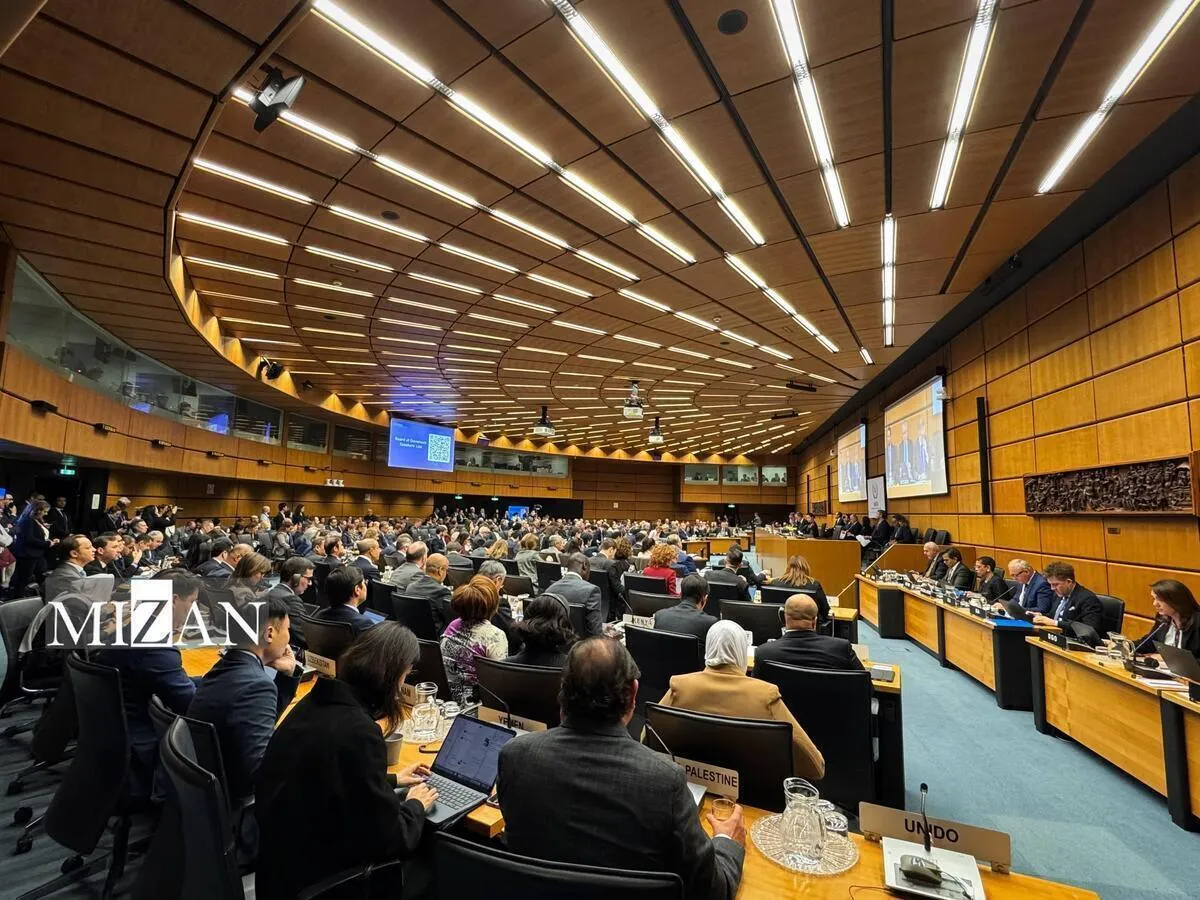
This document—approved in a closed session with the minimum number of votes (19 in favor, 3 against including Russia, China, and Niger, and 12 abstentions)—requires Tehran to “immediately” provide a report on the status of its enriched uranium stockpile and nuclear sites damaged during the 12-day war, while making no reference to Iran’s long-standing cooperation with the International Atomic Energy Agency.
Reuters, citing diplomatic sources, wrote that the resolution is aimed at extending and recalibrating the Agency’s mandate to monitor and report on specific aspects of Iran’s nuclear program.
The document, based on the latest report by IAEA Director General Rafael Grossi, emphasizes the need for the Agency to have immediate access to accurate information about Iran’s declared nuclear material stockpiles.
According to the resolution, Iran—under international decisions reimposed in September 2025—is obligated to suspend all activities related to enrichment and reprocessing, including research and development and all heavy-water projects.
Iran is also requested to act in accordance with the Additional Protocol and provide full information regarding the status of its enriched uranium stocks and safeguarded facilities.
The document further asks the IAEA Director General to submit, before each quarterly regular meeting of the Board of Governors, a report on the implementation of Iran’s safeguards agreement under the Nuclear Non-Proliferation Treaty (NPT), as well as the implementation of all relevant UN Security Council resolutions, consistent with previous practice.
The resolution calls for Iran’s full and immediate cooperation concerning the nuclear sites that were bombed.
Iran had previously warned against any hostile measures at the Board of Governors.
The Board has called on Iran to “expand its full and immediate cooperation,” provide detailed information on its 60% enriched uranium stockpile, and allow access to its nuclear sites.
Diplomats said: “The resolution adopted by the IAEA Board of Governors is driven by the political ambitions of Western countries.”
They added: “The arguments presented by the UK, Germany, the United States, and France were unconvincing to those who do not wish to politicize the Board’s work, noting that the current situation regarding safeguards on Iran is the result of illegal attacks by the United States and Israel on Iran’s safeguarded nuclear facilities in June.”
Joint statement by Iran and seven countries at the IAEA Board of Governors
Eight countries—including China, Russia, and Iran—issued a joint statement at the IAEA Board of Governors meeting condemning U.S. and Israeli attacks on Iran’s safeguarded nuclear facilities and the attempt to pass a new anti-Iran resolution. They called on member states to oppose political maneuvering over Iran’s peaceful nuclear program and refrain from supporting the draft resolution.
The eight countries—Belarus, China, Cuba, Iran, Nicaragua, Russia, Venezuela, and Zimbabwe—emphasized Iran’s long-standing commitment to non-proliferation and the inalienable right of all NPT member states to peaceful nuclear energy. They strongly condemned the illegal attacks by the United States and Israel on Iran’s safeguarded facilities and described the current situation as the direct result of those attacks and the unconstructive actions of the European Troika.
The statement welcomed the high-level engagement between the IAEA Director General and Iranian officials, as well as Tehran’s cooperation in allowing access to facilities “not under attack.” However, it warned that introducing a new anti-Iran resolution could undermine the current dialogue, weaken the positive atmosphere of cooperation, and—by creating a “parallel reality” in reporting mechanisms—damage the unity, credibility, and institutional integrity of the Agency.
The eight countries stressed the need to safeguard the technical and impartial nature of the IAEA and urged all member states to resist the politicization of safeguard-related issues concerning Iran and avoid supporting the draft resolution.