Ashraf-3 unmasked: Forced divorces, brainwashing, and modern slavery within the Monafeghin Terrorist Group
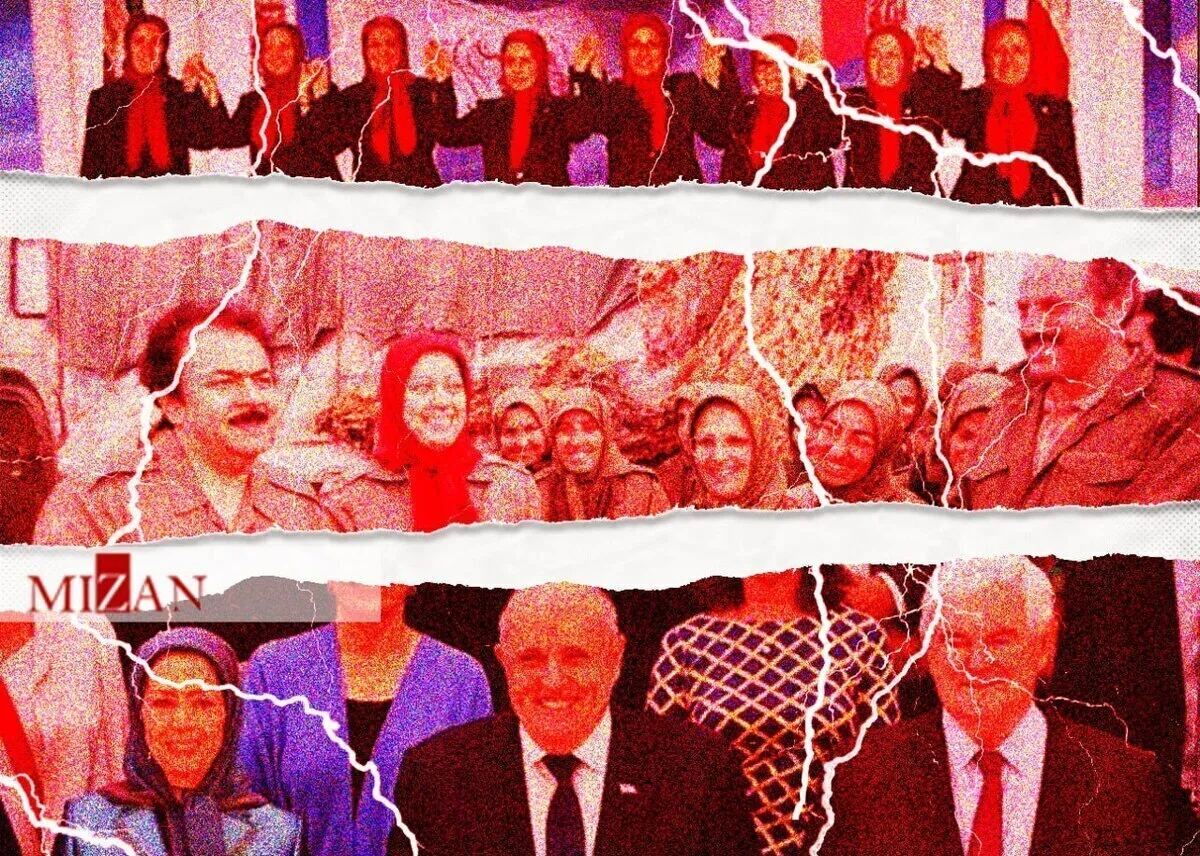
In recent years, the instrumentalization of human rights by the West and its double standards have become starkly evident. One of the most prominent aspects of this approach is the support, hosting, and cooperation of Western countries with terrorist groups—among them the Monafeghin.
The Albanian outlet Gazeta Impact has published a detailed report on this matter. According to the report:
Under the foundations of modern international law, human rights are meant to be universal and inalienable. The Universal Declaration of Human Rights states that “all human beings are born free and equal in dignity and rights.”
Nevertheless, in practice, the very Western governments that speak of protecting human rights have themselves violated them. Over recent decades, these countries have launched devastating wars and imposed crippling sanctions with little regard for civilian lives.
Global hypocrisy on human rights is also evident in Western support for terrorist groups. Some of the gravest abuses today occur not only in wartime, but through networks of terrorist groups sponsored by foreign governments. States can publicly condemn terrorism while simultaneously funding, arming, or sheltering terrorists abroad.
A prime example is the Monafeghin Terrorist Group. Western countries that once classified the group as a terrorist entity now support it, ignoring its long record of violence and cult-like activities.
Under pressure from the Trump administration, Albania agreed to relocate several thousand Monafeghin members from Iraq and establish a base—Camp Ashraf-3—on its soil. American hardliners such as John Bolton and Mike Pompeo openly cultivated the Monafeghin as an “asset” against Iran. The U.S. has not been alone. By sheltering and supporting the Monafeghin, Western countries have become complicit in its actions.
One analyst noted that Albania agreed to host the Monafeghin only after “the Americans made the deal extremely attractive.” By providing sanctuary, these governments share both moral and potentially legal responsibility for the group’s human rights violations.
Supporters of the Monafeghin and shared responsibility for its crimes
Responsibility for Monafeghin crimes extends beyond the group itself. The Monafeghin does not operate alone; any state or entity that supports it becomes an accomplice.
During its long exile, the Monafeghin was first funded by Saddam Hussein. After his fall, Israel became its main financial backer. Following the 2003 U.S. invasion of Iraq, Washington treated Monafeghin members as “protected persons.”
The U.S. effectively provided financial aid to the group for a period. In 2016, Albania—under pressure from the U.S. and the UN—accepted the Monafeghin. Critics say Albanian politicians viewed the arrangement as a way to “please Washington.” As The Guardian reported, while the Monafeghin was “widely seen as a cult and once condemned by the U.S. and the U.K.,” its anti-Iran stance made it “a favorite among White House hardliners.”
By sheltering the Monafeghin, Albania joined the ranks of countries criticized for hosting terrorist organizations.
International law is clear: states must prevent their territory from being used for terrorism. Albania’s case is no different. Hosting an armed terrorist organization with a history of attacks—whether the Monafeghin or any other—invites the same global condemnation and shame.
Harboring terrorists is, in effect, complicity in their crimes.
Systematic abuse of Monafeghin members
Despite its claims of advocating freedom, the Monafeghin enforces internal rules that violate nearly all basic human rights of its members.
Human rights researchers and defectors have provided horrifying accounts of life inside Monafeghin camps. They report bans on family life and personal liberty; members were forced into mass divorces and separation from spouses and children.
A survivor told Human Rights Watch that Massoud Rajavi ordered members to divorce their spouses—not only legally, but emotionally. Couples were separated by force; children were taken away from their parents.
One former female member recounted how, in 1990, she was forced to divorce her husband and surrender her five-year-old daughter and newborn son. Women who resisted were threatened with violence. A guard reported that female cadres were instructed to divorce their husbands and “marry” Rajavi—or disappear.
Evidence reveals a pattern of forced marriage and sterilization that the Monafeghin proudly denies. One member testified that Rajavi gathered hundreds of women and organized involuntary hysterectomies as a supposed “highest act of loyalty.”
Violation of family rights and women’s rights
The Monafeghin prohibits normal family interaction. Children born to members are raised inside camps and often turned into child soldiers.
One former child soldier recalled being taken to Iraq at age 14, where he received weapons training. He said the MKO separated children from parents, applied psychological pressure, and turned them into fighters.
Contact with relatives is blocked; visits or phone calls from the outside are considered threats to members’ “mental control.” In short, the fundamental right to family life is completely destroyed.
Forced migration and statelessness
Although Monafeghin members are technically refugees in Albania, they have no real right to movement. Between 2013 and 2016, the group’s leaders coordinated with U.S. and Albanian officials for the mass relocation from Iraq.
Members were issued temporary Albanian IDs that the organization never renewed, leaving them with no permanent legal status. Monafeghin officials openly boasted that the settlement agreement left “full responsibility for the individuals” with the organization.
As a result, nearly all members are stranded in the camp without valid travel documents.
Brainwashing and psychological control
The Monafeghin leadership constantly subjects members to brainwashing. At collective confession sessions, participants must suppress any private thoughts.
According to a 2005 Human Rights Watch report, ideological control was so strict that members had to disclose any thoughts outside organizational doctrine—or be accused of treason. Whistleblowers were imprisoned, beaten, or disappeared.
Labor and economic exploitation
Although the Monafeghin calls itself an “army,” its members receive no wages or benefits. All labor serves the organization. Members depend solely on rationed food and shelter inside the camp, with no independent employment or freedom to choose their tasks.
After arriving in Albania, many were forced into office work or cyber-propaganda inside a closed compound, producing disinformation. Those who escape find themselves “without identity papers and without any means of support.”
Experts describe the living conditions as modern slavery: unpaid labor, forced indoctrination, and total dependency on the cult.
Restrictions on residency, citizenship, and movement
Members cannot choose where they live. All reside inside the fortified Ashraf-3 compound under armed security. Leaving without permission is strictly forbidden.
None have received Albanian citizenship or residency. Their temporary documents have expired, rendering them effectively stateless—despite Article 15 of the Universal Declaration of Human Rights guaranteeing the right to nationality.
Without passports or legal residency, Monafeghin members cannot travel, relocate, or apply for protection elsewhere. Escaping the camp is nearly impossible without hiding one’s identity.
Violation of legal rights and privacy
Monafeghin members have no access to justice outside the camp. Albanian police, courts, and health inspectors have no authority inside Ashraf-3. The compound is a legal black hole, controlled entirely by the Monafeghin’s internal security apparatus.
One former member said that after escaping, he realized phones and radios were banned inside the camp. The camp, he said, was deliberately isolated by Western support to keep members from accessing outside information.
Civil rights such as due process, privacy, and access to information are deliberately denied.
Other rights violations
The Monafeghin also violates numerous additional basic rights. Members have no choice over their daily lives or future. Property rights are irrelevant. Environmental and health rights are ignored whenever they conflict with organizational controls.
Even rights guaranteed by the Universal Declaration of Human Rights—freedom of thought, expression, association, and adequate living standards—are subordinated to Monafeghin demands.
In short, every fundamental human right, from family life to freedom of speech, is destroyed under Monafeghin directives.
Impact of the Monafeghin’s presence on Albanian citizens and law
The presence of the Monafeghin in Albania has harmed not only its own members, but also the rights and security of Albanian citizens. Hosting a fortified enclave controlled by a foreign terrorist group inevitably imposes costs on the host nation.
First, accepting a terrorist organization was highly controversial. Observers note that Albanian authorities agreed primarily to satisfy the United States—not out of any local necessity. Many Albanians oppose the presence of an unwanted paramilitary base and fear security risks and loss of sovereignty.
Under Albanian law, refugees are entitled to legal protections and identity rights—rights the Monafeghin members do not have. A former insider revealed that the government issued only temporary IDs and allowed them to expire, leaving thousands with no legal status and no access to basic public services. In practice, they exist in a legal limbo controlled by the Monafeghin rather than Albanian law.
Albanian institutions are barred from oversight. Police, intelligence services, and the judiciary cannot enter Camp Ashraf. The Monafeghin leadership refuses entry to human rights organizations or even NGOs.
This creates a zone where the rule of law in Albania is effectively suspended. Critics note that thousands of letters from worried families seeking contact with their loved ones have gone “unanswered.” One Albanian NGO stated that police, security, and health authorities have “no jurisdiction” inside the camp—a situation unacceptable for national security.
In short, Albania cannot exercise sovereignty over the foreign militant group it chose to shelter.
This impunity has real consequences. Albanian and international media reported in late 2021 that senior Monafeghin officials were quietly arrested for trafficking crimes—including human trafficking and drug smuggling—but charges were dropped.
One report noted that two key Monafeghin figures were detained yet never prosecuted, suggesting that the group was shielded by its foreign backers from accountability.
Further investigations showed that Monafeghin members even assisted Albanian police in identifying illegal migrants—supposedly as cooperation. In those cases, migrants were told they would be deported unless they stayed in Ashraf for “support,” effectively luring vulnerable people into exploitation. Such schemes constitute criminal abuse of migrants on Albanian soil.
Global comparisons: Countries condemned for harboring terrorists
Albania is not the only country to shelter controversial terrorist groups, but history shows host nations are not immune from backlash.
Albania’s arrangement with the Monafeghin is significant in this context. By accepting and supporting a foreign armed terrorist group, Albania has joined the list of states that must answer for the actions of the organization they host.
Under UN counterterrorism conventions, “states must not provide safe haven to terrorists” and must cooperate in dismantling terrorist networks. Thus, when Albanians complain that their government has “no control” over the Monafeghin camp, they are invoking a principle supported by the international community: a state that cannot or will not control its territory risks sanctions and condemnation.
History shows that countries knowingly or negligently sheltering terrorists eventually face legal and reputational consequences.
Ultimately, the Monafeghin enclave in Albania is an anomaly that violates human rights at every level. Its foreign backers and the host country share responsibility for these outcomes.
The remaining Monafeghin members face a simple choice: stay and be buried under the organization’s lies, or leave while they still can. They need not destroy their lives for a false cause; they can become survivors who choose life over indoctrination.
As one defector said: returning to normal society is no longer a dream—it is the reality for those who have had the courage to leave.