A hidden supply line: How Canadian parts help power Israel’s bombing of Gaza
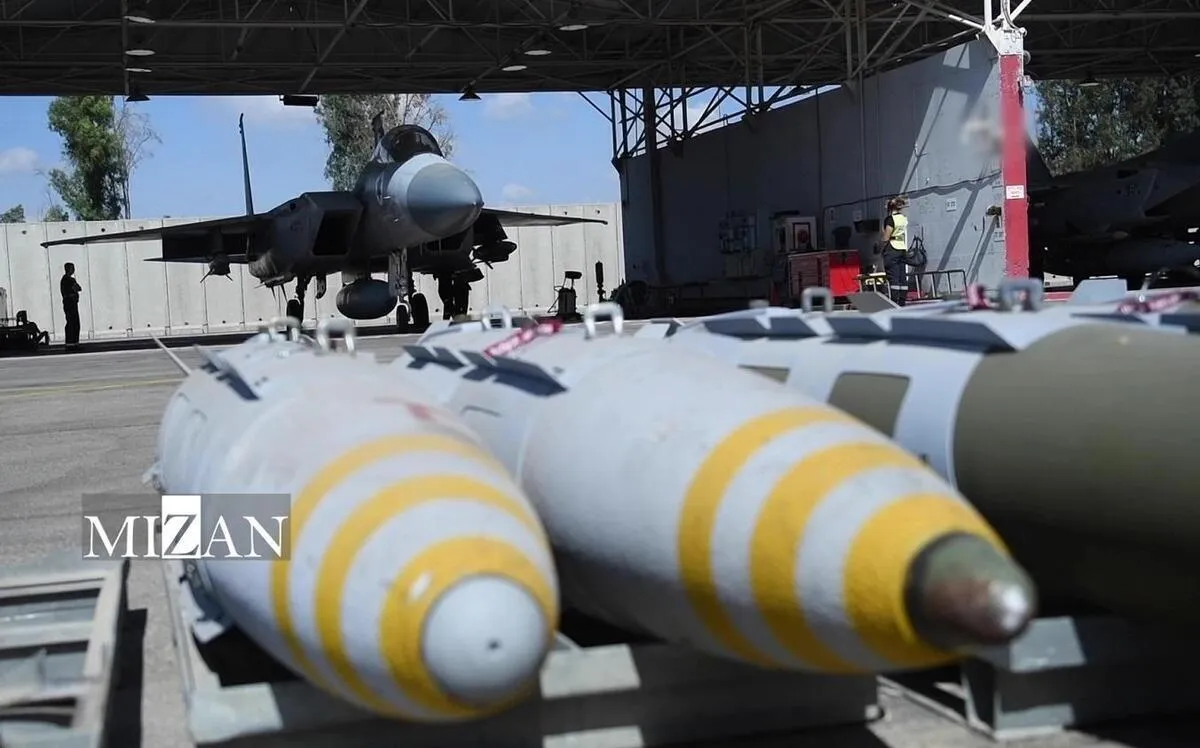
A newly published report reveals that Canada continues to supply military equipment to Israel through U.S. arms manufacturers.
This comes despite Canadian Foreign Minister Anita Anand claiming in August that all 2024 export permits that could allow the use of Canadian military components in Gaza had been suspended.
The report, titled “Exposing America’s Legal Loophole: How Canadian F-35 Parts and Explosives Reach Israel,” states that the evidence includes details of hundreds of shipments from Canadian military producers to U.S. weapons factories that manufacture the Israeli regime’s fighter jets, bombs, and artillery shells.
For the first time, the report also exposes Canada’s role as a vital transit corridor for hundreds of shipments of European-made TNT en route to U.S. bomb manufacturers, along with shocking evidence that Canadian F-35 components were sent to Israel just days after arriving at U.S. facilities.
According to the report, Canadian F-35 parts were transferred to Israeli territory only days after entering U.S. plants.
Based on the provided data, at least 34 shipments of military aircraft components were sent by U.S. Lockheed plants to Israel’s Ministry of War, air force bases, and weapons manufacturers between April 2024 and August 2025—immediately following the receipt of hundreds of similar shipments from Canadian producers.
Meanwhile, 360 additional shipments of aircraft components from Canadian manufacturers were delivered to the Lockheed Martin F-35 assembly plant in Fort Worth, Texas, between September 2023 and August 2025.
The report states that 150 shipments of Canadian explosive and flammable materials from General Dynamics facilities in Valleyfield and Repentigny, Québec, were sent to U.S. Army munitions factories. These facilities produce 2,000-pound MK-84 bombs, 155-mm artillery shells, and 120-mm tank rounds for export to Israel.
The publication also reveals that at least 433 shipments of Polish-produced TNT were transferred to Québec between October 2023 and November 2025 and then shipped on to Israeli territory.
It notes that this TNT was used in MK-84 and I-2000 Penetrator bombs—both employed by Israel in strikes on Gaza.
The report was issued by a coalition including World Beyond War, the Palestinian Youth Movement, Canadians for Justice and Peace in the Middle East, and the Arms Embargo Now coalition.
Rachel Small of World Beyond War stated: “Let’s be clear: despite the Canadian government’s attempts to calm us and create the illusion that Canada has addressed Israel’s military supply issue, we now see that Canadian-made military goods have been flowing to Israel the entire time.”
She added that by bypassing Canadian export controls through U.S. channels, Canada was directly supporting Israel’s capacity to commit war crimes in Gaza and maintain the occupation of Palestine.
Small argued, citing remarks by former Foreign Minister Mélanie Joly and current Foreign Minister Anand, that Canada’s suspension of arms export permits was largely a semantic maneuver designed to mislead the public, while ensuring Israeli weapons manufacturers continued to have access to Canadian military goods.
“From the start, the Canadian government knew that most ongoing weapons exports to Israel did not even require Canadian permits, because they could be easily routed through the U.S. This is systematic deception.”
Hanin Mhanna of the Palestinian Youth Movement echoed these concerns, describing the U.S. loophole as a mechanism allowing Canada to claim innocence while its weapons trade continues unchecked through American channels.
Although the Canadian government still insists that export permits are blocked and that weapons are not being sent for use in Gaza, the evidence shows the opposite.
Canadian weapons manufacturers are not only involved—they are actively partnering with Israel. They are essential to Israel’s military machine.
Alex Patterson of Canadians for Justice and Peace in the Middle East explained that the U.S. loophole is enabled by the Export Control List, a regulation under the Export and Import Permits Act that defines which weapons require licensing.